What Is a Surface Cleaner for Pressure Washing? Benefits, How It Works, and When to Use One for Your Home
Originally Published August 15, 2025
Last Updated July 22, 2026
Why Surface Cleaners Produce Better Driveway Cleaning Results
If you've ever rented a pressure washer to clean your driveway, you probably expected professional-looking results. Instead, you may have spent an entire Saturday outside only to end up with streaks, uneven cleaning, sore muscles, and a driveway that still didn't look quite right.
I see this more often than you might think.
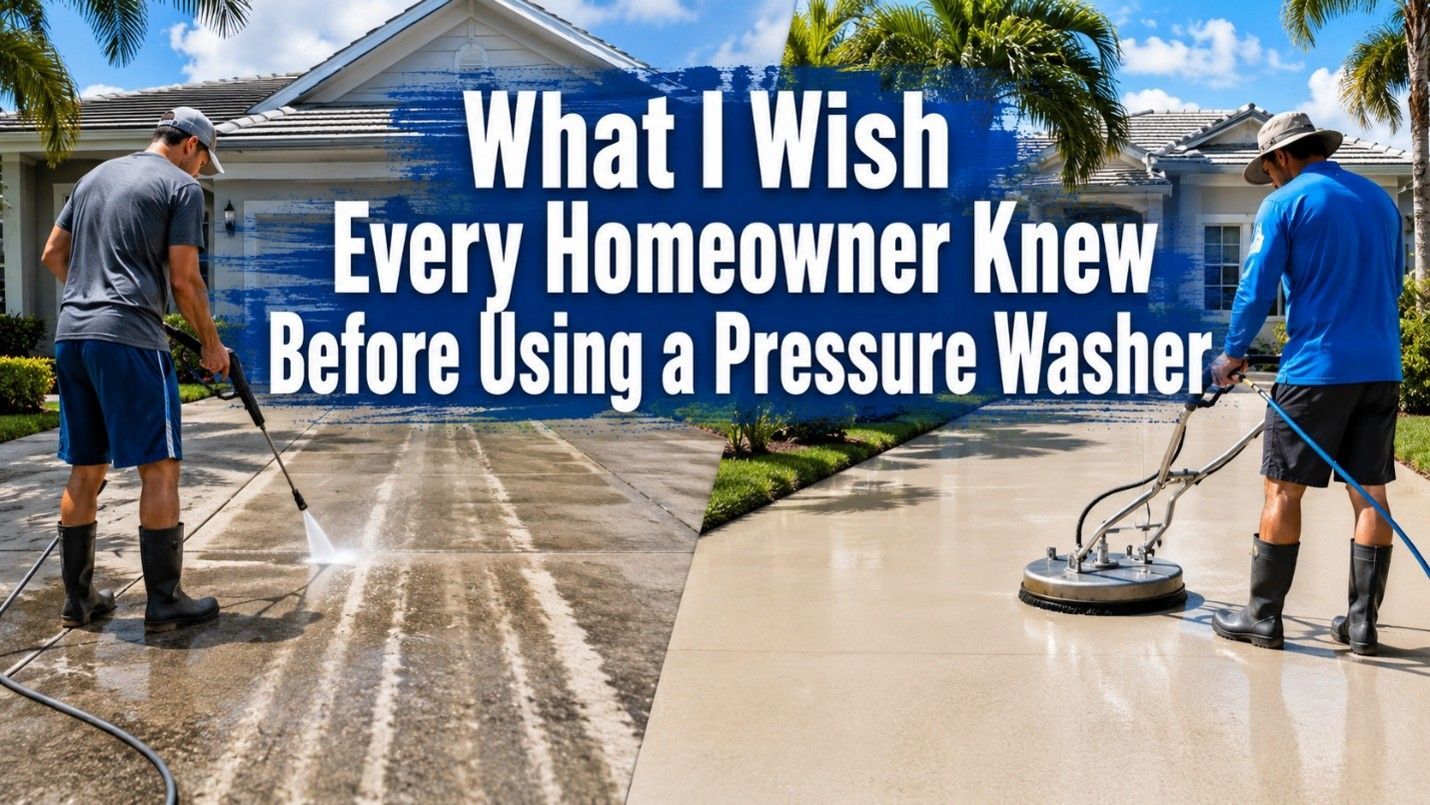
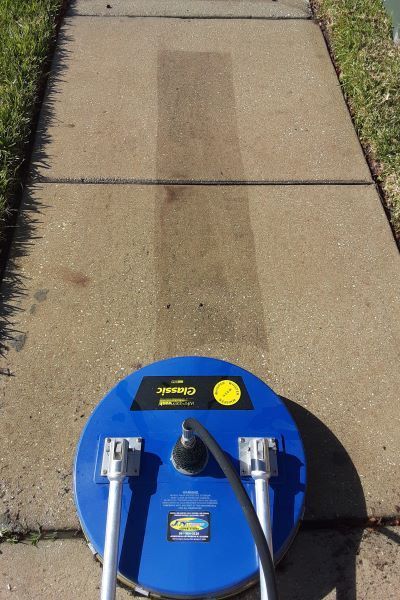
In fact, one thing I've learned after more than 13 years of cleaning driveways throughout Riverview and the surrounding South Hillsborough County area is that homeowners almost never tell me they already tried cleaning the driveway themselves. They don't have to. Before I even ring the doorbell, I can usually tell by the cleaning lines left behind. Those familiar "tiger stripes" tell the whole story.
The biggest difference between a professional driveway cleaning and a typical DIY job usually comes down to one piece of equipment: the surface cleaner.
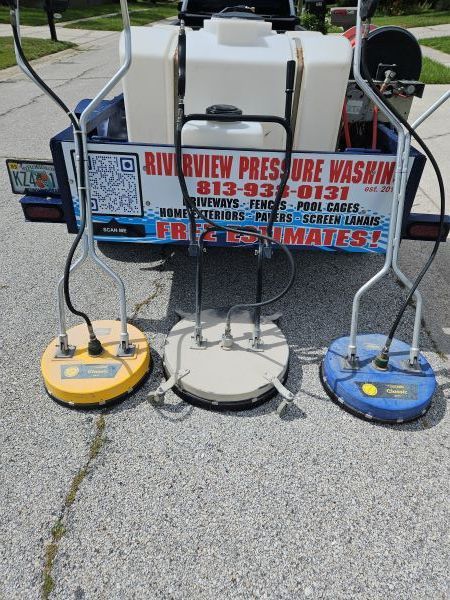
What Is a Surface Cleaner?
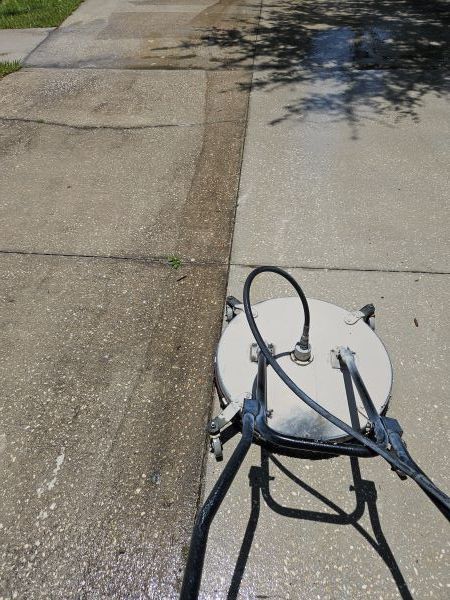
A surface cleaner is a flat, circular attachment that connects to a pressure washer. While many homeowners assume it works like a floor buffer with spinning brushes underneath, that's actually not how it works at all.
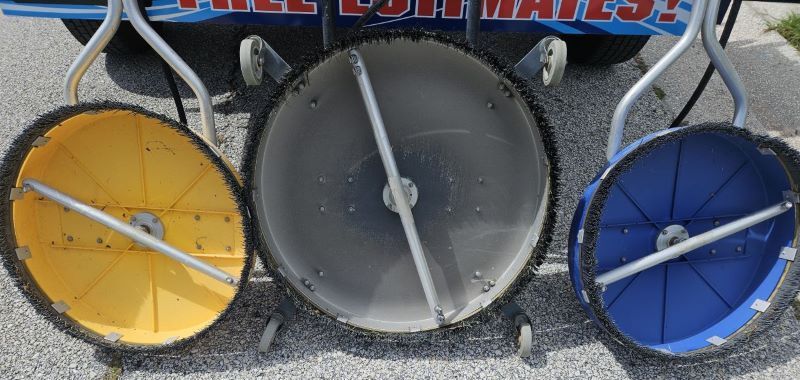
Inside the housing are two precisely sized spray nozzles mounted on a rotating spray bar. As water flows through the nozzles, the spray bar spins at extremely high speed, creating a wide, even cleaning pattern across the concrete.
Instead of concentrating all of the pressure into one narrow stream like a pressure washing wand, a surface cleaner distributes that pressure evenly across a much larger area. The result is faster cleaning, more consistent results, and a significantly lower chance of leaving visible streaks or damaging the concrete.
Why Professionals Use Surface Cleaners on Almost Every Flat Surface
I watch pressure washing videos from around the country, and I'm honestly surprised by how many contractors still clean driveways, sidewalks, and patios using only a pressure washing wand.
Personally, I use a surface cleaner on every flat surface I possibly can.
Whether I'm cleaning a driveway, sidewalk, patio, pool deck, or parking pad, a surface cleaner produces a more uniform finish than a wand ever could. It's also considerably faster, easier on the equipment operator, and provides a cleaning pattern that's simply impossible to duplicate by hand.
There are certainly situations where a pressure washing gun is necessary, such as cleaning edges, corners, expansion joints, or tight spaces around porches and pool cages. But whenever a surface cleaner fits, it's almost always the right tool for the job.
Why DIY Driveways Often End Up with Tiger Stripes
Most homeowners rent what they believe is the best equipment available.
They head to a local rental store, pick up a pressure washer, rent a surface cleaner, and spend several hours cleaning the driveway.
Initially, the driveway may actually look pretty good.
Then something interesting happens.
A few months later, dark stripes begin appearing across the concrete.
Those stripes weren't caused by new algae growth. They were there all along. The driveway simply wasn't cleaned evenly, and over time the areas that weren't thoroughly cleaned become visible again.
That's one of the biggest differences between consumer equipment and professional equipment.
The driveway doesn't just look cleaner the day it's washed. It stays cleaner much longer.
When customers ask how long they can expect their driveway to stay clean, I typically tell them about one to two years depending on shade, irrigation, surrounding landscaping, and weather conditions. They're often surprised because many assume they'll be cleaning it again within a few months.
Professional equipment simply cleans deeper and more consistently.
Speed Is Only Part of the Story
One of the first things customers notice is how quickly we work.
A typical two-car driveway usually takes me about 45 minutes to an hour.
A three-car driveway generally takes between one and one and a half hours.
People are often amazed because they remember spending most of their weekend trying to accomplish the same thing.
Years ago, I used to explain it this way when customers were deciding whether to hire me.
You can rent a pressure washer for around $80. Then you'll probably rent a surface cleaner for another $40.
By the time you load the equipment, transport it home, spend hours outside in the Florida heat, return everything before the rental deadline, and hope you're happy with the results, you've invested an entire day.
Or...
For about the same money, you can hire a professional and watch the whole process from inside your air-conditioned home.
That comparison usually helped people realize they weren't just paying for the equipment. They were paying for experience, efficiency, and better results.
Why Professional Equipment Makes Such a Big Difference
One of the biggest misconceptions homeowners have is that pressure is everything.
It's not.
Water volume is just as important.
Most homeowner pressure washers produce around 3 to 4 gallons per minute (GPM). Professional machines commonly produce 8 GPM or more.
That extra water volume allows us to clean much more effectively while maintaining the correct speed for the surface cleaner.
Our commercial equipment uses a 24-inch surface cleaner powered by an 8 GPM pressure washer. That's a completely different setup than the smaller homeowner models commonly sold at home improvement stores.
It's not simply a larger attachment.
The entire system is designed to work together.
Bigger Isn't Always Better
This is another area where many homeowners are surprised.
A larger surface cleaner isn't automatically better.
Every surface cleaner is designed to operate within a specific water flow range.
For example, my pressure washer produces 8 GPM.
Since my surface cleaner uses two spray nozzles, each nozzle is sized for approximately 4 GPM.
That combination allows the spray bar to spin at exactly the speed it's designed for.
If someone installs a larger surface cleaner that requires more water than the machine can supply, the spray bar slows down, cleaning performance drops, and the results become inconsistent.
Likewise, if I wanted to use a smaller commercial surface cleaner, I could simply install the properly sized nozzles and maintain the same cleaning effectiveness.
Matching the equipment correctly is just as important as the equipment itself.
Why Homeowners Can't Simply Buy Professional Equipment
People occasionally ask why they can't just purchase the same equipment professionals use.
The short answer is because it requires much more than just buying a larger attachment.
Our 24-inch surface cleaner is powered by an 8 GPM commercial pressure washer that draws water from a 125-gallon buffer tank. Many contractors running even larger commercial equipment use 300 to 500-gallon water tanks.
The plumbing, pumps, hose sizes, nozzles, and water supply are all designed as one complete system.
Simply attaching a commercial surface cleaner to a homeowner pressure washer wouldn't produce professional results.
The Surface Cleaner Doesn't Finish the Job
Another misconception is that once the surface cleaner finishes, the driveway is done.
That's actually only the beginning.
After cleaning the main surface, we still clean every expansion joint, edges along garage doors, porches, sidewalks, walls, and any areas the surface cleaner can't reach.
On paver pool decks, we also clean corners, around screen enclosures, and other tight areas using a pressure washing wand.
Once everything is thoroughly cleaned, we rinse the property, remove any overspray, and apply a post-treatment that helps eliminate any remaining organic growth and improves the overall appearance.
Those finishing details are often what separate an average cleaning from one that truly looks professional.
A Common DIY Mistake That Can Permanently Damage Concrete
Although surface cleaners are much safer than using a pressure washing wand alone, they still need to be used correctly.
One mistake I occasionally see is someone pulling the trigger before they begin moving.
Because the spray nozzles are concentrating thousands of pounds of pressure in one location, even sitting still for a few seconds can permanently etch the concrete, leaving a circular pattern that cannot be removed.
A surface cleaner should always be moving as soon as the trigger is engaged.
Fortunately, this type of damage is preventable with proper technique.
Why Customers Are So Surprised
One of the most common comments I hear after finishing a driveway is:
"I didn't know it could look that good."
That's always rewarding to hear.
Most homeowners have only seen what consumer equipment can do.
Once they see the difference professional equipment, proper technique, and years of experience make, they understand why the results are so dramatically different.
It's not simply about cleaning faster.
It's about producing a cleaner, more uniform driveway that stays cleaner much longer.
Final Thoughts: Why Surface Cleaners Became the Industry Standard
Surface cleaners may look like a simple attachment, but they're one of the biggest reasons professional driveway cleaning produces such dramatically different results than a typical DIY project.
Over the years, they've become the industry standard for cleaning large, flat surfaces because they simply work better. They clean faster, produce a more uniform finish, reduce operator fatigue, minimize the risk of etching concrete, and deliver results that last longer than most homeowners expect. While there are still situations where a pressure washing wand is the better choice, such as cleaning edges, expansion joints, and tight corners, a surface cleaner is the first tool most professionals reach for when cleaning driveways, sidewalks, patios, and pool decks.
At Riverview Pressure Cleaning, we've spent more than 13 years helping homeowners throughout Riverview and South Hillsborough County restore their concrete surfaces using commercial-grade equipment and proven cleaning techniques. Whether you're trying to improve your home's curb appeal, remove years of algae and mildew, or simply avoid spending your weekend behind a rental pressure washer, using the right equipment makes all the difference.
If you're considering having your driveway professionally pressure washed, learn more about our Driveway Pressure Washing service. If you're wondering how long you can expect the results to last, our article How Long Does Driveway Pressure Washing Last? explains the factors that affect how quickly algae, mildew, and dirt return to your concrete.
The next time you watch a professional clean an entire driveway in under an hour, you'll know the secret isn't just the pressure washer. It's knowing how to pair the right equipment with years of experience to produce cleaner, more consistent, and longer-lasting results.
Share: