How Often Should You Clean a Pool Cage in Florida?
How Often Should You Clean a Pool Cage in Florida?
After cleaning pool cages throughout Riverview and the surrounding Tampa Bay area for more than a decade, we've learned that there's no single cleaning schedule that works for every pool cage.
Some pool cages stay relatively clean for well over a year, while others begin showing green algae sooner because of shade, trees, moisture, or irrigation. Some homeowners are also more particular about keeping their outdoor living space spotless and prefer to have it cleaned before family gatherings or parties.
In our experience, the best cleaning schedule depends on both the conditions around your pool cage and how you want your outdoor space to look.
Why Annual Cleaning Works Well for Most Pool Cages
For most homeowners, once-a-year cleaning is a good way to keep algae and other buildup under control.
Annual cleaning helps keep algae, pollen, dust, dirt, and spider webs from becoming heavily established. When a cage is maintained regularly, there is usually much less buildup to remove, which makes the cleaning process easier and allows us to use less pressure.
The goal isn't necessarily to wait until your pool cage looks dirty. Regular cleaning can keep the enclosure looking good throughout the year while preventing buildup from reaching the point where it becomes difficult to remove.
For many homeowners, this is especially important because the pool area is an extension of their living space. If family and friends regularly use the pool, keeping the cage and screens clean can make the entire backyard feel more inviting.
Not Every Pool Cage Needs Cleaning at Exactly the Same Time
Environmental conditions can make a big difference.
A pool cage surrounded by mature trees and heavy shade may develop algae much faster than one that receives direct sunlight most of the day. Irrigation overspray, nearby vegetation, moisture, and airflow can all affect how quickly dirt and organic growth return.
We've also found that homeowners have different ideas about what "clean" means.
Some customers call when they see the first signs of green algae. Others are perfectly comfortable waiting until the buildup becomes more noticeable. Some simply want their pool area looking spotless throughout the year, even when algae isn't the main reason for the cleaning.
There's nothing wrong with any of these approaches. The right schedule depends on your property and how you want your pool area to look.
What Happens When You Wait Several Years?
A pool cage doesn't suddenly become difficult to clean because you missed one annual cleaning.
We've seen cages go more than two years between cleanings and still be relatively manageable.
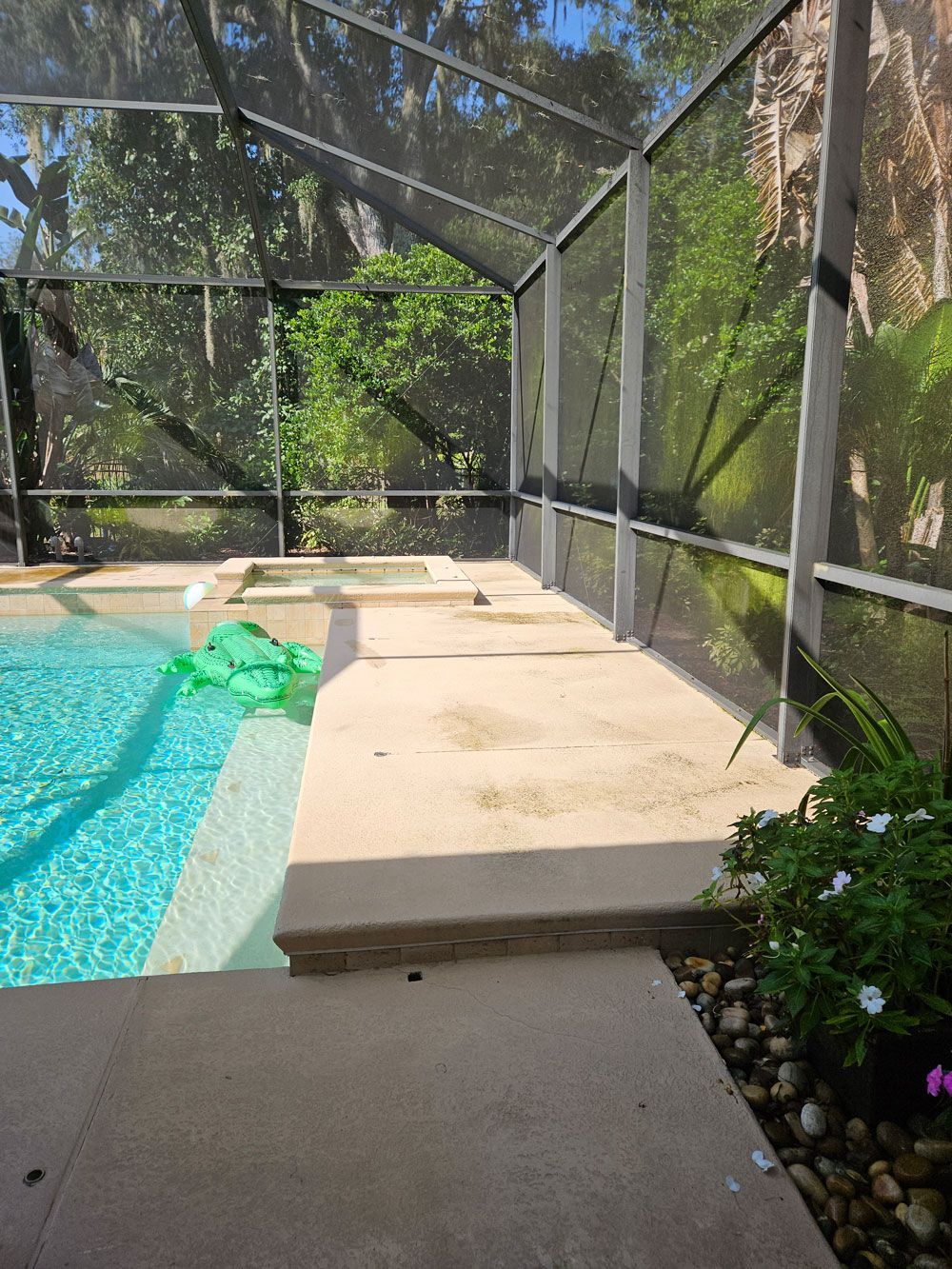
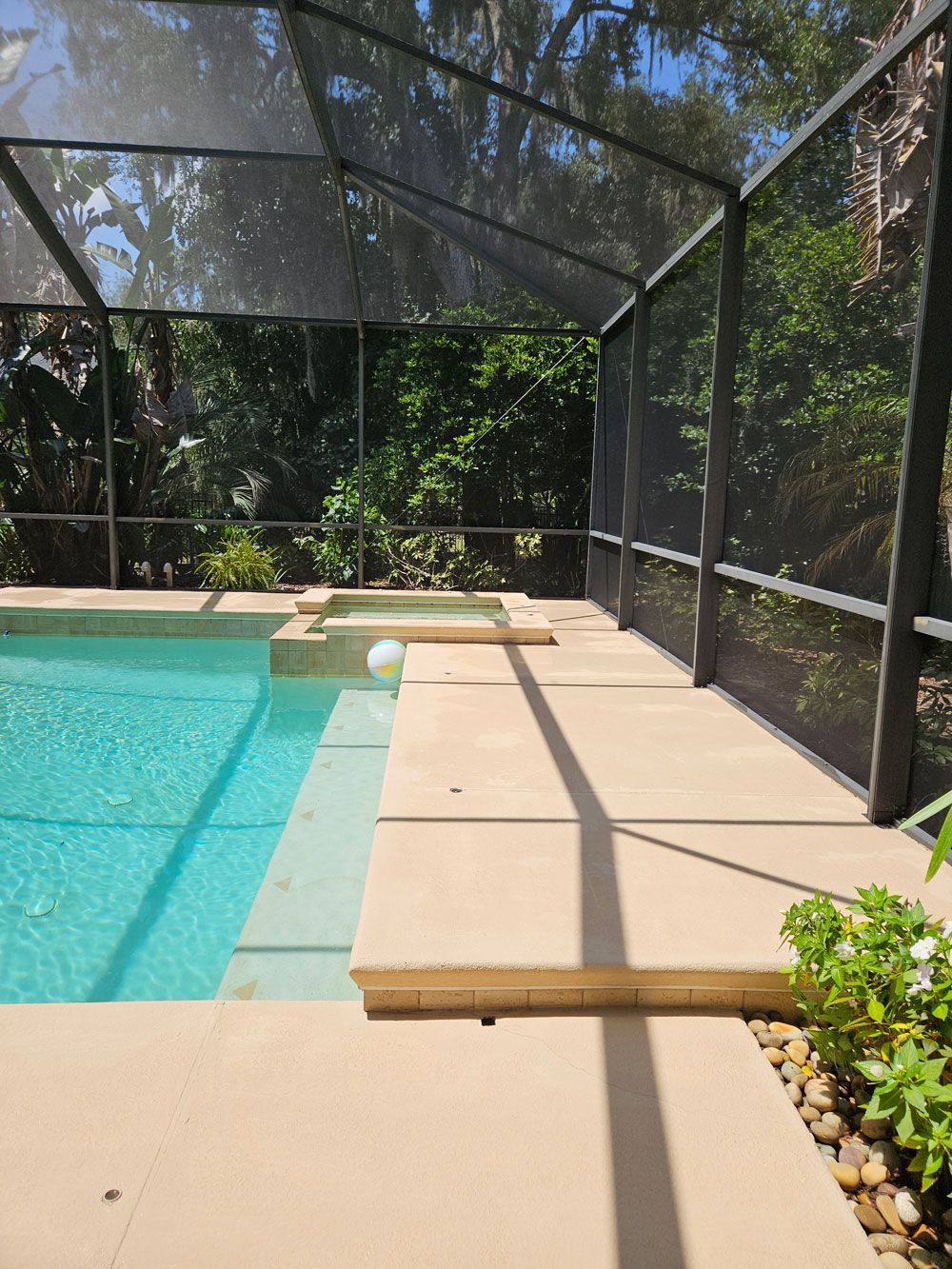
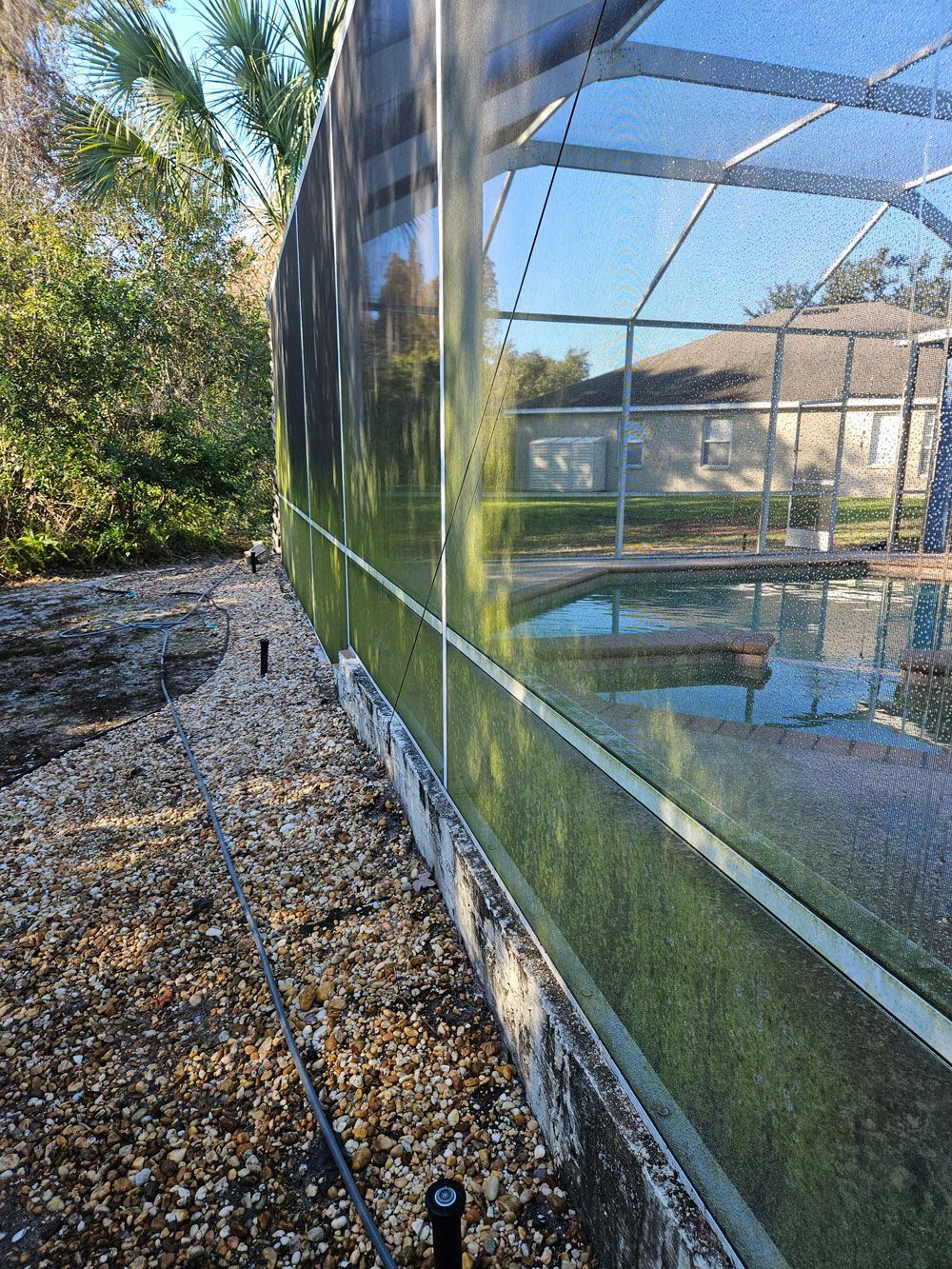
For example, we recently cleaned a pool cage that had last been cleaned in April 2024. About half of the screens had developed algae, although only a couple had heavy buildup. The job took a little longer than an average cleaning, but it wasn't particularly difficult.
The situation changes when a cage goes four or five years or longer without cleaning.
At that point, algae can become much more established. We may need to use smaller overlap patterns, slightly more pressure, and stronger cleaning solutions to remove the buildup. Because of this, we also have to be more careful around plants and screens, which means stopping to rinse landscaping more frequently.
That additional care makes heavily neglected cages take longer to clean and can increase the potential for damage to painted finishes, screens, or nearby landscaping.
How Algae Progresses Over Time
There isn't a precise timetable because environmental conditions make a big difference, but we've noticed a general progression on pool cages that aren't regularly maintained.
Light green algae: Often begins becoming noticeable after one to two years.
Heavier green algae: More commonly develops after two to four years.
Dark, black, or orange staining: Can develop after four to five years or more.
These timeframes can vary considerably. A heavily shaded cage with lots of moisture may develop algae much faster than a cage that receives full sun and has good airflow.
The important thing is not to treat these timeframes as a schedule. They are simply patterns we've observed over the years.
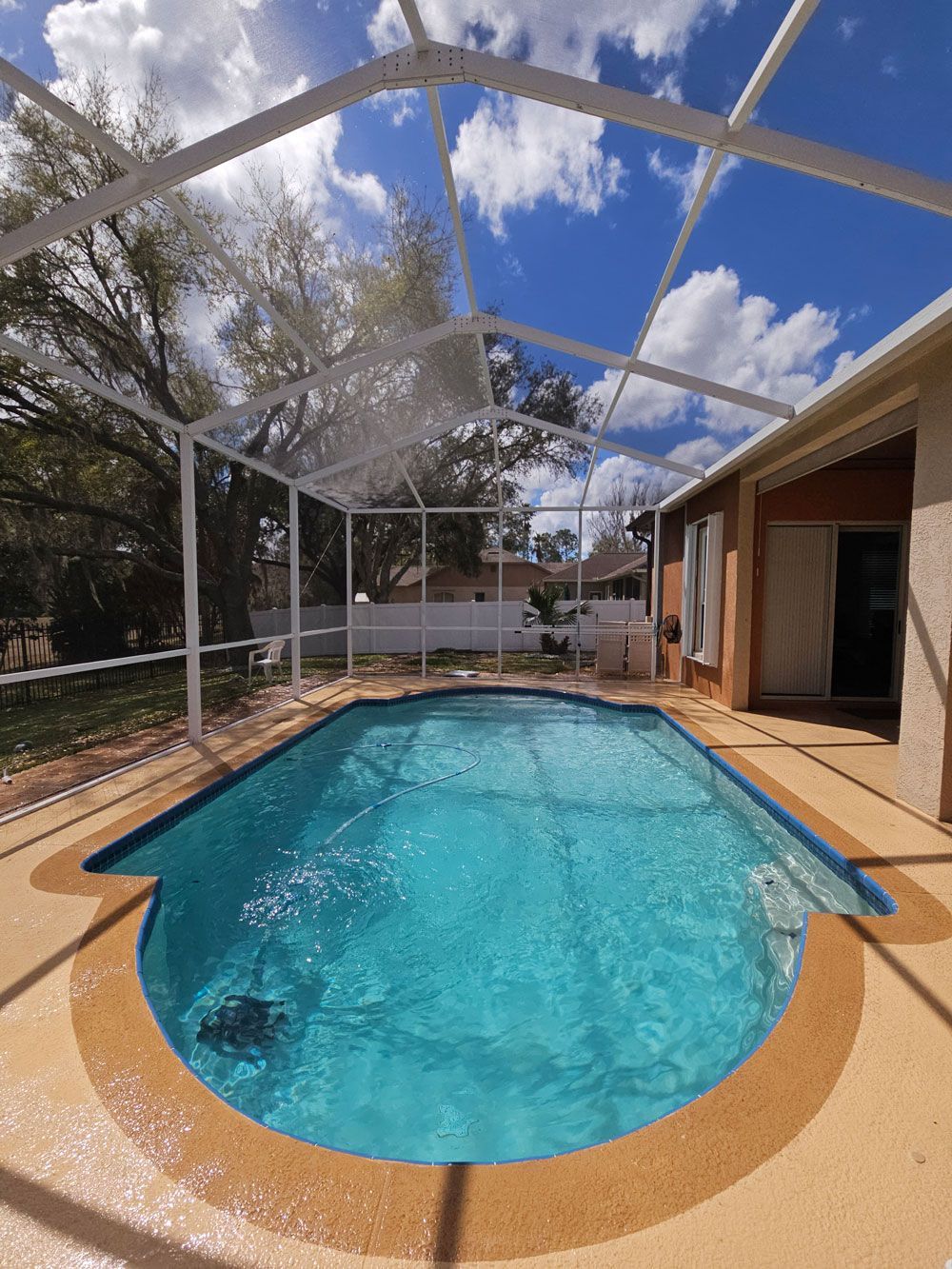
What We Clean During a Regular Pool Cage Cleaning
A pool cage can collect much more than algae.
Even a relatively clean enclosure gradually collects dust, pollen, dirt, and spider webs. Chair rails and other horizontal surfaces can collect debris and hold moisture after rain or morning dew.
That's why we don't simply focus on areas where green algae is visible.
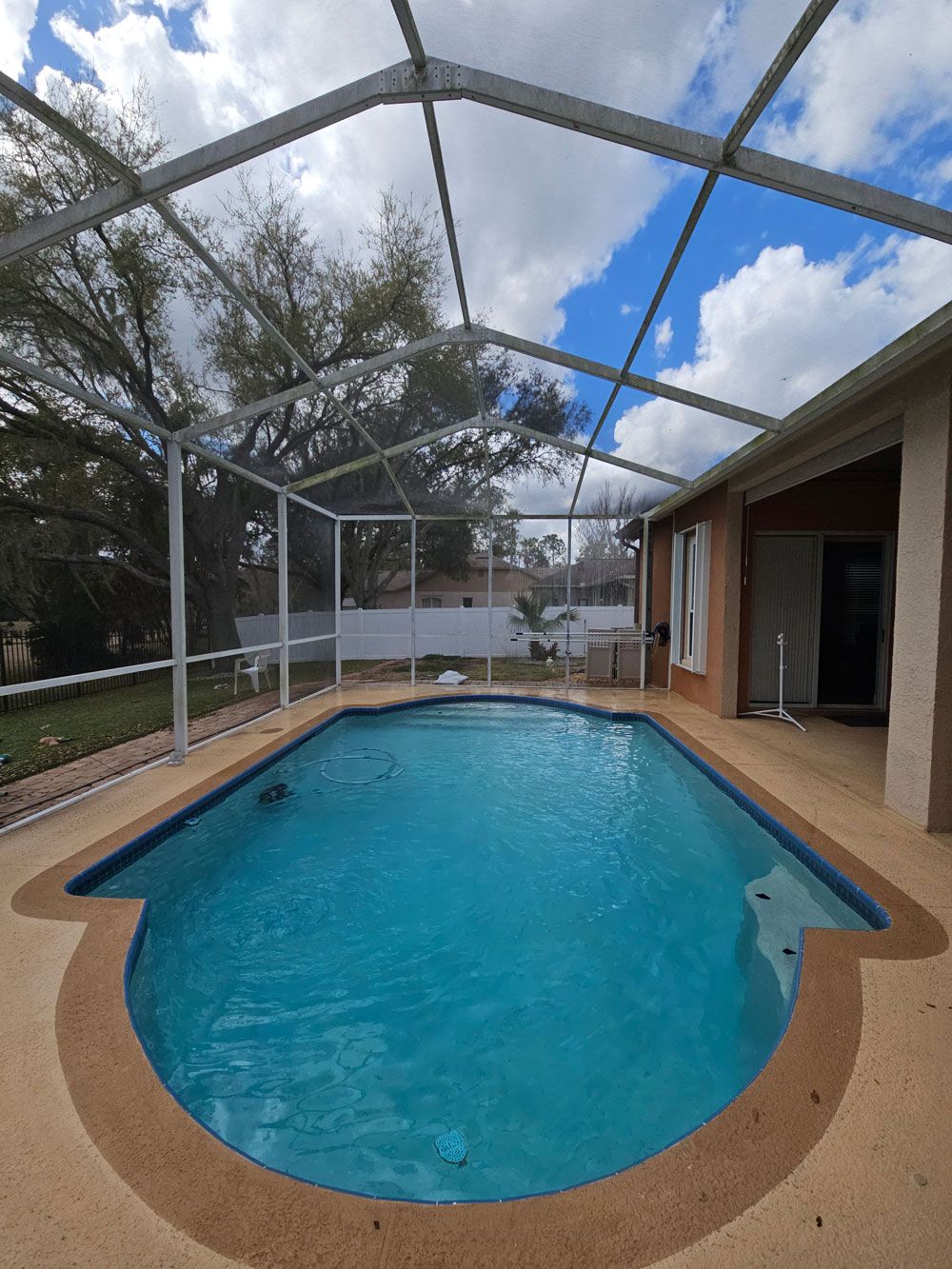
When we clean a pool cage, we work from top to bottom to clean the cage structure, screens, doors, kick plates, and pool deck. Our pool cage cleaning service is designed to clean the entire outdoor living area, not just the areas where algae is visible.
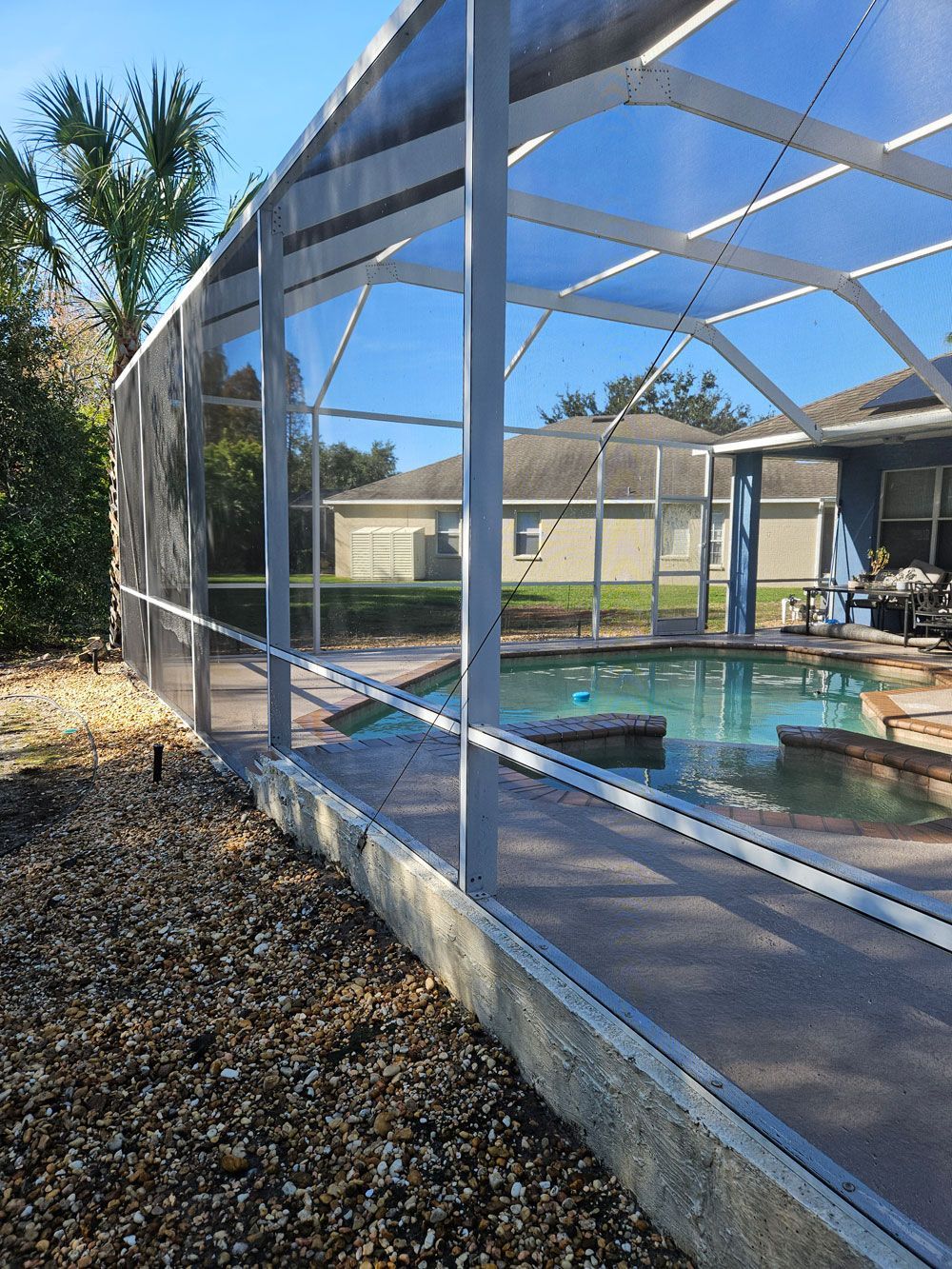
A cage that is mostly clean can be cleaned more efficiently because there is less heavy algae to remove. The result is a cleaner outdoor space without having to wait for years of buildup to accumulate.
What About Pool Cages That Are Cleaned More Often?
Some homeowners prefer to have their pool cage cleaned more than once a year, and that's perfectly reasonable.
If you have several family gatherings throughout the year, regularly entertain guests, or simply enjoy having the pool area looking spotless, you may prefer a more frequent cleaning schedule.
In these situations, the goal isn't necessarily to remove heavy algae. It's about maintaining the appearance of the entire outdoor living space.
A regularly maintained pool cage may have little visible algae but still benefit from removing the dust, pollen, dirt, and spider webs that accumulate over time.
The Biggest Problem Is Waiting Too Long
The one situation we'd recommend avoiding is letting algae progress to the point where it becomes dark black or orange.
At that stage, the buildup can become extremely difficult to remove completely without risking damage to the painted finish on the aluminum frame.
Cleaning before the algae becomes heavily established is much easier and generally allows us to work with less pressure and less aggressive cleaning methods.
If you're already seeing some green, that doesn't necessarily mean your pool cage is in bad shape. Early algae buildup is usually much easier to deal with than heavily established growth.
So, How Often Should You Clean Your Pool Cage?
For most Florida homeowners, we recommend having the pool cage cleaned once a year.
However, your ideal schedule may be different.
A pool cage in full sun with good airflow may stay cleaner for longer. A cage surrounded by mature trees, heavy shade, or frequent moisture may need attention sooner. And homeowners who use their pool area frequently or entertain often may simply prefer to have it cleaned more regularly.
The important thing is to find a schedule that works for your home and keeps the pool area looking the way you want it to.
If you're interested in why some pool cages develop algae faster than others, read our article Why Pool Cages Turn Green Faster Than Homeowners Expect.
If you're wondering what professional pool cage cleaning costs and what's included, our Pool Cage Cleaning Cost Guide breaks down typical pricing and cleaning times.
Final Thoughts
After more than a decade of cleaning pool cages in the Tampa Bay area, we've learned that there isn't one perfect cleaning schedule for everyone.
Some customers want their pool area spotless year-round. Others are comfortable waiting until they see some green. Both approaches are completely reasonable.
Our recommendation for most homeowners is to have the pool cage cleaned annually. Regular maintenance keeps algae and other buildup to a minimum, makes the cleaning process easier, and helps keep the entire outdoor living space looking its best throughout the year.
The best time to clean your pool cage isn't necessarily when it looks its worst. In many cases, keeping up with regular maintenance is what prevents it from getting to that point in the first place.
Share: