A Step by Step Look at a Professional Pool Cage Cleaning
A Step by Step Look at a Professional Pool Cage Cleaning
If you've never hired a professional to clean your pool cage, you may wonder what actually happens once the technician arrives.
Do they simply spray everything with a pressure washer?
Not quite.
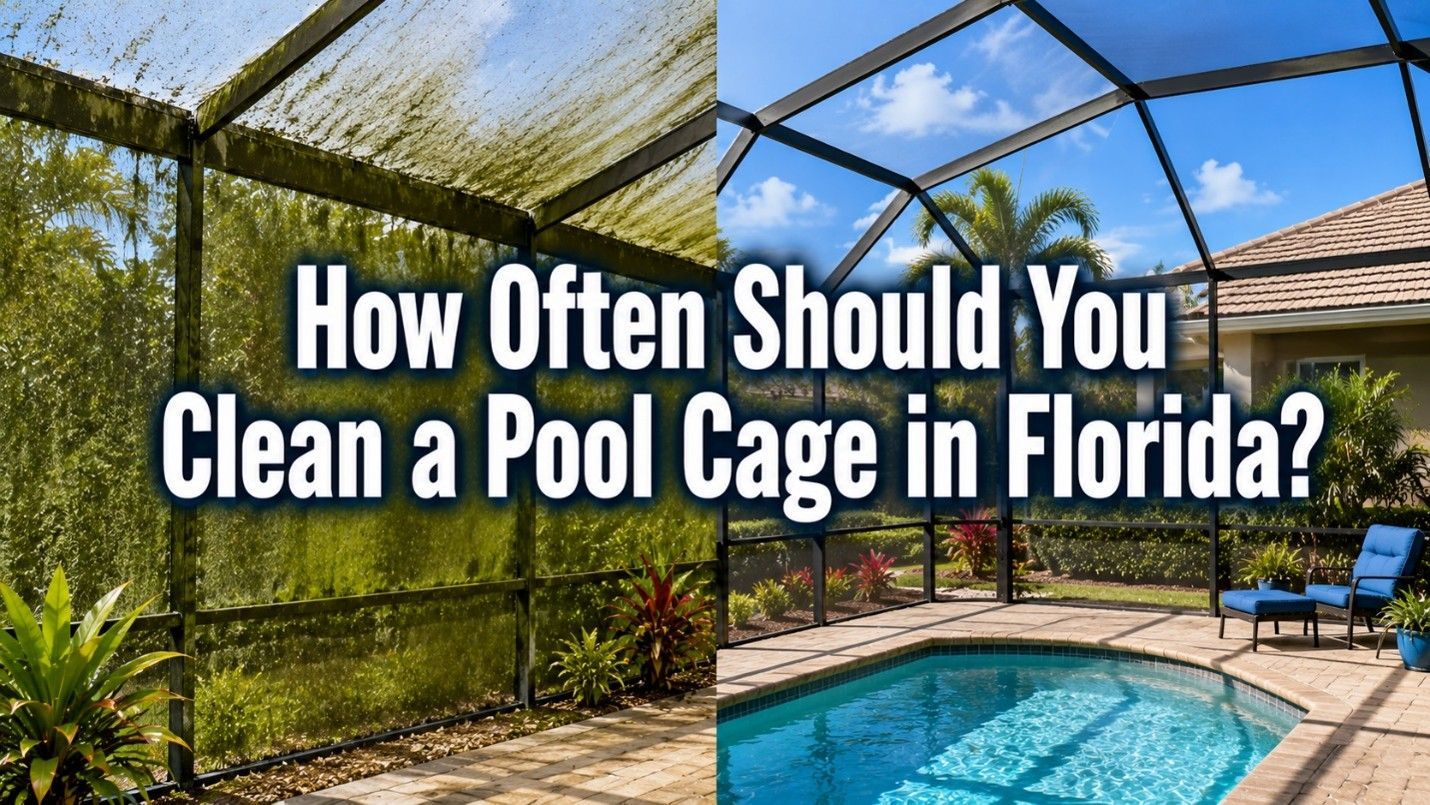
A thorough Pool Cage Pressure Washing service follows a specific process, and every step has a purpose. The order matters because it helps produce better results, protects your landscaping, and keeps the enclosure cleaner long after the job is finished.
Here's a behind-the-scenes look at how we clean pool cages throughout Riverview, Apollo Beach, and Sun City Center.
Before the Cleaning Begins
Every job starts with a quick walk around the pool enclosure.
Before unloading equipment, we inspect the cage, screens, and pool deck while checking for anything that may require special attention.
We also look for:
- open windows near the pool area
- delicate landscaping
- heavy algae buildup
- areas where debris has collected
Before we begin, we ask homeowners to remove smaller personal items such as:
- potted plants
- toys
- garden hoses
- lightweight patio chairs
Larger items like grills, tables, and deck boxes can usually remain in place. If something is too heavy or difficult to move safely, we'll simply work around it. We never want homeowners to risk an injury trying to prepare for the cleaning.
Protecting Your Landscaping
One of the questions we hear most often is: "Will the cleaning solution hurt my plants?"
Nearby landscaping receives plenty of fresh water throughout the cleaning process.
Rather than spraying the cage and walking away, we continually rinse surrounding plants to dilute the cleaning solution and minimize stress.
Most plants tolerate the process very well.
Some plants, especially hibiscus, are much more sensitive. When we see those, we let homeowners know ahead of time and take extra precautions. Even then, it's possible for some leaves to drop after cleaning. Fortunately, healthy hibiscus plants typically recover with new growth over the following weeks.
Landscaping has a much bigger impact on exterior cleaning than many homeowners realize. Mulch, irrigation, shrubs, and tree placement can all affect how quickly algae and dirt return. We'll take a closer look at that in our blog "What Your Landscaping Might Be Doing to Your Home."
Why We Always Start on the Outside
One question homeowners rarely ask is why we clean the outside of the enclosure first.
The answer has nothing to do with convenience.
It's actually about keeping the inside cleaner.
Before entering the enclosure, we remove as much debris as possible from the exterior of the cage and screens.
That includes:
- spider webs
- spider egg sacs
- leaves
- pine straw
- flower buds
- Spanish moss
- small sticks
If those materials are pushed toward the inside during cleaning, they can become wedged into corners or stick to the screens, making them much harder to remove.
Starting on the outside helps prevent that from happening.
One Side at a Time
Florida's heat doesn't leave much room for mistakes.
Rather than applying cleaning solution to the entire enclosure at once, we work one complete side at a time.
First, we apply the cleaning solution to one entire side of the cage and screens.
Then we clean each panel from the top down before moving to the next side.
Once that side is complete, we move to the next side of the enclosure, apply the cleaning solution to that entire side, and repeat the process until every exterior section has been cleaned.
Working this way prevents the cleaning solution from drying too quickly while allowing us to thoroughly clean every panel.
If we encounter unusually heavy algae buildup, we may apply a second treatment before washing that section again.

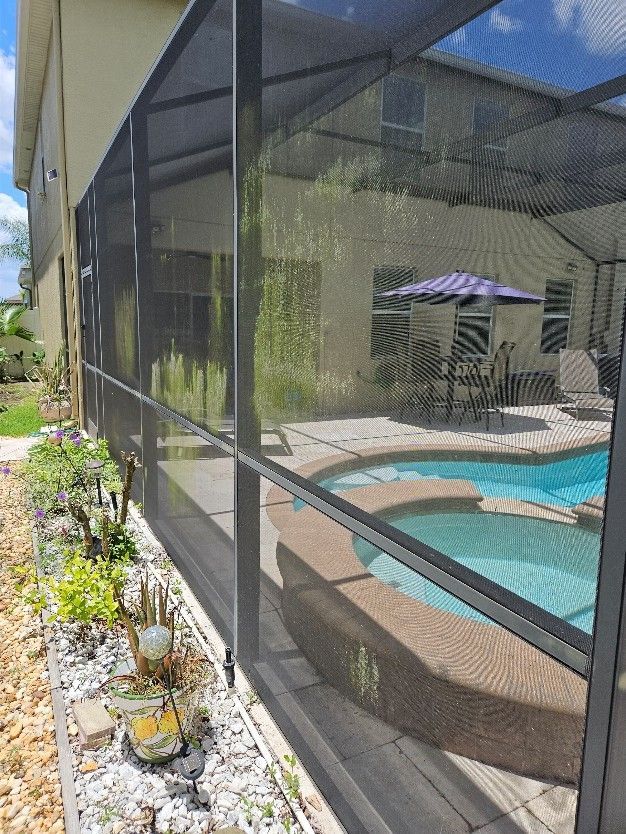
Clean Screens Mean a Cleaner Pool Deck
One of the biggest misconceptions about pool cage cleaning is that the screens don't matter very much.
In reality, they're one of the most important parts of the entire job.
Dust, pollen, and organic debris collect on the upper screens throughout the year.
Every time it rains, those contaminants wash down onto the pool deck.
That's why we spend just as much time cleaning the upper screens as we do the deck itself.
Clean screens help keep the pool deck cleaner long after the job is finished. If you've ever wondered why some enclosures seem to look dirty again sooner than others, we cover the biggest causes in our blog, "Why Does My Pool Cage Look Dirty Again So Quickly?"
They're also one of the biggest differences homeowners notice afterward.
We hear it all the time: "I didn't realize the screens were that dirty."
Once they're properly cleaned, they almost disappear into the background, making the enclosure feel brighter and the view much clearer.
It's one of the biggest benefits homeowners notice after a complete Screen and Lanai Cleaning, where both sides of the screens are thoroughly cleaned whenever they're accessible.
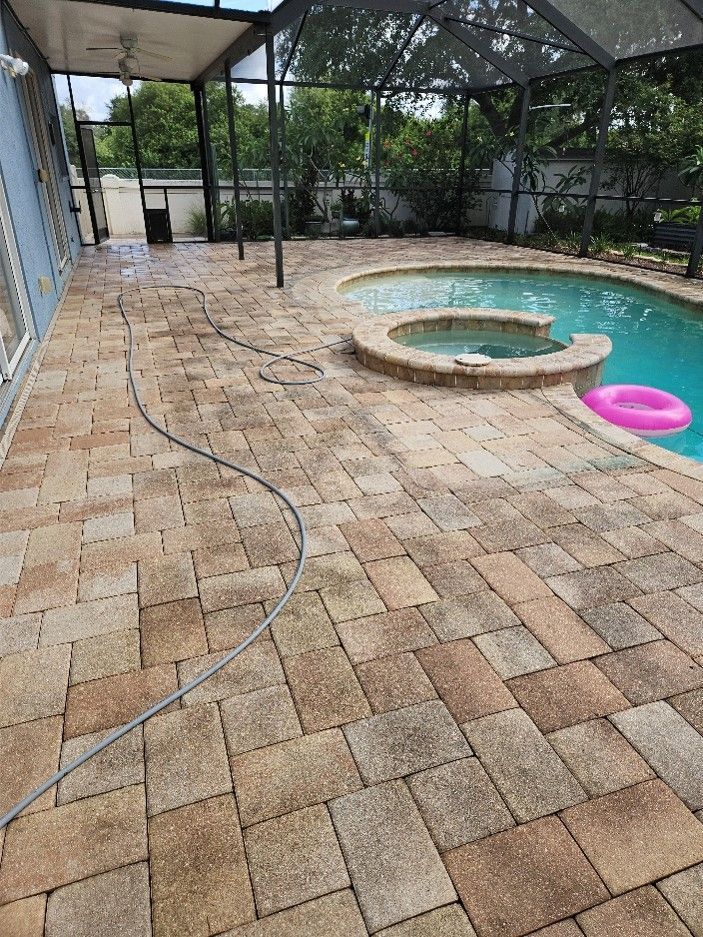
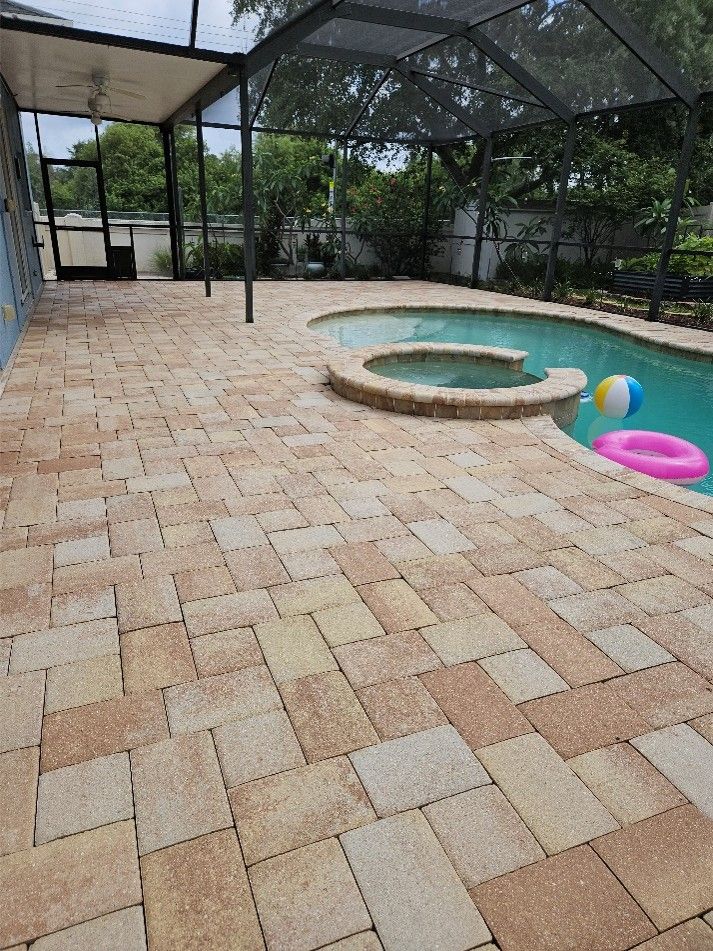
Cleaning the Pool Deck
Once the upper structure has been cleaned, it's time for the pool deck.
We begin by applying a light cleaning solution to loosen algae, dirt, and organic buildup.
The cleaning method depends on the surface. Whether the deck is painted concrete, pavers, natural stone, or another material, our
Pool Cage Pressure Washing service is designed to safely clean both the enclosure and the surrounding deck without charging extra simply because of the deck material.
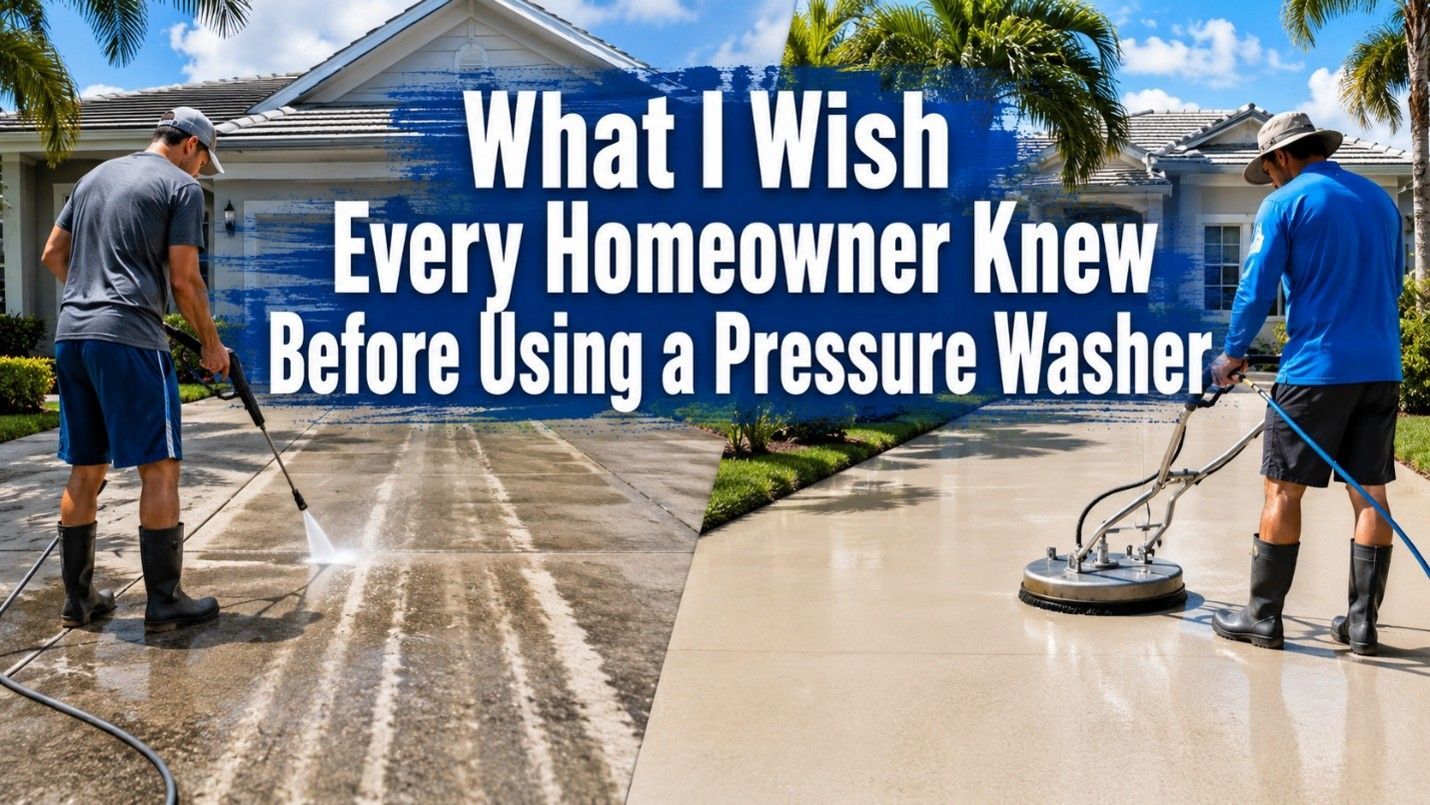
Natural stone and paver decks are typically cleaned with a surface cleaner, while painted decks are cleaned by hand using a pressure washing gun to protect the finish.
We always begin near the edge of the pool and work outward toward the cage.
This helps minimize the amount of dirt that could accidentally end up in the pool.
After the main portion of the deck is complete, we clean the edges along the cage by hand.
These areas collect the most dirt and require more detailed attention.
Cleaning them last also makes sense because this step throws dirt back onto the lower cage panels.
Finishing the Lower Cage
With the deck complete, we return to the lower sections of the enclosure.
Before washing, we apply another light coat of cleaning solution to the lower cage, screens, and the underside of the chair rail.
This is one of the most visible parts of the enclosure when you're relaxing in the pool.
If that area isn't cleaned properly, homeowners often notice it the first time they look up from the water.
Just like the upper sections, we clean one panel at a time until every accessible part of the enclosure has been completed.
The Final Details Matter
The last part of the job often receives the least attention from homeowners, but it's one of the most important.
After the cleaning is complete, we:
- neutralize nearby windows, soffits, grills, patio furniture, and other surrounding surfaces
- thoroughly rinse all nearby landscaping with fresh water
- flush French drains to help remove accumulated dirt and keep water flowing properly
- perform a final inspection to make sure nothing was missed
- remove any remaining debris from inside the enclosure before packing up
These finishing touches help leave the entire pool area looking clean, not just the cage itself.
What Happens After We Leave?
For the rest of the day, we recommend keeping pets off the freshly cleaned pool deck until everything has dried completely.
If patio furniture or other items were temporarily moved into the yard, it's best to wait until the surrounding ground is dry before placing them back inside the enclosure. This helps prevent mud or debris from being tracked across the freshly cleaned deck.
After that, the pool area is ready to enjoy.
If you're curious how long the results typically last and what factors cause algae to return sooner, be sure to read "Why Does My Pool Cage Look Dirty Again So Quickly?"
Final Thoughts
A professional pool cage cleaning involves much more than simply spraying water.
Every step is performed in a specific order to improve the finished result, protect your landscaping, and leave your pool enclosure looking its best.
If you're in Riverview, Apollo Beach, or Sun City Center and have questions about the process, would like an honest recommendation, or want to learn more about our
Pool Cage Pressure Washing service, feel free to reach out anytime. We're always happy to explain how we clean and why each step matters.
Share: