Your Landscaping Might Be Making Your Home Dirtier
Your Landscaping Might Be Making Your Home Dirtier
Beautiful landscaping is one of the best ways to improve curb appeal.
Mature oak trees provide welcome shade during Florida summers. Palm trees give homes a tropical feel. Colorful shrubs and flower beds make a property feel finished and inviting.
After more than 13 years of cleaning homes throughout Riverview and South Hillsborough County, I've also learned something else.
Many of the landscaping choices that make a home look beautiful can unintentionally create exterior cleaning problems if they aren't maintained.
That doesn't mean you should avoid planting trees or shrubs.
It simply means understanding how today's landscaping decisions affect your home's maintenance over the next five or ten years.
Here are some of the most common things I notice while walking around a property.
1. Plants Too Close to the House
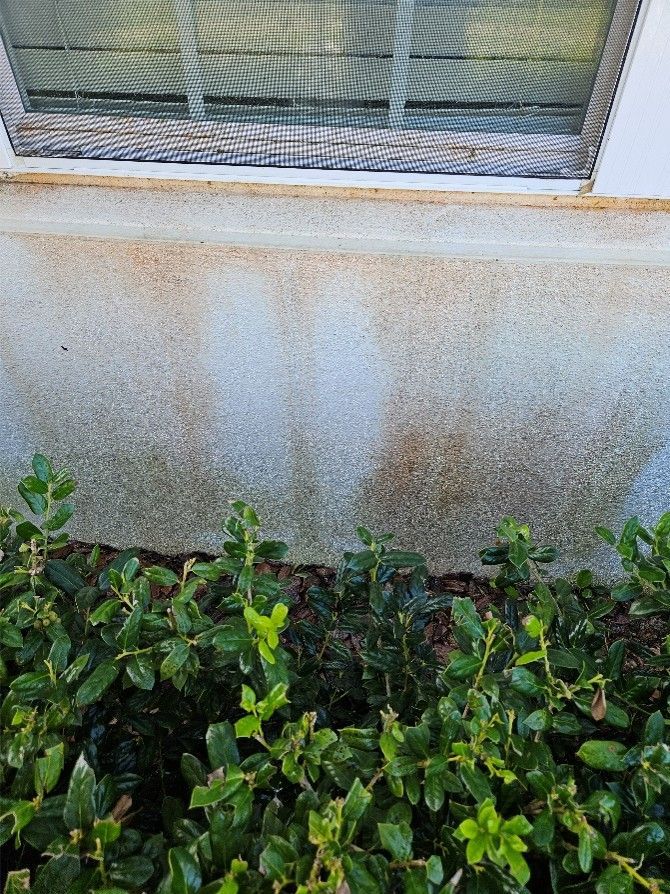
One of the first things I notice is how close shrubs are growing to the home's exterior.
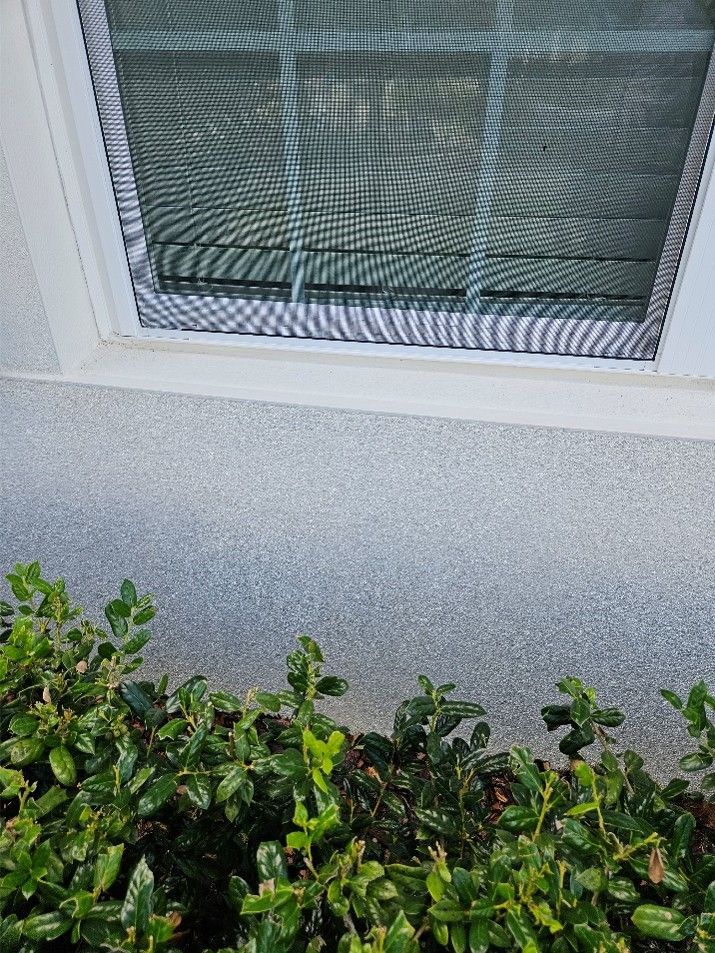
When bushes are kept trimmed away from the walls, allowing air to circulate, algae growth is usually minimal.
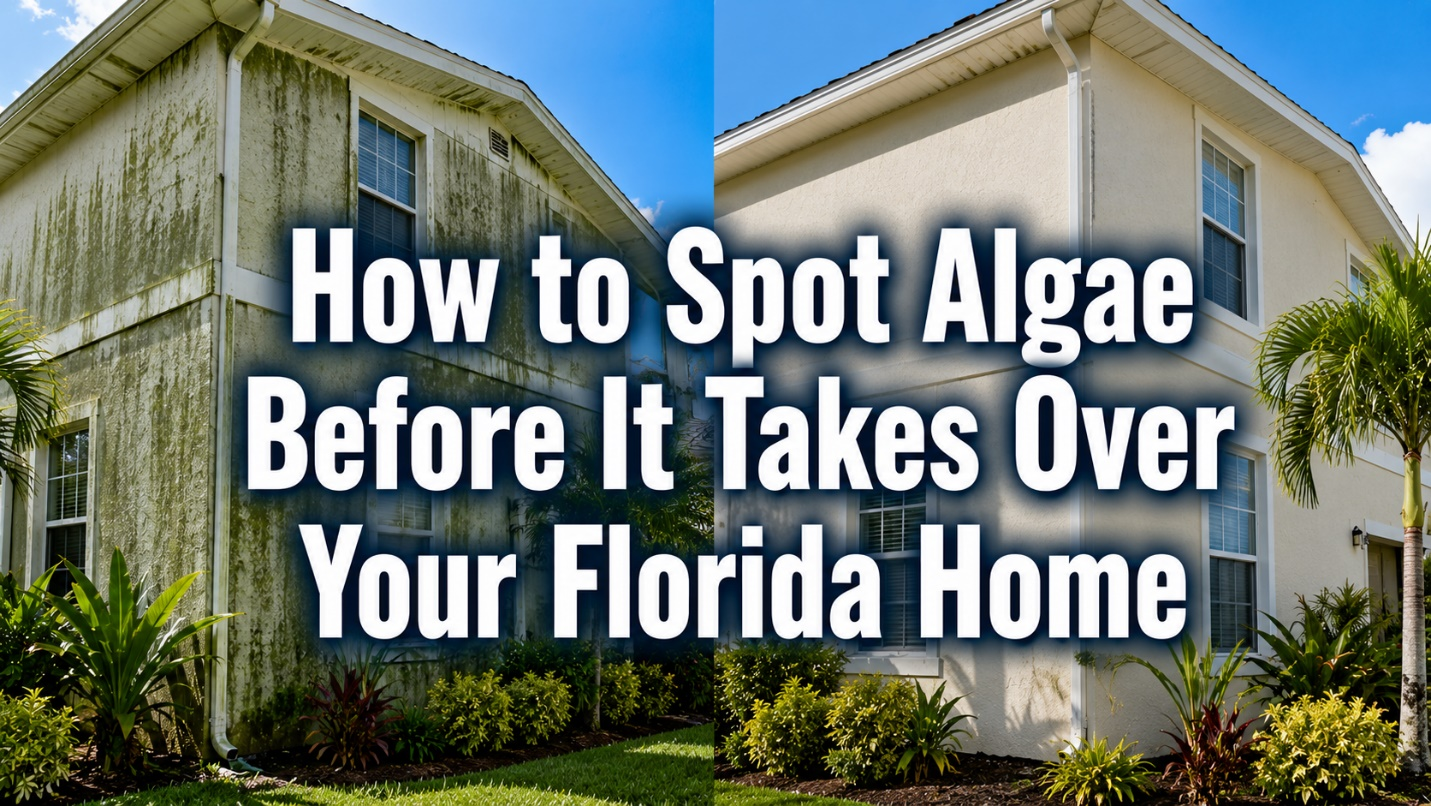
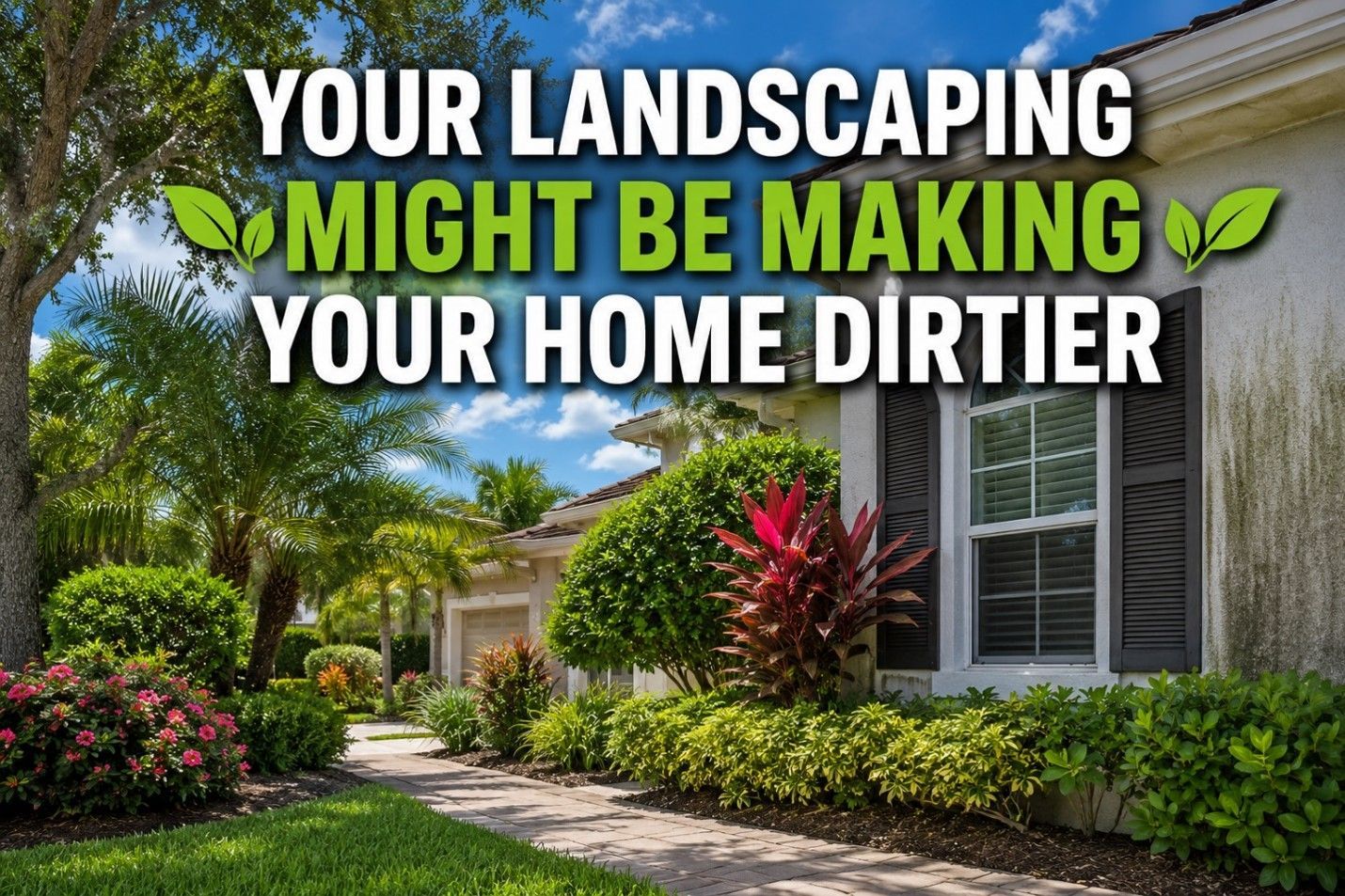
But when shrubs grow directly against the house, they trap moisture, reduce airflow, and block sunlight.
North facing walls are especially susceptible.
Even homes that are cleaned regularly will often develop algae behind dense landscaping because those areas rarely dry completely.
This is where our Home Pressure Washing service often makes the biggest difference.
Algae Doesn't Stay Green Forever
Many homeowners assume algae is simply green.
In reality, it develops in stages.
Fresh algae is usually green and relatively easy to remove when caught early.
As it ages, it becomes thicker and can develop a reddish orange color that's much more difficult to remove.
Eventually, the buildup becomes so dense that it blocks sunlight from reaching the paint underneath, causing uneven fading.
In rare situations where algae has been left untouched for years, it can bond so tightly to the paint that portions of the coating may come off during cleaning.
Fortunately, we rarely encounter that because most homeowners schedule cleaning long before it reaches that point.
2. Irrigation Can Create the Perfect Environment for Algae
Sprinkler systems are another thing I notice almost immediately.
The biggest problems aren't usually caused by the sprinklers themselves.
It's where they're spraying.
When irrigation constantly wets shaded walls, fences, or concrete, those surfaces stay damp much longer than they should.
One interesting thing I've observed is that clean surfaces don't immediately begin growing algae simply because they're getting wet.
But once algae becomes established, those same wet conditions allow it to spread surprisingly fast.
Sometimes adjusting a sprinkler head by just a few inches can significantly slow future algae growth.
3. Trees Can Be Tough on Roofs
I love mature trees.
They make neighborhoods throughout Riverview, Brandon, and Valrico feel established and beautiful.
But trees also create some of the biggest roof maintenance challenges we see.
Palm fronds and overhanging oak branches can rub against asphalt shingles during windy weather, gradually wearing away the protective surface.
Leaves, acorns, and other organic debris collect on the roof, trapping moisture and creating ideal conditions for algae growth.
These are just a few of the reasons we recommend routine Roof Cleaning, which also offers several long term benefits discussed in our blog, "Why Regular Roof Cleaning in Riverview, FL Extends Roof Life and Lowers Your Energy Bills."
Another situation I occasionally encounter involves narrow upright trees, similar to pencil cypress, planted directly beside the home.
They look like a great choice because they grow upward instead of outward.
The problem is they don't stop growing.
Over time, they can grow directly into the soffits, creating another maintenance issue that homeowners rarely anticipate.
Watch for Seasonal Staining
Spring creates another challenge.
Oak leaves, acorns, and other organic debris often leave tannin stains on driveways, sidewalks, patios, and even roofs if they're allowed to sit too long.
Most stains can be removed during routine cleaning.
Tree sap, however, is a different story.
It often requires specialized chemicals and hot water to remove effectively.
Palm seed pods are another difficult stain.
Once they discolor concrete, they're among the most stubborn stains we encounter.
The best solution is simply removing them regularly before they have a chance to stain.
4. Landscape Before or After Pressure Washing?
If you're planning to install new flower beds or fresh mulch, here's one recommendation I give homeowners all the time.
Pressure wash first.
Cleaning after landscaping often blows mulch out of place, shifts decorative stone, and can even lift poorly secured landscape fabric.
Not only does that create more work, but it also increases the chance of accidentally disturbing newly planted flowers.
I usually recommend scheduling the cleaning first, then installing the landscaping afterward.
If a small touch up is needed after everything is finished, we're happy to use our 30 day guarantee to return for a quick rinse rather than performing another heavy cleaning around your new plants.
5. Bigger Plants Need Bigger Maintenance Plans
Large plants around a pool cage aren't a bad idea.
In fact, they create beautiful privacy and give many backyards the tropical appearance homeowners are looking for.
The key is understanding that larger plants require regular pruning.
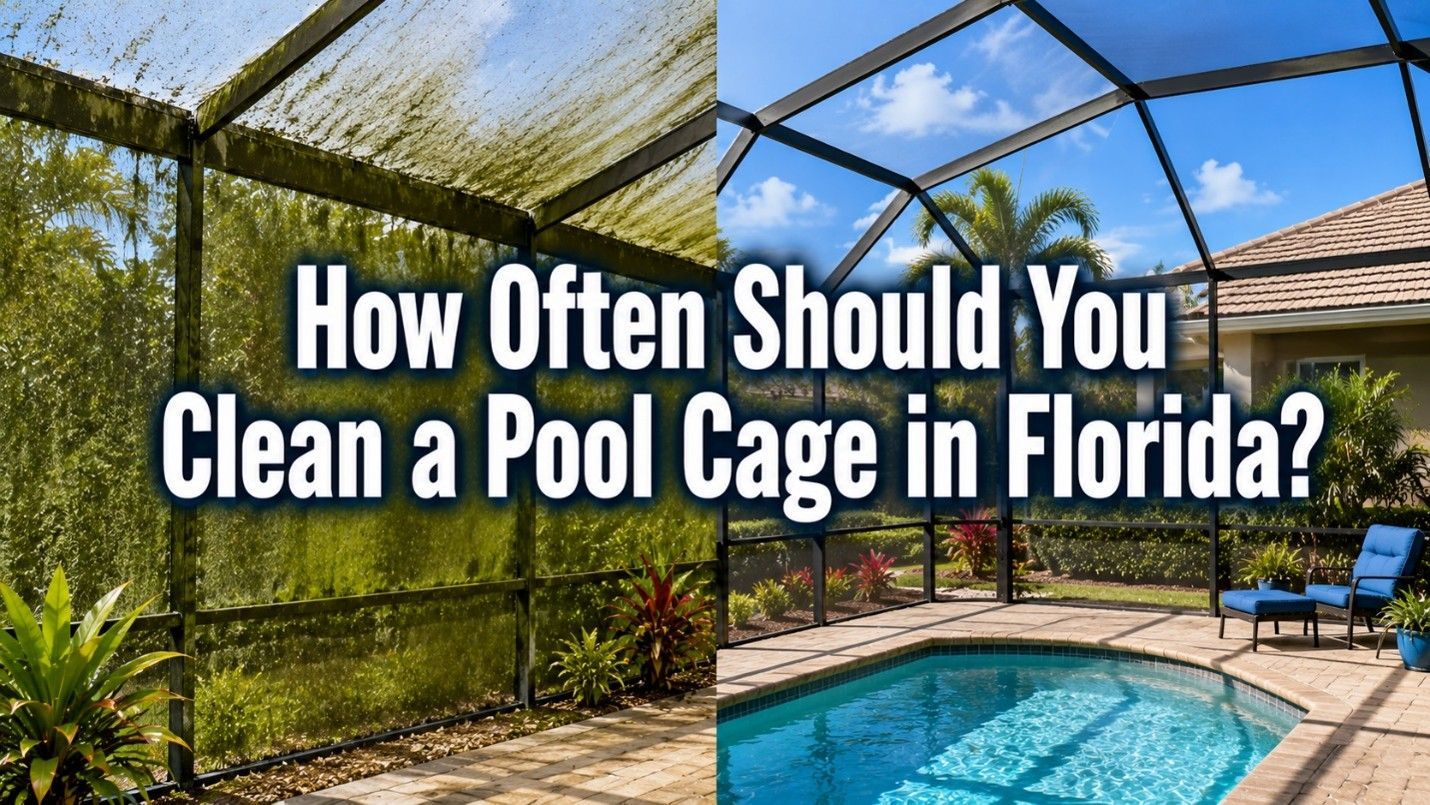
Without it, branches eventually grow against the screens, making the outside of the enclosure difficult or even impossible to clean.
During storms, those same branches can rub against the screens or become caught in them, increasing the chance of tears.
That's one reason landscaping can affect how long a pool enclosure stays looking its best, something we discuss further in "Why Does My Pool Cage Look Dirty Again So Quickly?"
Inside the enclosure, I often see the same thing happen with in ground planters.
Bird of Paradise and date palms make incredible statement plants when they're young.
Over time, though, they continue growing until they're pushing directly against the screens.
They may look fantastic for the first few years, but eventually they require significant pruning or replacement to prevent damage to the enclosure.
Smaller plants like liriope, crotons, holly, boxwoods, and shefflera are much easier to maintain because they stay compact and can usually be trimmed away from the screens.
If privacy is the goal, larger plants can absolutely accomplish that. They simply need routine trimming so they have room to move naturally during windy weather without rubbing against the enclosure.
This also makes future Pool Cage Pressure Washing much easier and more effective because both sides of the screens remain accessible.
Don't Forget the Bottom of the Screens
One surprisingly common source of screen damage isn't a tree.
It's a weed eater.
Without some type of border around the enclosure, homeowners and lawn crews often trim grass right against the bottom of the screens.
Over time, string trimmers can easily tear the screen mesh.
Once there's a hole, insects, rodents, squirrels, and other pests have an easy way inside.
Installing paver edging or flat border stones around the enclosure creates a clean mowing edge while helping protect the screens from accidental damage.
6. Landscaping Affects Vinyl Fences Too
Landscaping doesn't just affect your home and pool cage.
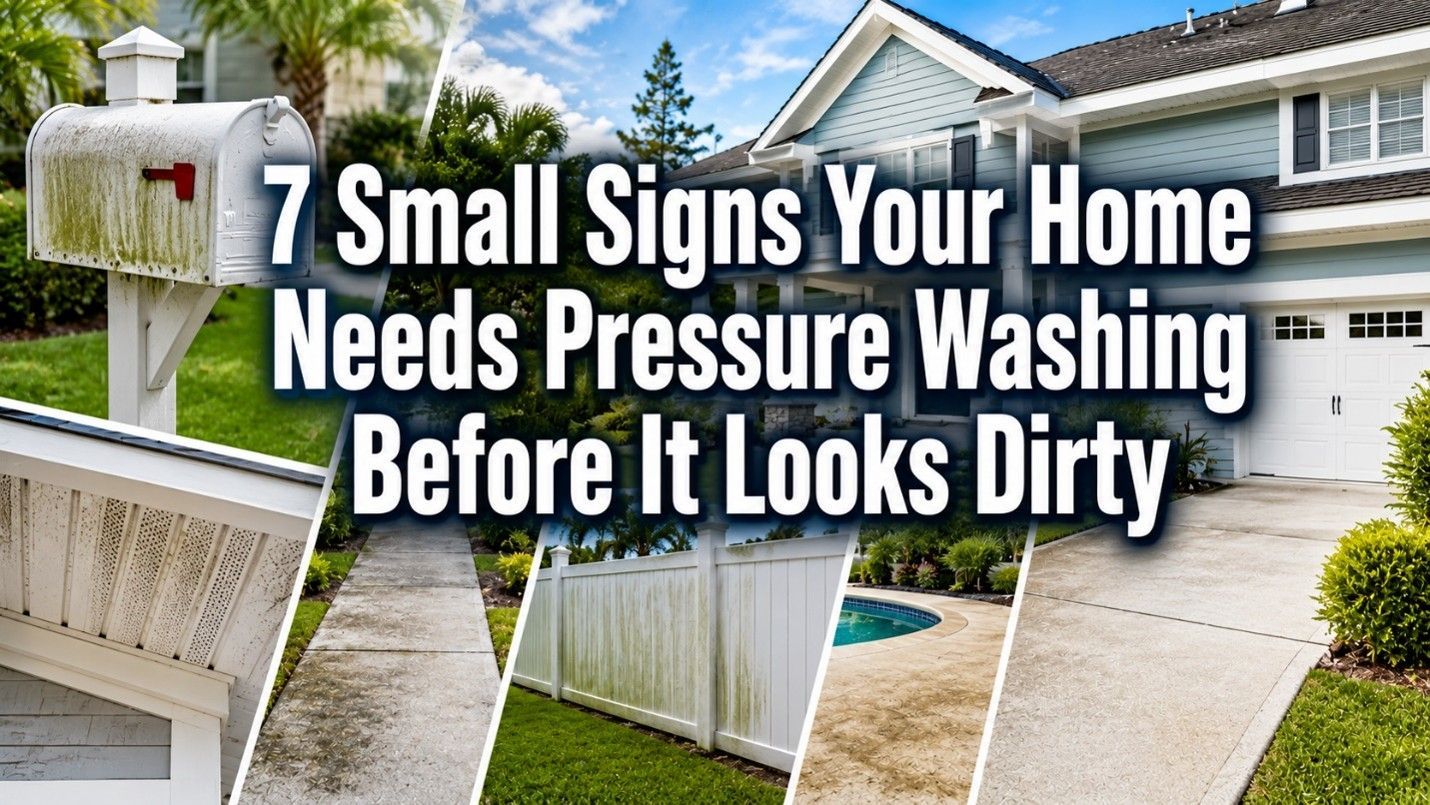
It also changes how quickly vinyl fences develop algae.
Shrubs, palm clusters, crepe myrtles, and other ornamental plants create additional shade that keeps fence panels damp long after the rest of the yard has dried.
Those shaded panels often become the first places where algae begins growing.
If left alone too long, the same thick orange algae that develops on siding can begin forming on vinyl fencing as well.
Working around these areas also requires extra care because stronger cleaning solutions must be balanced with protecting nearby plants.
It's one reason some homeowners choose to clean only the affected sections of their fence, which we explain in "Should I Clean My Entire Fence or Just the Green Side?"
The Biggest Mistake I See
If I had to choose one thing homeowners underestimate, it would be how much landscaping changes exterior maintenance.
Beautiful landscaping isn't the problem.
Waiting too long to maintain the home around it is.
Homes with mature trees, dense landscaping, and irrigation systems usually benefit from annual exterior cleaning.
Properties with less shade and little irrigation can often go longer between cleanings.
The longer algae is allowed to grow, the stronger the cleaning solutions often need to be to remove it.
Using stronger products doesn't automatically damage plants, but it does require more care and increases the importance of thoroughly protecting the surrounding landscaping during the cleaning process.
Final Thoughts
One thing I've learned after cleaning thousands of homes throughout Riverview, Brandon, and Valrico is that beautiful landscaping and a clean home go hand in hand.
Trees, shrubs, flower beds, and tropical plants all add tremendous curb appeal.
They simply need to be maintained along with the rest of the property.
A little pruning, thoughtful irrigation, and routine exterior cleaning can prevent many of the issues that become much harder to correct a few years later.
If you're in Riverview, Brandon, or Valrico and have questions about how your landscaping may be affecting your home's exterior, or you'd like an honest recommendation about Home Pressure Washing, Roof Cleaning, or Pool Cage Pressure Washing, we're always happy to help.
Share: