How Long Does Driveway Pressure Washing Last in Florida?
How Long Does Driveway Pressure Washing Last in Florida?
One of the first questions homeowners ask after I finish cleaning their driveway is:
"How long is it going to stay this clean?"
It's a fair question, especially here in Florida where heat, humidity, afternoon rain, and algae all seem determined to reclaim every clean surface.
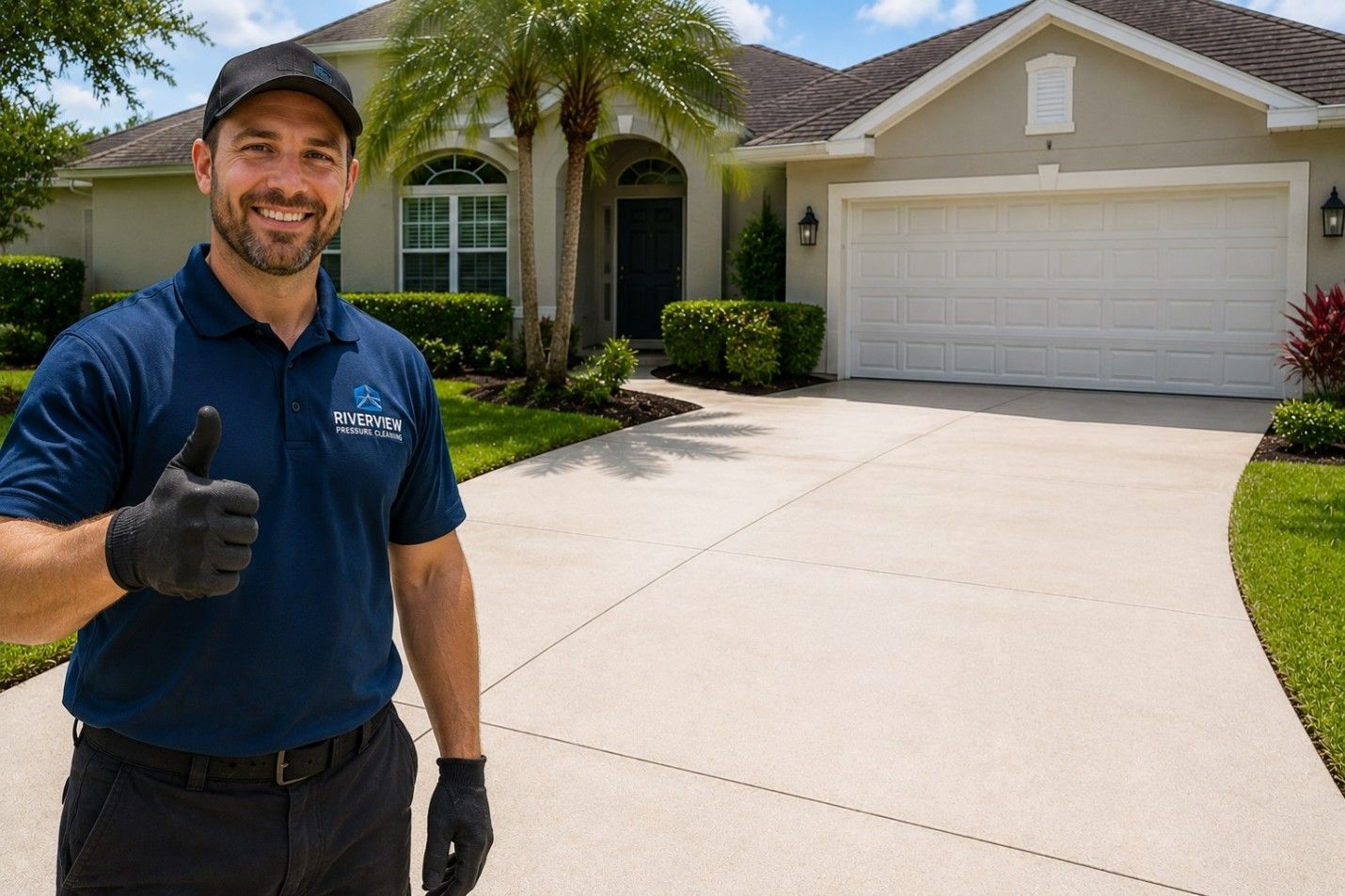
The short answer is: Most professionally cleaned driveways in Florida stay noticeably cleaner for about one to two years.
That doesn't mean every driveway will look exactly the same after 12 months, though. I've cleaned neighboring homes where one driveway still looked bright and clean well over a year later, while the house across the street was already showing algae again.
The difference usually isn't the concrete or the quality of the cleaning.
It's the environment surrounding the driveway.
How Long Should Your Driveway Stay Clean?
After more than 13 years of cleaning driveways throughout Riverview and South Hillsborough County, I've found that most homes fall into one of these categories.
| Property Conditions | Typical Time Before Algae Begins Returning |
|---|---|
| Mature trees with frequent irrigation | 6–12 months |
| Older neighborhoods with moderate shade | Around 1 year |
| Average Florida home | 1–2 years |
| Full sun with little or no irrigation | 18–24 months |
| Nearly ideal conditions | Occasionally 3–4 years |
These aren't guarantees. They're simply the patterns I've consistently observed after cleaning thousands of driveways.
What I Look for Before I Even Start Cleaning
Every estimate starts the same way.
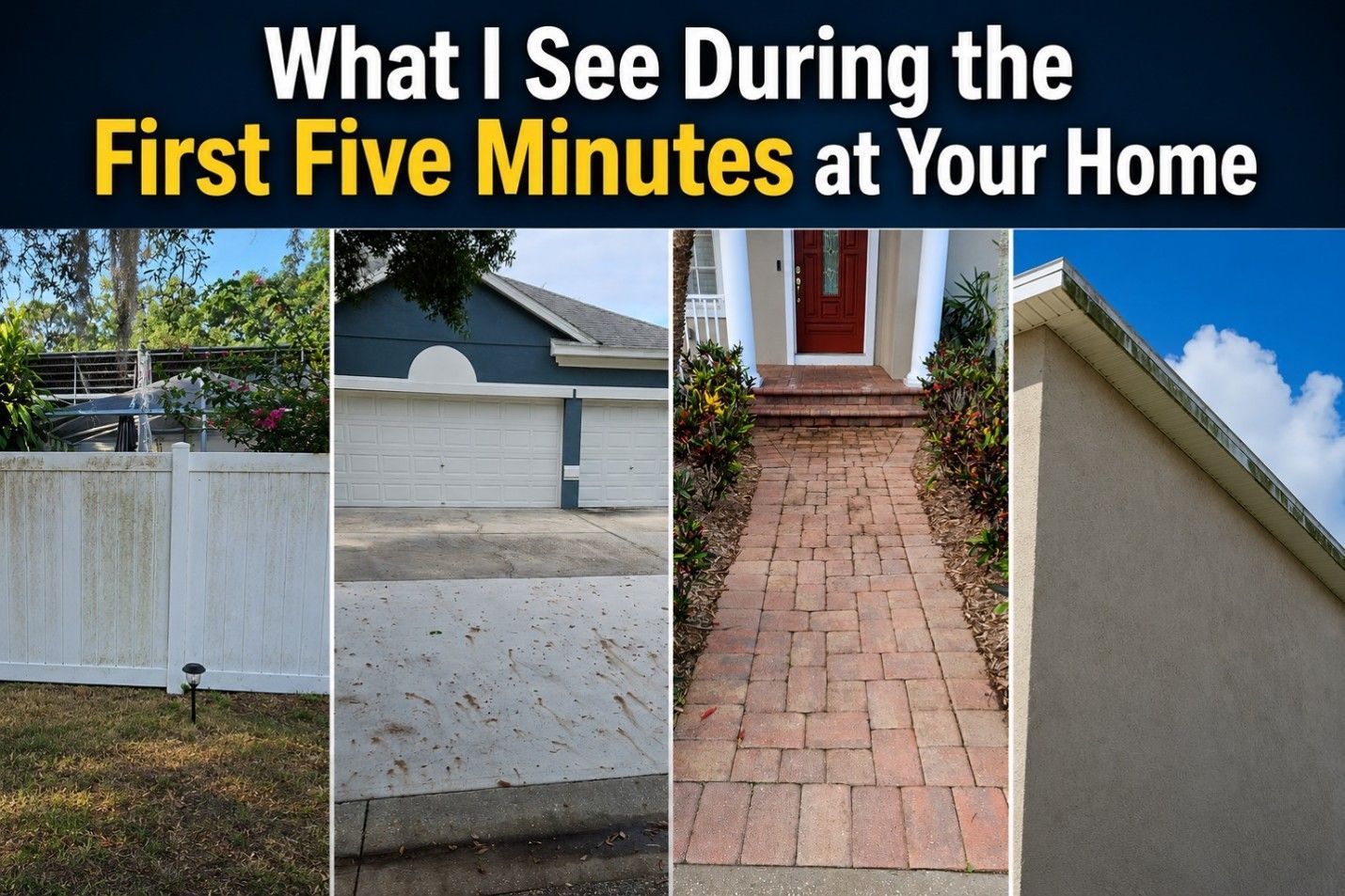
Before I unload my equipment, I'm already looking for clues that tell me how long your driveway is likely to stay clean after I'm finished.
The first thing I notice is tree shade.
The second is irrigation.
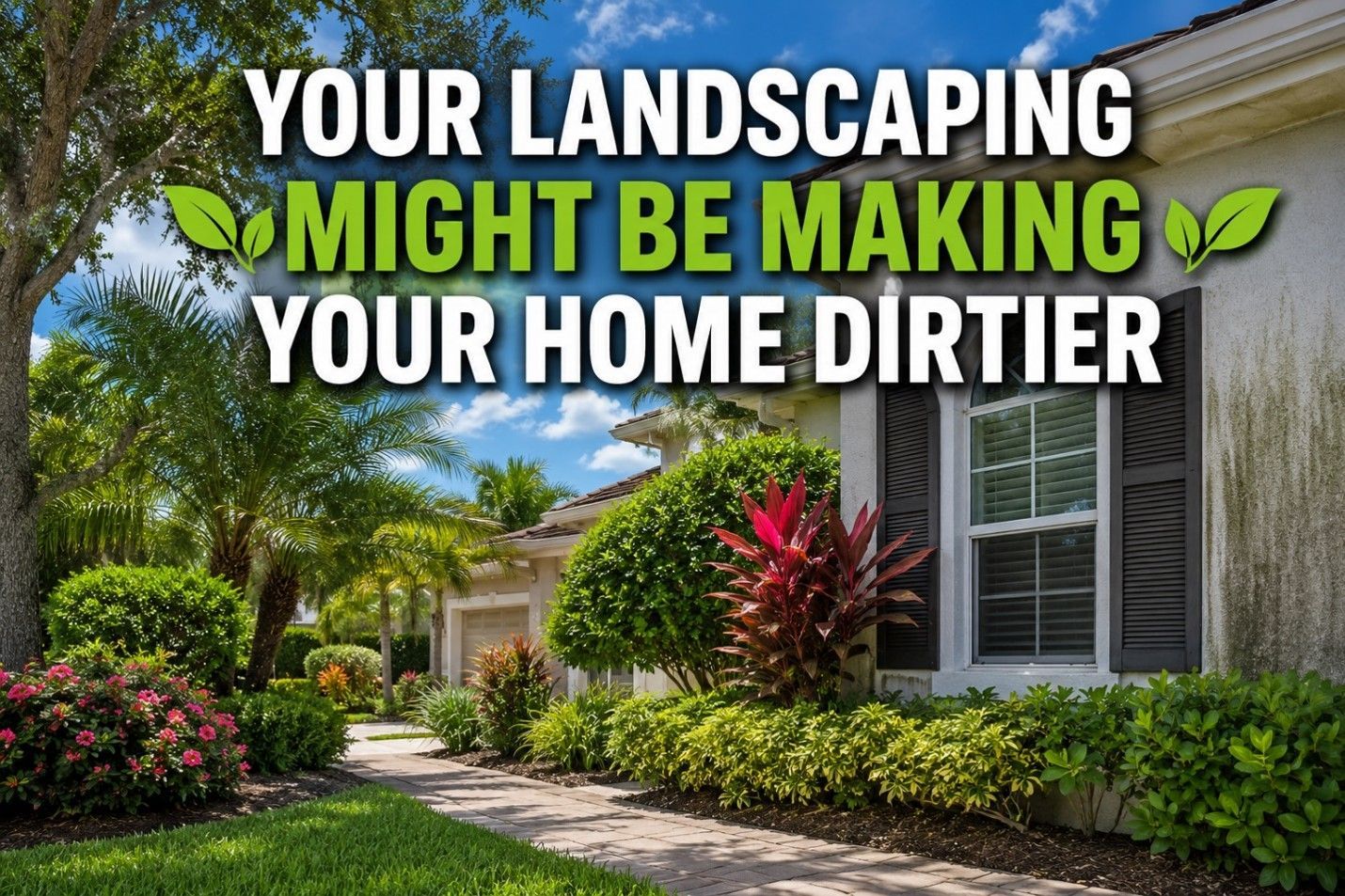
Those two factors have a bigger impact on algae growth than almost anything else I see.
If your driveway spends much of the day in the shade or your sprinkler system regularly wets the concrete, I'll usually let you know that algae will probably return sooner than it would on a sunny property.
If your home has full sun, excellent drainage, and little or no irrigation, I'll explain that your driveway could easily stay looking good for 18 to 24 months, although I still recommend cleaning it annually to keep it looking its best.
If you're interested in learning more about why neighboring homes can have completely different results, check out our article on Why Some Driveways Stay Cleaner Longer Than Others.
Why I Still Recommend Annual Cleaning
One thing surprises homeowners when I tell them this.
Even if I believe their driveway could stay clean for nearly two years, I still recommend annual driveway pressure washing.
Why?
Because it's much easier to maintain a clean driveway than restore one that's been neglected for several years.
Cleaning once a year keeps algae and organic buildup from becoming deeply established. Your driveway continues looking bright, your curb appeal stays consistent, and the cleaning itself remains straightforward.
Waiting until the driveway is heavily stained often means homeowners spend years looking at dirty concrete simply because it "isn't bad enough yet."
My Own Driveway Is No Different
People sometimes assume I clean my own driveway every few months.
I don't.
My driveway has several advantages.
- Full sun throughout the day
- No irrigation spraying onto the concrete
- Excellent drainage with very little standing water
Because of those conditions, I usually clean my own driveway about every 18 months.
Ironically, I'm just like most homeowners.
I don't notice the gradual change from week to week.
One day I simply realize it doesn't have that bright, freshly cleaned appearance anymore, and I know it's time to pressure wash.
Fortunately, I never let heavy algae or years of dirt accumulate, so restoring it is always quick and easy.
Why Professional Results Last Longer Than DIY Cleaning
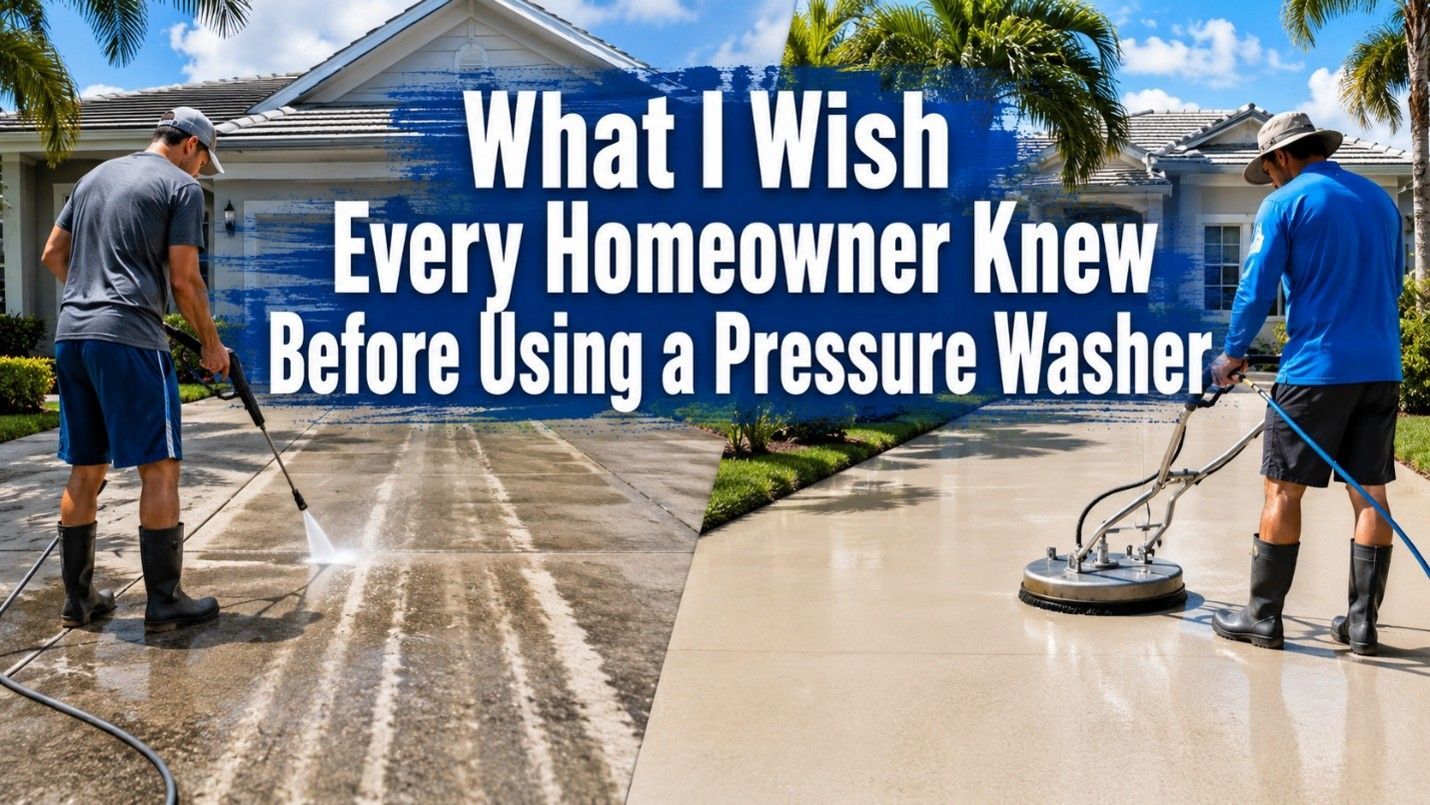
Many homeowners who have rented pressure washers expect driveway cleaning to last only a few months.
That's because their own DIY cleaning usually doesn't last very long.
One of my favorite parts of talking with customers is explaining that professional cleaning is different.
When I tell them that many professionally cleaned driveways stay noticeably cleaner for one to two years, they're often genuinely surprised.
The biggest difference isn't just experience.
It's professional equipment.
Commercial pressure washers produce significantly more water volume than homeowner machines, allowing us to clean concrete more thoroughly and consistently. That's one of the reasons professional driveway cleaning generally lasts much longer than most DIY attempts.
If you're curious why commercial equipment makes such a noticeable difference, read our article Why Surface Cleaners Produce Better Driveway Cleaning Results.
When You'll First Notice the Driveway Changing
Most driveways don't suddenly become dirty overnight.
The change is gradual.
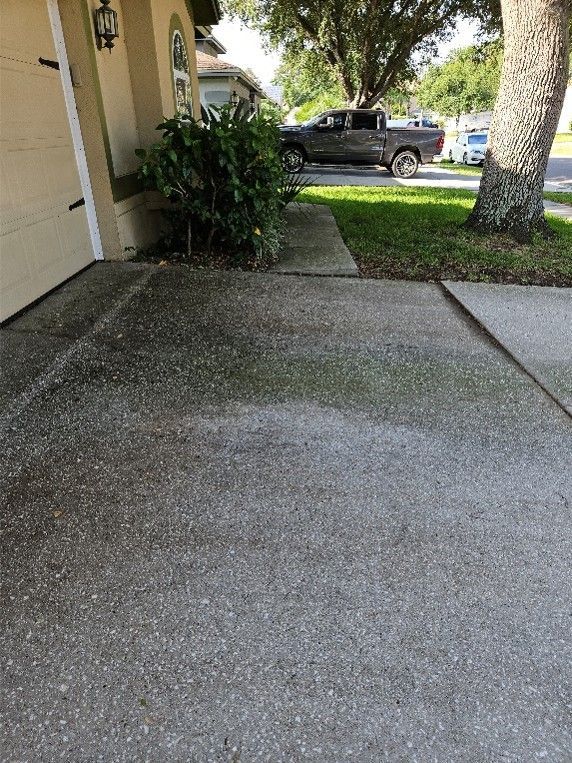
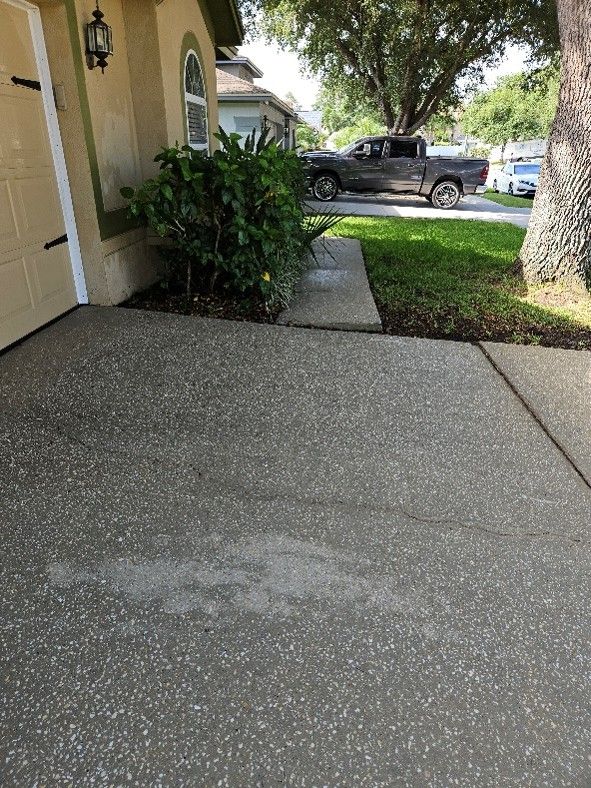
For north-facing homes, I often see algae beginning on the front walkway or directly in front of the garage door first.
Shaded areas, regardless of which direction the home faces, are almost always the first places where algae returns.
If your sprinkler system sprays onto the sidewalk, the sidewalk will often begin darkening before the driveway itself. Sidewalks also tend to collect runoff during heavy summer rains, allowing moisture to remain on the surface longer.
These small changes don't necessarily mean it's time for immediate cleaning, but they are usually the first signs that organic growth is beginning to return.
If you're unsure whether your driveway is ready for another cleaning, we'll cover those warning signs in our article How Do You Know It's Time to Pressure Wash Your Driveway?
Does It Matter What Time of Year You Clean?
Homeowners occasionally ask whether it's better to clean before or after Florida's rainy season.
In my experience, it doesn't make much difference.
A properly cleaned driveway is going to remain clean based much more on the conditions surrounding the property than the month it was cleaned.
Some homeowners prefer waiting until after the rainy season because they feel they'll enjoy the clean appearance longer.
That's perfectly reasonable.
But algae doesn't immediately return after a few weeks of rain. It typically takes several months for organic growth to become established and then additional wet weather before it becomes noticeable.
The quality of the cleaning is far more important than the season in which it's performed.
Final Thoughts
Most professionally cleaned driveways in Florida stay noticeably cleaner for one to two years, but every property is different.
Mature trees, frequent irrigation, heavy shade, and poor drainage can shorten that timeframe to as little as six to twelve months. On the other hand, homes with full sun, excellent drainage, and little irrigation often remain clean for 18 to 24 months, and occasionally even longer.
That's why I spend a few minutes looking at every property before I begin. After years of cleaning driveways throughout Riverview and South Hillsborough County, I've learned that a quick look at the surroundings usually tells me more about how long the results will last than the driveway itself.
If you're wondering whether it's time to schedule your next Driveway Pressure Washing service, I'd be happy to take a look and give you an honest recommendation based on your property's specific conditions.
Share: