How do you know it's time to pressure wash your driveway?
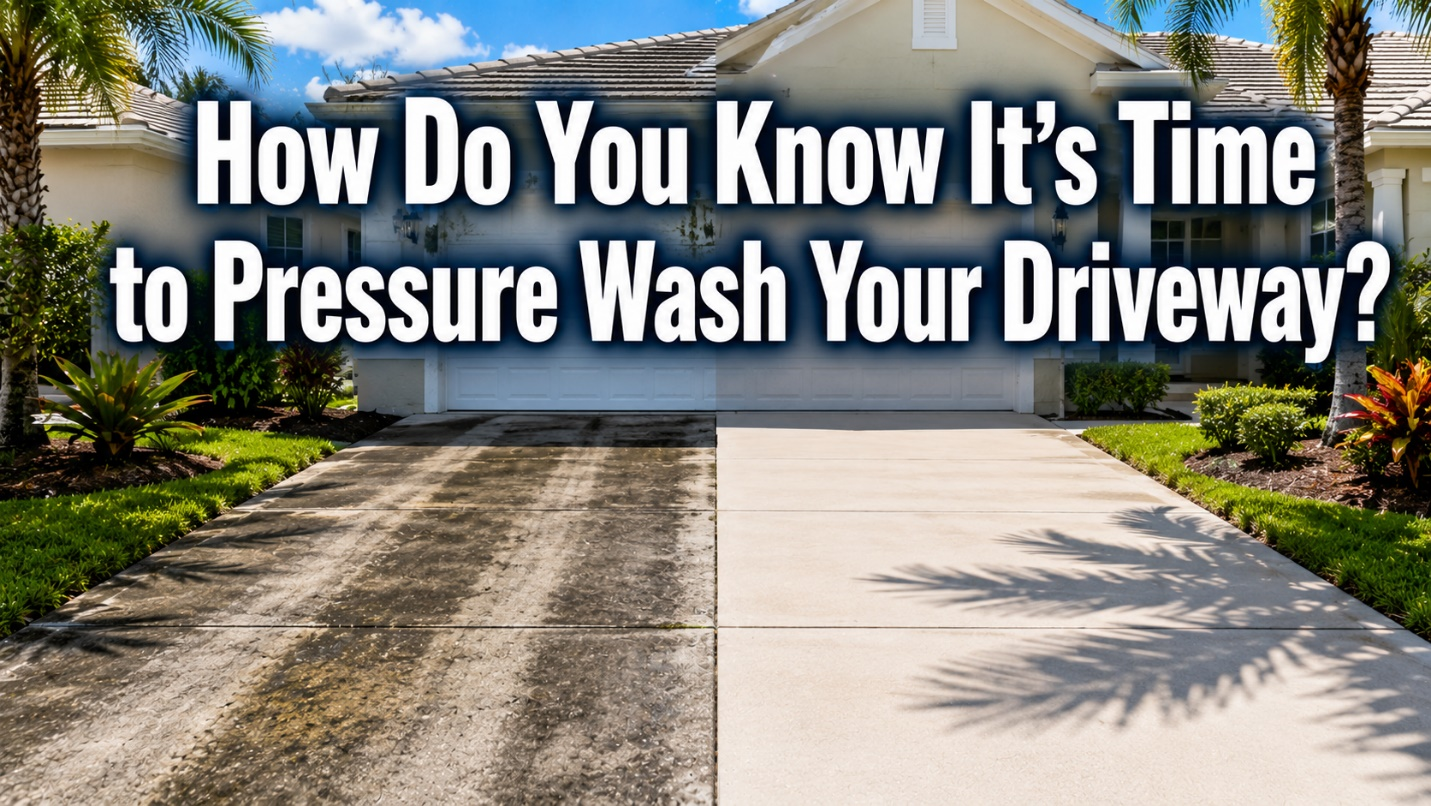
How Do You Know It's Time to Pressure Wash Your Driveway?
One of the biggest mistakes homeowners make is waiting until their driveway looks completely black before having it cleaned.
The problem is that driveways don't suddenly become dirty overnight.
The change happens so gradually that most people don't notice it until years of algae and dirt have already built up.
Ironically, I'm no different.
Even though I clean driveways for a living, I don't notice my own driveway slowly changing from week to week. One day I simply realize it doesn't have that bright, freshly cleaned appearance anymore, and I know it's time to pressure wash.
So how do you know when it's time?
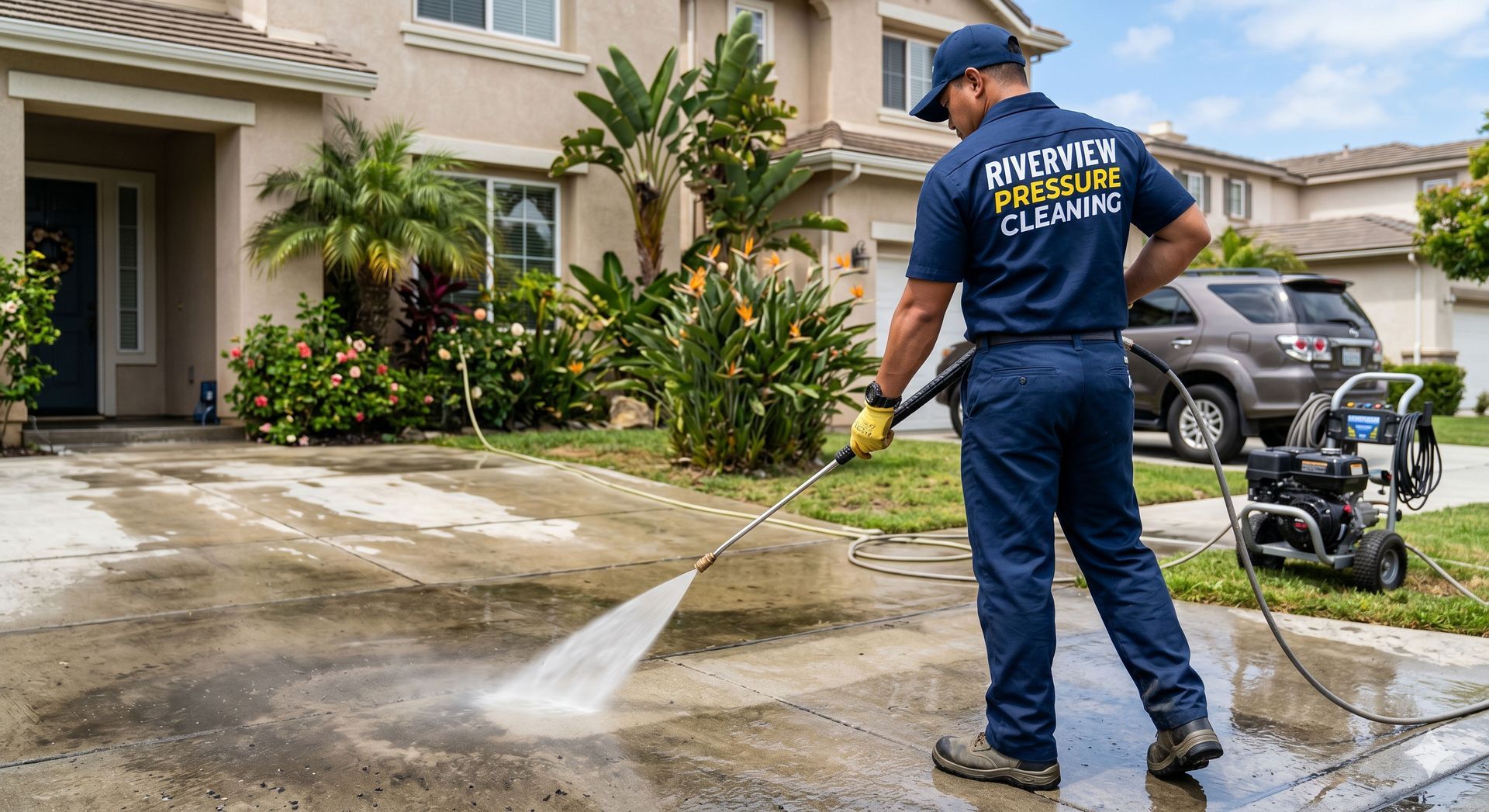
After more than 13 years of cleaning driveways throughout Riverview and South Hillsborough County, here are the signs I look for.
Black Streaks Are Usually the First Clue
When I pull up to a customer's home, the first thing that catches my eye isn't usually a completely black driveway.
It's the black streaks.
If the driveway has been professionally cleaned within the last couple of years, those streaks are often the first sign that algae is beginning to establish itself again.
By the time the entire driveway turns dark, the buildup has usually been developing for quite a while.
Catching it early helps maintain a brighter driveway and makes routine maintenance much easier.
Homeowners Usually Notice Something Different
Interestingly, what homeowners notice first is often different from what I notice.
Many customers tell me the first thing they see is green algae developing along the front walkway or around the garage door.
That makes sense.
Those are areas people walk past every day when leaving or entering the house.
If landscape beds border the walkway, those areas often stay damp a little longer, making them one of the first places where algae becomes visible.
If you've noticed those areas changing, it's probably a good time to start paying attention to the rest of the driveway.
Don't Ignore Areas That Stay Wet
One of the best pieces of advice I can give homeowners is simple:
Pay attention to how long your concrete stays wet.
Those areas will almost always become your problem areas first.
After a rainstorm or even a heavy morning dew, notice which parts of the driveway remain damp while everything else has already dried.
That extra moisture gives algae the perfect opportunity to grow.
If you'd like to understand why this happens, read our article Why Some Driveways Stay Cleaner Longer Than Others, where I explain how shade, irrigation, drainage, and other factors affect algae growth.
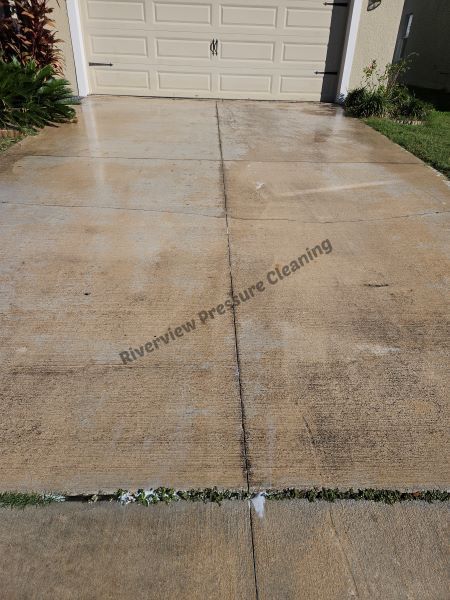
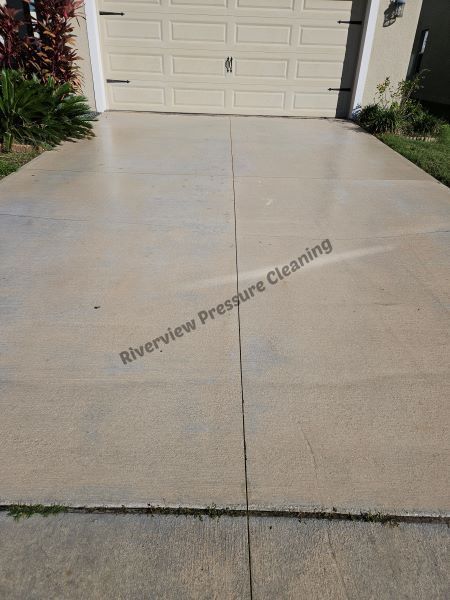
Hard Algae Means You've Waited Too Long
Not every dirty driveway is difficult to clean.
What concerns me more is hard algae.
I usually find it beneath large trees or along the edges of driveways where irrigation repeatedly wets the concrete.
The driveway doesn't have to be completely black for hard algae to develop.
That's one reason I recommend routine maintenance instead of waiting until the driveway looks terrible.
Cleaning before algae becomes deeply established almost always produces better results and helps preserve the appearance of the concrete over time.
HOA Letters Aren't a Reason to Panic
About half of my driveway cleaning business comes from homeowners who receive HOA letters.
The first thing many people tell me is:
"I didn't think my driveway looked that bad."
And honestly...
In many cases, they're right.
Most HOA letters aren't targeting one specific homeowner.
They're often community-wide reminders encouraging residents to maintain their homes before algae and dirt become more noticeable.
If you receive one of these letters, don't assume your driveway is the worst in the neighborhood.
Instead, use it as a reminder that regular maintenance is usually easier than waiting until heavy buildup develops.
Safety Can Become a Concern
For most homeowners, appearance is what prompts the phone call.
Occasionally, however, safety becomes the bigger concern.
This is especially true for older adults or anyone with mobility challenges.
I've seen algae become so thick that it almost forms a thin layer across the concrete.
When that happens, even a heavy morning dew can make the surface surprisingly slippery.
Fortunately, most homeowners never allow their driveway to reach that point.
Routine cleaning removes algae long before it becomes a significant slip hazard.
Before the Holidays Is the Perfect Time
Every year I receive a noticeable increase in driveway cleaning calls after Florida's rainy season and just before the holidays.
That timing makes sense.
Families are preparing for guests, decorating the house, and suddenly noticing things they've walked past every day without really seeing.
A clean driveway can make a dramatic difference in your home's curb appeal, especially when friends and family are coming to visit.
Waiting Too Long Doesn't Save Money
Some homeowners think they'll save money by waiting another year or two before cleaning.
In reality, the opposite is often true.
Routine maintenance keeps algae from becoming deeply established and helps preserve the bright appearance of the concrete.
Waiting until the driveway is completely black usually means you've spent years looking at a dirty driveway when a simple maintenance cleaning could have kept it looking great all along.
If you're curious how long professional driveway cleaning typically lasts, read How Long Does Driveway Pressure Washing Last?
Professional Cleaning Makes a Difference
Many homeowners who have tried pressure washing their own driveway are surprised by how much longer professional results last.
Commercial equipment removes algae much more thoroughly than most homeowner pressure washers, giving your driveway the best possible starting point before nature begins taking over again.
If you're interested in learning why professional equipment produces cleaner, longer-lasting results, read Why Surface Cleaners Produce Better Driveway Cleaning Results.
Final Thoughts
Your driveway doesn't have to be completely black before it's time to pressure wash.
In fact, the best time is usually much sooner.
Black streaks, green algae along the walkway, damp areas that never seem to dry, or even an HOA reminder are all signs that it's time to start thinking about maintenance.
After years of cleaning driveways throughout Riverview, Lithia, Valrico, Brandon, and the surrounding communities, I've learned that homeowners who pay attention to these early warning signs usually enjoy cleaner concrete, better curb appeal, and fewer problems over the long term.
If you're beginning to notice those changes, our Driveway Pressure Washing service can restore your driveway before heavy algae buildup takes hold, helping your home look its best year-round.
Share: