Why some driveways in Riverview stay cleaner longer than others
Why Some Driveways Stay Cleaner Longer Than Others
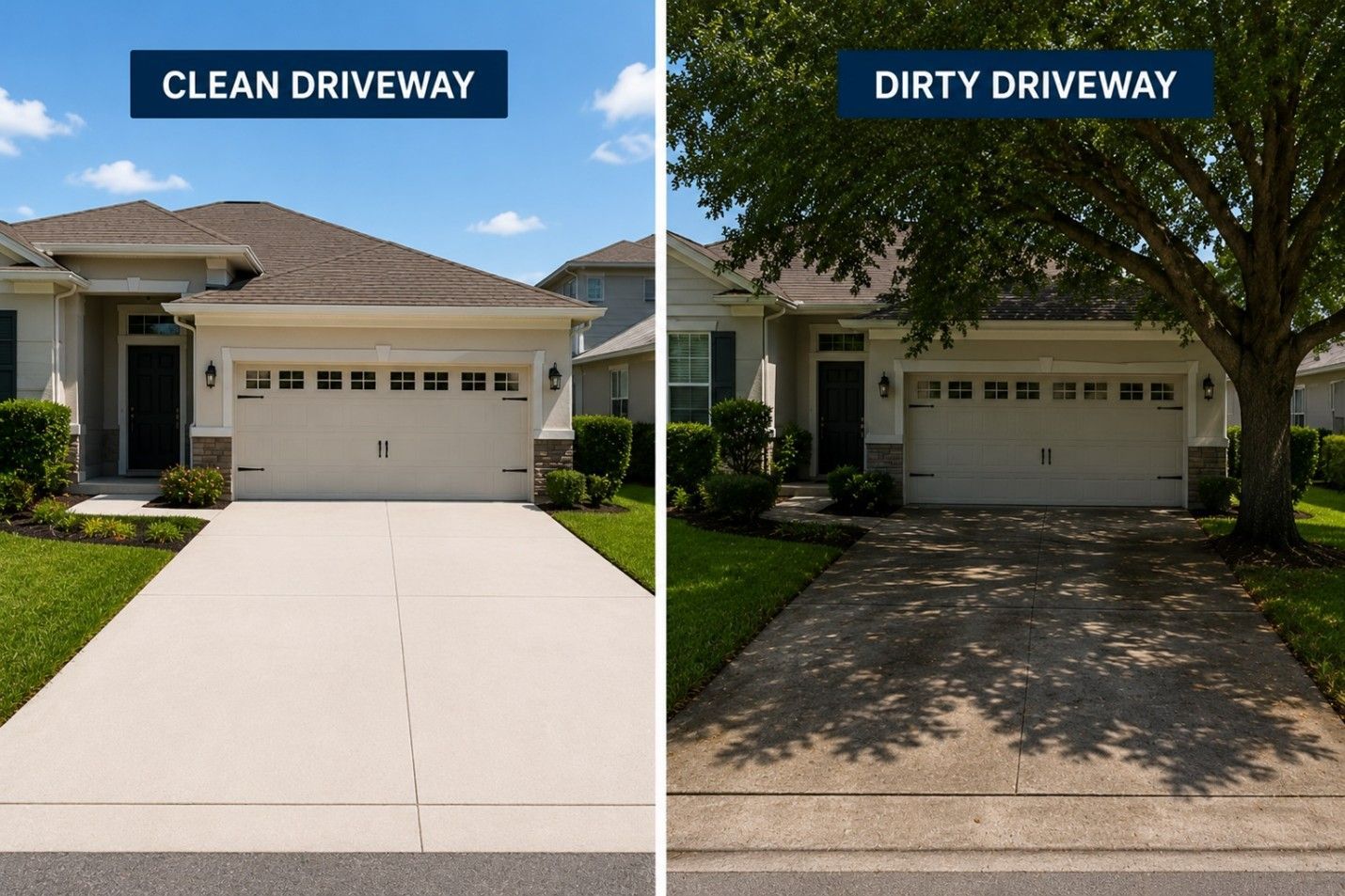
Have you ever driven through your neighborhood and noticed that one driveway still looks bright and clean while the house across the street is already covered in algae?
It happens all the time.
In fact, I've cleaned two driveways on the same street, built by the same builder, using the same equipment on the same day, only to see completely different results a year later.
Most homeowners assume the difference is the concrete itself.
It usually isn't.
After more than 13 years of cleaning driveways throughout Riverview and South Hillsborough County, I've found that the biggest difference almost always comes down to one simple thing:
How long the concrete stays wet.
The longer moisture remains on the surface, the sooner algae, mildew, and organic buildup begin to return.
Tree Shade Is Usually the Biggest Factor
If I had to identify the single biggest reason one driveway stays cleaner than another, it would be tree shade.
Large canopy trees, especially mature live oaks, dramatically reduce the amount of sunlight reaching the concrete. As a result, the driveway stays damp much longer after overnight dew, afternoon rain showers, or irrigation.
That extra moisture creates the perfect environment for algae to grow.
Interestingly, not all trees have the same impact. Palm trees rarely provide enough consistent shade to make much difference. Large oaks and other broad-canopy trees, however, can shade portions of a driveway for most of the day, allowing algae to establish much sooner.
This is one of the first things I notice when I pull up to a customer's home because it gives me a pretty good idea of how long their driveway is likely to stay clean after I'm finished.
If you're wondering how long professional cleaning typically lasts under different conditions, read our article How Long Does Driveway Pressure Washing Last?
Irrigation Is Often the Hidden Culprit
The second thing I look for is the irrigation system.
One thing I've learned over the years is that many homeowners have no idea their sprinklers are soaking the driveway.
Most people never actually watch their irrigation system run. They assume it's watering the lawn.
Sometimes I'll notice a dark pattern across the concrete that immediately tells me sprinkler water is hitting the driveway several times each week. Other times, I've seen broken sprinkler heads spraying straight into the air like a fountain, with water running down the driveway every time the system cycles.
Even a properly functioning irrigation system can shorten the time between cleanings if sprinkler heads are aimed slightly too high or a little too far toward the concrete.
Fortunately, this is usually easy to correct.
Most landscaping companies can adjust sprinkler heads in just a few minutes. If your system needs more extensive work, an irrigation specialist can evaluate the coverage and make sure your lawn—not your driveway—is getting watered.
Drainage Matters More Than Most People Realize
After shade and irrigation, I begin looking at drainage.
Some drainage issues are easy to fix.
Others aren't.
I've cleaned homes where tree roots gradually lifted sections of the sidewalk or curb, creating low spots where water pools after every rainstorm. I've also seen neighborhoods where stormwater consistently sits in front of several driveways because the street no longer drains properly.
In those situations, homeowners may be doing everything right, but the concrete simply stays wet longer because the water has nowhere to go.
Roof design can also play a role.
Homes with roof valleys draining toward the driveway often experience much more runoff than homes with front-facing gables that direct water toward the sides of the house.
Again, it all comes back to one thing: The longer the concrete stays wet, the faster algae returns.
House Orientation Can Influence Where Algae Appears First
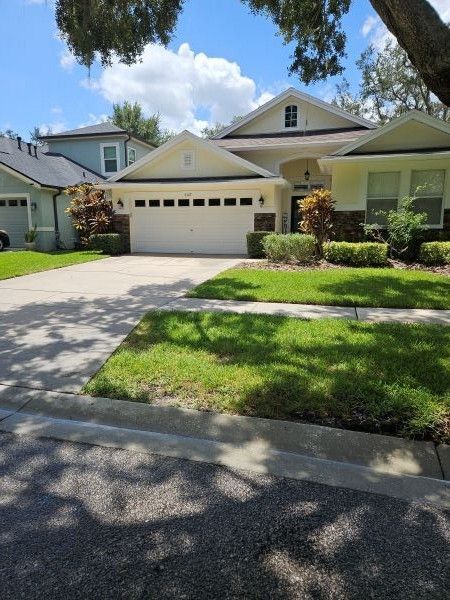
House orientation isn't usually as important as shade or irrigation, but after thousands of driveway cleanings, I've noticed some consistent patterns.
On many north-facing homes, algae often begins developing along the front walkway and directly in front of the garage before spreading across the rest of the driveway.
If landscape beds border the walkway, those areas usually remain damp longer and become the first places where algae appears.
There are exceptions. Homes that direct roof runoff into landscape beds instead of onto the driveway sometimes stay cleaner around the garage a little longer than expected.
No two homes are exactly alike, but once you understand how moisture behaves around your property, these patterns start to make sense.
The Homeowner Makes a Bigger Difference Than You Might Think
Not everything is determined by the property itself.
One habit consistently stands out.
Homeowners who regularly blow or sweep leaves and organic debris from the driveway usually enjoy cleaner concrete much longer than homeowners who simply let everything accumulate.
Leaves trap moisture against the surface after rain and morning dew, giving algae the perfect opportunity to grow.
Taking just a few minutes every week to keep the driveway clear helps it dry faster and slows the return of organic buildup.
If practical, trimming tree branches to allow a little more sunlight onto the driveway can also make a noticeable difference over time.
Why Two Neighboring Driveways Can Look Completely Different
This is one of my favorite things to explain to customers.
Imagine two homes across the street from one another.
They were built by the same builder.
The driveways are the same age.
They were professionally cleaned on the same day.
One homeowner has a large oak tree shading the driveway most of the afternoon and an irrigation head spraying across the sidewalk.
The other has full sun, excellent drainage, and no irrigation hitting the concrete.
A year later, one driveway may already be developing noticeable algae while the other still looks remarkably clean.
The difference wasn't the pressure washing.
It was everything that happened after the cleaning.
Professional Cleaning Gives You the Best Starting Point
Even under perfect conditions, algae will eventually return.
The goal isn't to stop nature forever.
The goal is to start with the cleanest surface possible and slow the return of organic growth.
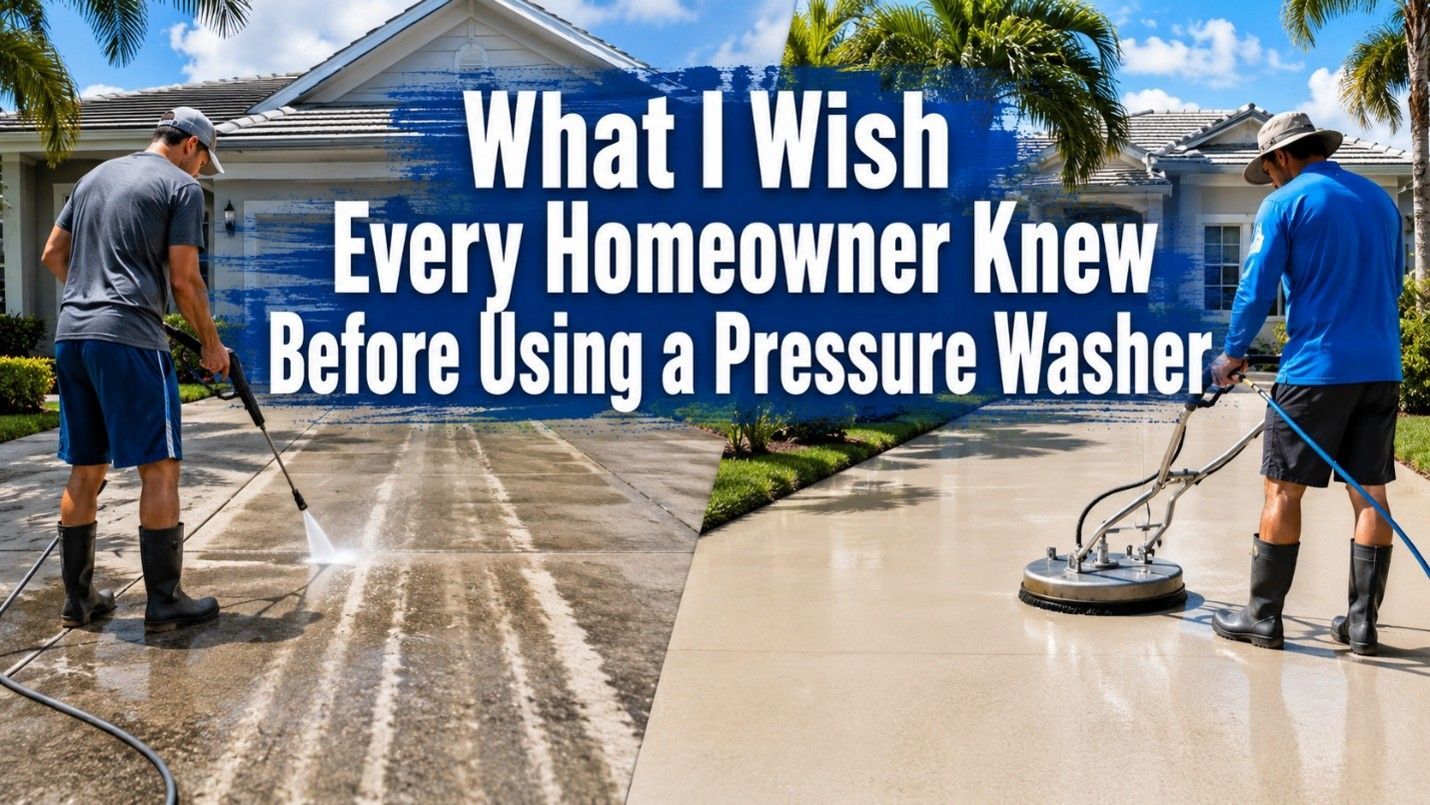
Professional equipment removes algae much more thoroughly and evenly than typical homeowner equipment, giving your driveway the best opportunity to stay cleaner longer.
If you're interested in learning why commercial equipment produces better and longer-lasting results than DIY equipment, read Why Surface Cleaners Produce Better Driveway Cleaning Results.
Final Thoughts
No two driveways age exactly the same.
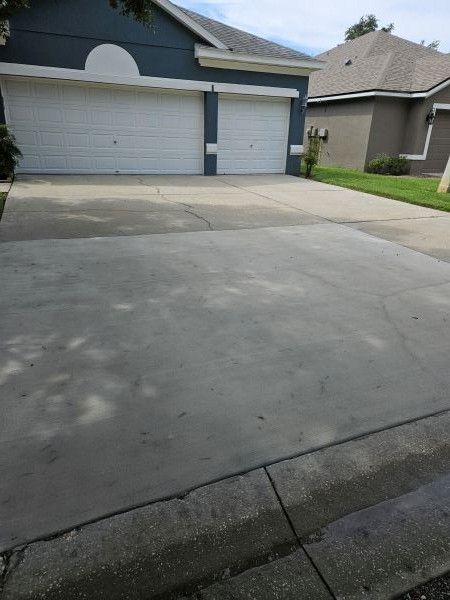
After years of cleaning homes throughout Riverview, Lithia, Valrico, Brandon, and the surrounding communities, I've learned that the biggest predictors of how long a driveway stays clean have very little to do with the concrete itself.
Instead, they come down to how much sunlight the driveway receives, how often it stays wet, and how it's maintained between cleanings.
If you're trying to decide whether it's time to have your concrete professionally cleaned, our Driveway Pressure Washing service removes years of algae, mildew, and organic buildup while helping restore your home's curb appeal.
If you're curious about how long those results typically last after professional cleaning, be sure to read How Long Does Driveway Pressure Washing Last?, where I break down the typical timelines homeowners can expect under different property conditions.
Share: