Why Do Roof Stains Always Start on One Side of the House?
Why Do Roof Stains Always Start on One Side of the House?
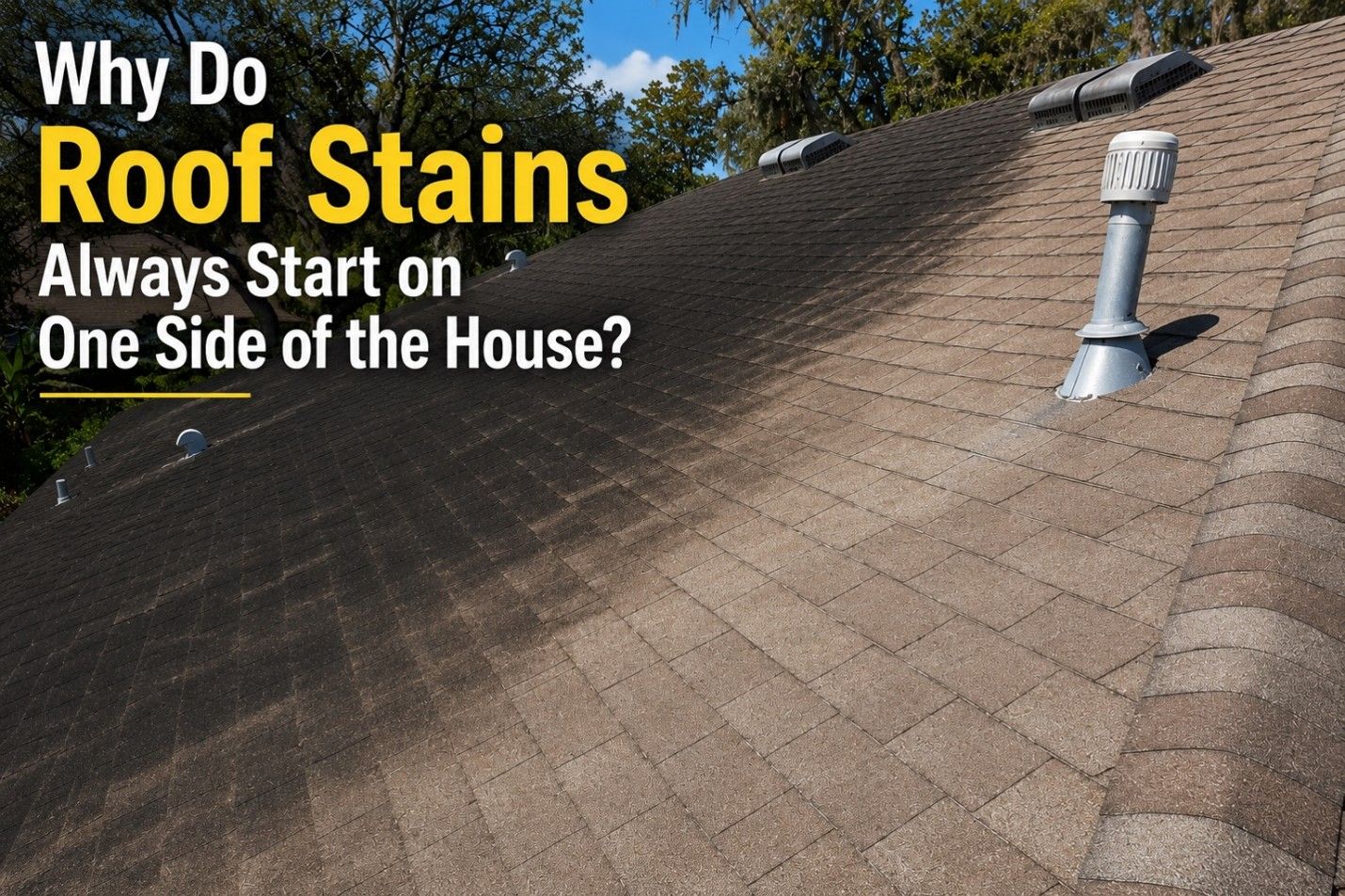
One of the most common questions homeowners ask when they first notice roof staining is: "Why is only one side of my roof turning black?"
At first, it seems strange.
The roof was installed at the same time. It receives the same rain. It sits on the same house.
Yet one section develops dark streaks while the rest still looks relatively clean.
If you live in Riverview, Brandon, Valrico, or Lithia, there's a good chance the answer comes down to sunlight, moisture, and shade.
Most Roof Stains Start Much Earlier Than Homeowners Expect
One thing that surprises many homeowners is how quickly roof staining can appear.
Most of the roofs we clean throughout Riverview and surrounding communities are only about 4 to 6 years old when homeowners first call about black streaks.
The roof itself is often in good condition.
Florida's humidity simply creates ideal conditions for algae growth.
Once algae begins growing on the shingles, it usually starts in specific areas before gradually spreading across larger portions of the roof.
North Facing Roof Slopes Are Usually the First to Stain
If there is one pattern we see over and over, it's this:
North facing roof slopes are almost always among the first areas to develop visible algae staining.
These sections receive less direct sunlight throughout the day, which means they stay damp longer after:
- rain
- morning dew
- cloudy weather
That additional moisture gives algae more time to grow.
The same principle applies to driveways, fences, and siding. It's why so many homeowners relate to "Why north facing driveways stay darker longer in Florida."
Less sunlight means slower drying times and faster algae growth.
Trees Can Accelerate the Problem
About half of the roofs we clean have mature trees nearby.
Those roofs are often the most challenging because algae growth tends to be thicker and more established.
Trees contribute to roof staining by creating:
- shade
- moisture retention
- leaf debris
- reduced airflow
Roof sections directly beneath tree canopies are frequently among the dirtiest areas on the entire roof.
The longer moisture remains on the shingles, the more opportunity algae has to grow.
Some Neighborhoods Experience Roof Staining Faster
Certain communities naturally develop roof staining sooner than others.
Older neighborhoods with mature trees often experience more algae growth because of the increased shade and moisture.
We frequently see heavier roof staining in areas such as:
- Panther Trace
- Summerfield
- older portions of Brandon
- established areas of Valrico
- mature neighborhoods in Lithia
By comparison, many newer communities in Apollo Beach and Ruskin have smaller trees and more direct sunlight, which often allows roofs to stay cleaner a little longer.
Of course, every property is different, but neighborhood tree coverage can make a noticeable difference.
Why Roof Stains Matter
Most homeowners first notice roof stains because of appearance.
Dark streaks can make a home look older and less maintained than it actually is.
But appearance isn't the only concern.
Algae feeds on the limestone filler found in many asphalt shingles. Over time, heavy algae growth can contribute to premature roof deterioration.
This is one reason routine roof cleaning is often recommended long before a roof reaches the end of its lifespan.
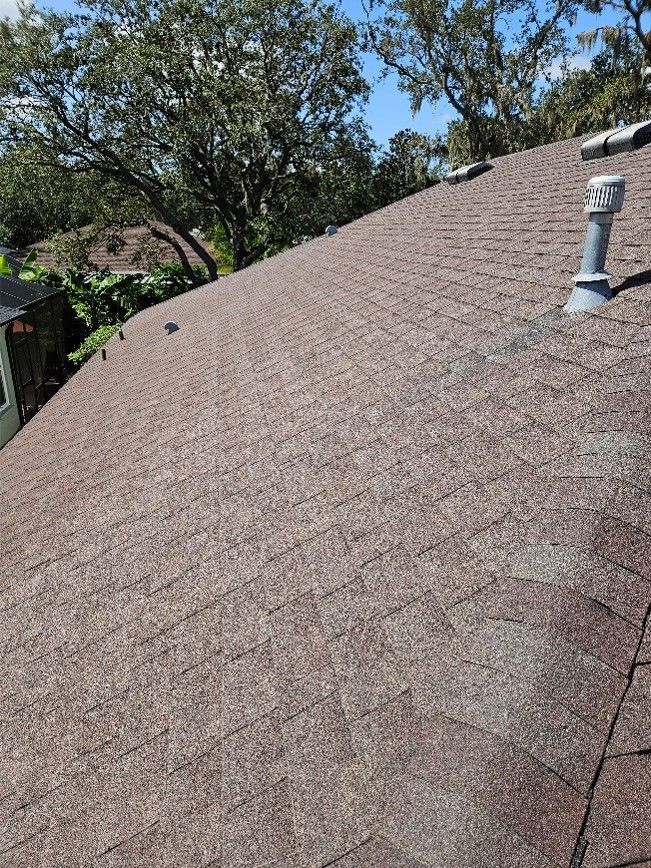
Most Roofs We Clean Are Asphalt Shingles
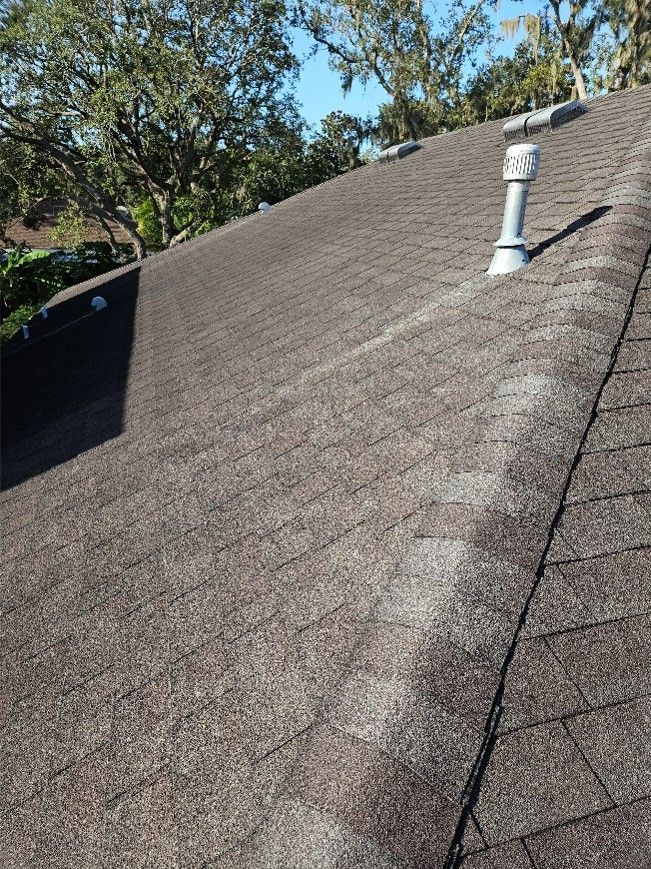
The majority of roofs we clean throughout Riverview and surrounding areas are asphalt shingle roofs.
Occasionally we clean tile roofs in gated communities, but asphalt shingles are by far the most common roofing material we encounter.
Because asphalt roofs are so common, they are also where homeowners most frequently notice black streaking.
How Long Does Roof Cleaning Last?
When performed properly, roof cleaning typically lasts about 4 to 5 years.
Several factors can influence that timeline, including:
- tree coverage
- roof orientation
- annual rainfall
- shade levels
North facing roof slopes often show the first signs of algae returning because they dry more slowly than the rest of the roof.
Homes in full sun generally remain cleaner longer than heavily shaded properties.
Sometimes the Roof Is Simply Too Worn
One thing homeowners rarely think about is roof safety.
During inspections, we occasionally encounter older roofs where the asphalt granules have deteriorated significantly.
In some cases, the granules become so loose that maintaining secure footing is difficult, even under dry conditions.
When that happens, walking the roof may no longer be safe.
Depending on the situation, we may recommend cleaning from a ladder where possible or discussing roof replacement options before attempting a full roof cleaning.
Safety always comes first.
The Good News
The fact that one side of the roof is stained does not necessarily mean there's a problem with the roof itself.
More often, it means that side experiences different environmental conditions than the rest of the home.
Sunlight, shade, moisture, and nearby trees all play a role in determining where algae develops first.
Final Thoughts
If one side of your roof is turning black while the rest still looks clean, you're seeing one of the most common roof cleaning situations in Florida.
North facing roof slopes, tree coverage, and moisture retention are usually the biggest contributors.
If you're in Riverview, Brandon, Valrico, or Lithia and have noticed dark roof streaks developing, feel free to reach out anytime for a quick quote or honest recommendation. Happy to take a look and point you in the right direction.
Share: