Why Pool Cages Turn Green Faster Than You Expect
Why Pool Cages Turn Green Faster Than Homeowners Expect
If you've owned a pool in Florida for a while, you've probably noticed that some pool cages seem to stay clean for years while others begin turning green in just under a year.
After cleaning pool cages throughout Riverview, Apollo Beach, Valrico, and the surrounding Tampa Bay area for more than a decade, we've noticed something interesting.
The biggest factor usually isn't the age of the pool cage.
It's the environment around it.
Why Some Pool Cages Get Dirtier Than Others
No two homes are exactly alike.
Some pool cages spend most of the day in direct sunlight, while others are surrounded by mature oak trees, palms, or conservation areas that keep the enclosure shaded and damp.
Over the years, we've found that pool cages are more likely to develop algae quickly when they have:
- Heavy shade throughout the day
- Trees that constantly drop pollen, leaves, or organic debris
- Poor airflow around the enclosure
- Irrigation that regularly wets the screens or frame
- Nearby ponds or wooded areas that create a more humid environment
Even two neighboring homes can have very different cleaning schedules simply because one enclosure dries much faster after rain.
Where Algae Usually Appears First
One pattern we've noticed over the years is that algae rarely appears everywhere at once.
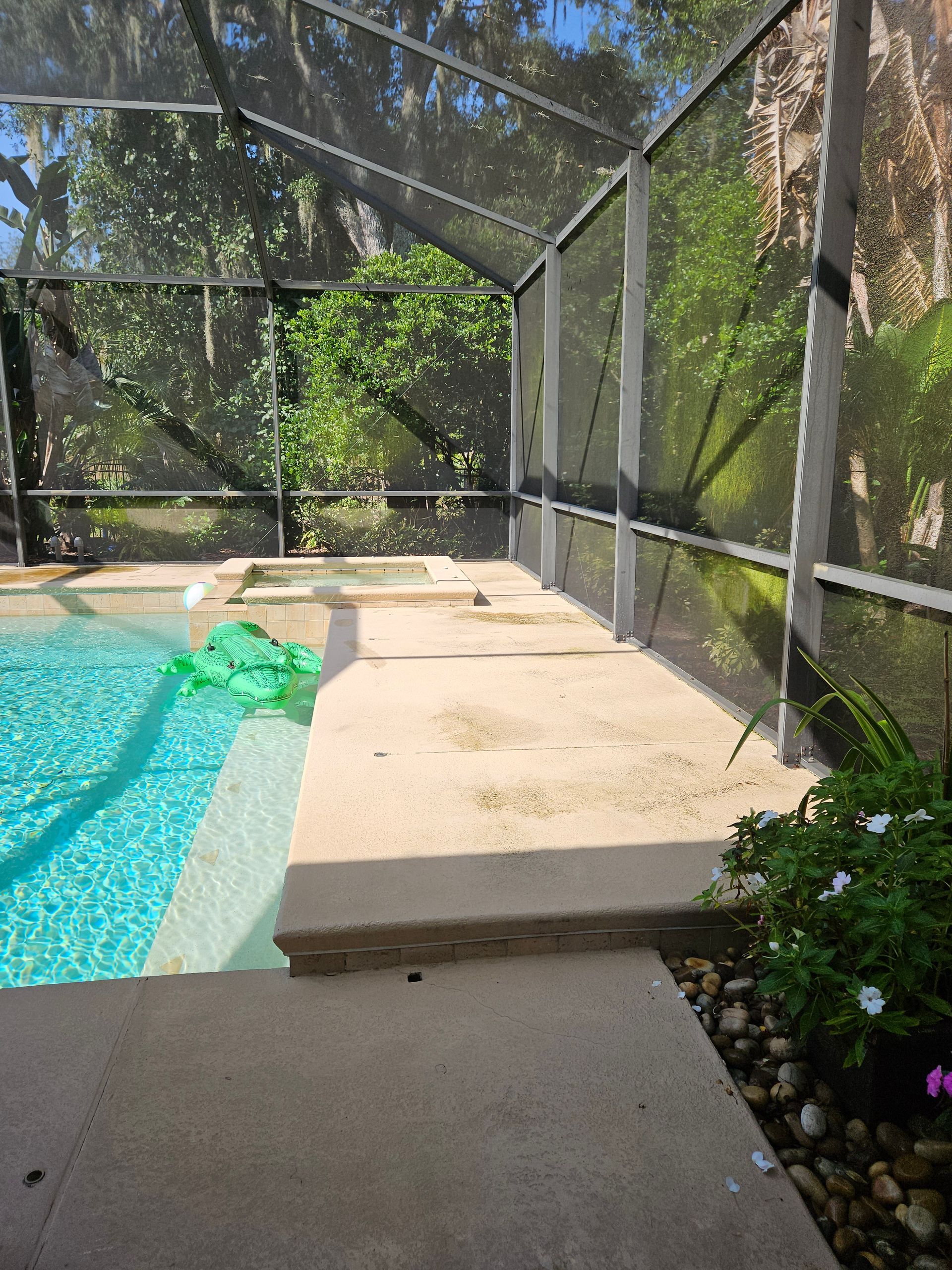
The upper beams on the north-facing side of the pool cage are often the first place we notice green algae beginning to develop. Because many homeowners spend most of their time looking out at the pool from inside the house, these upper beams can go unnoticed for quite a while.
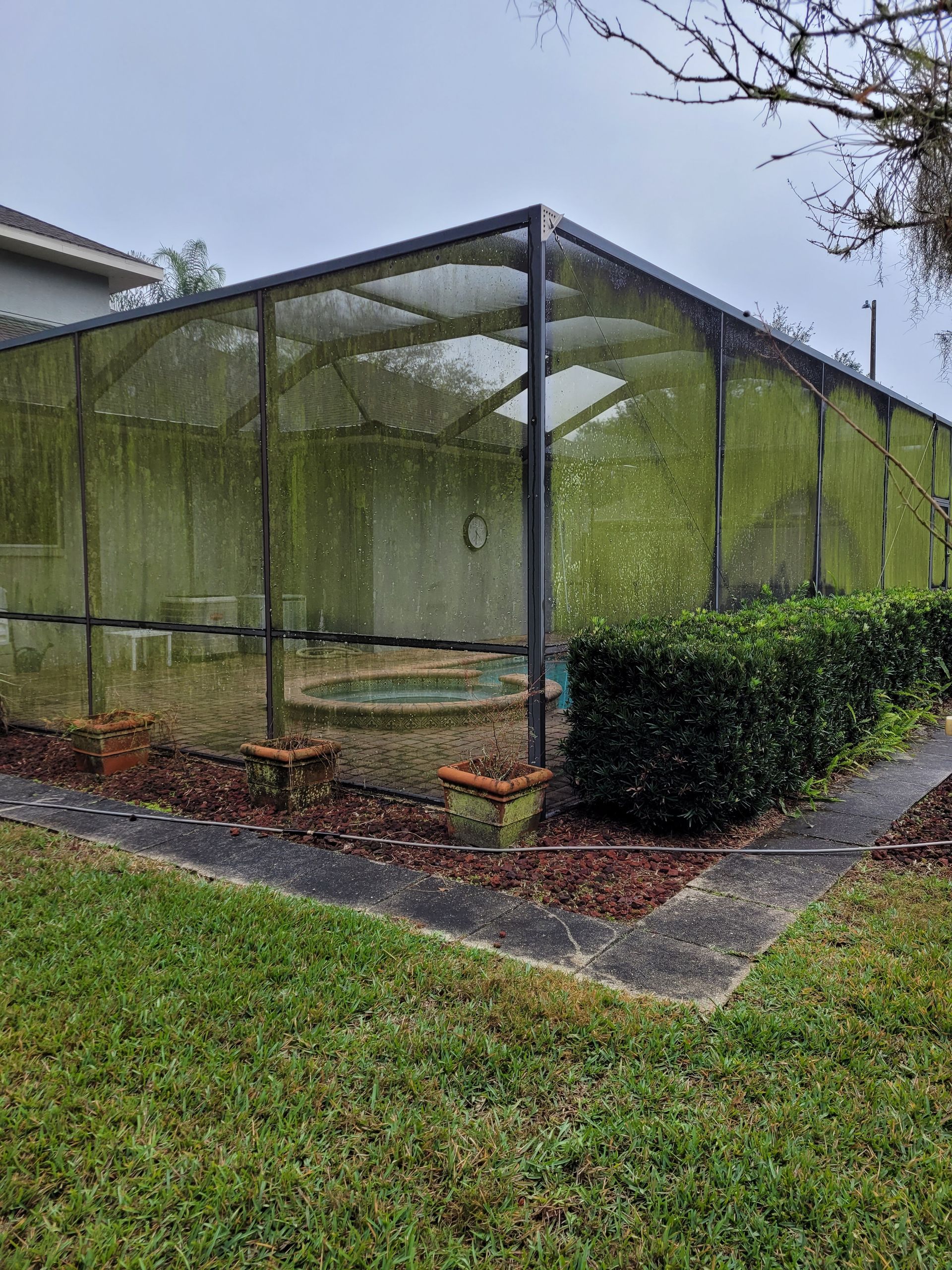
Shaded corners are another area where algae often appears early. It's not unusual for only two or three screen panels to turn green while the rest of the enclosure still looks perfectly clean.
We also pay close attention to the chair rails. These horizontal sections tend to collect pollen, dust, and other organic debris while also holding moisture after rain or heavy morning dew. Because they stay damp longer than other parts of the enclosure, algae often begins growing there before it spreads elsewhere.
Florida's Climate Creates the Perfect Environment
While Florida's summer rains certainly speed things up, algae isn't just a rainy season problem.
Pool cages are constantly exposed to morning dew, afternoon thunderstorms, warm temperatures, and high humidity. Since every enclosure sits directly over a swimming pool, moisture is almost always present.
Once pollen, dust, and other organic material begin collecting on the frame and screens, Florida's climate provides nearly everything algae needs to grow. That's why green buildup usually develops gradually instead of appearing overnight.
Why Homeowners Often Don't Notice It Right Away
One of the most common things we hear after cleaning a pool cage is:
"I didn't realize how dirty the screens were."
The reason is simple.
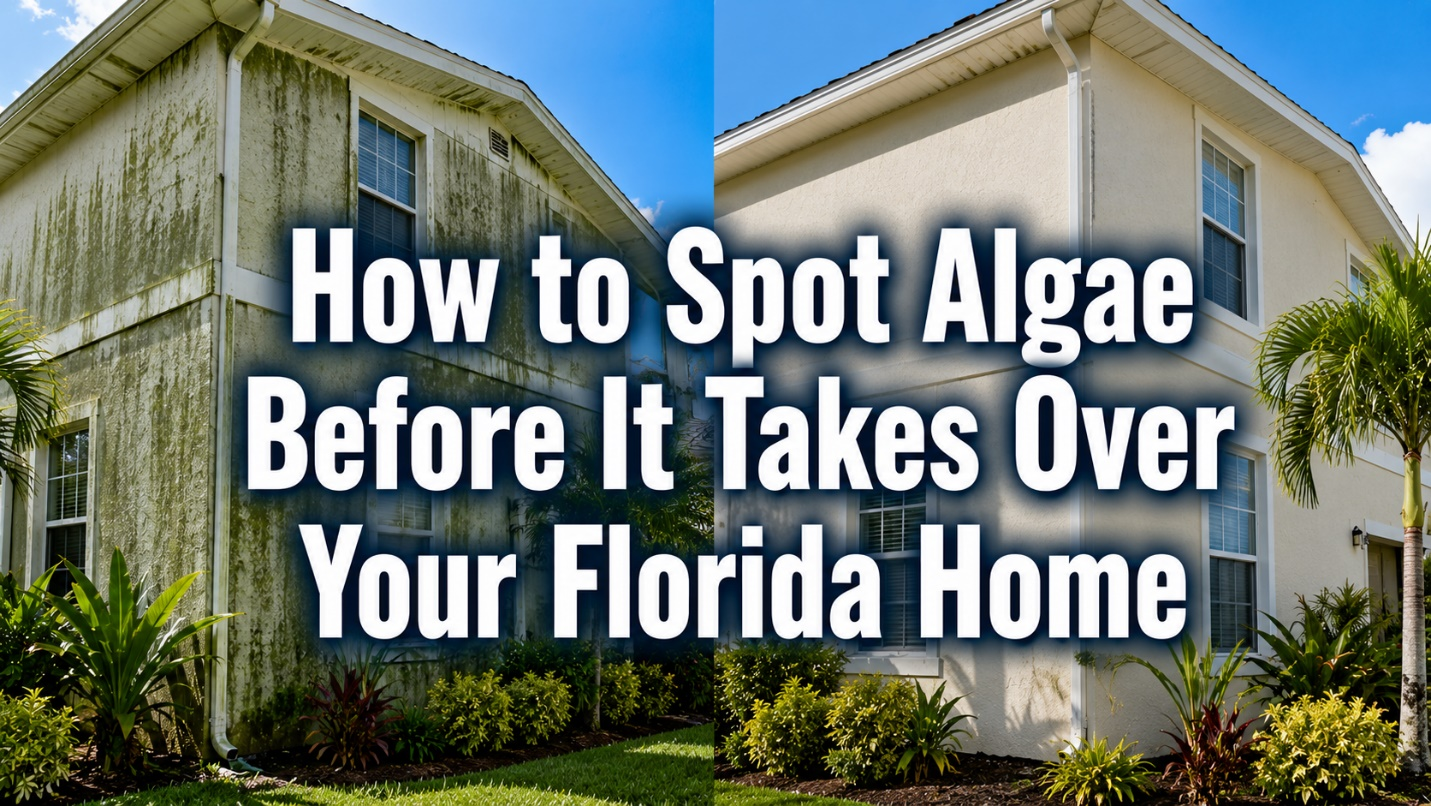
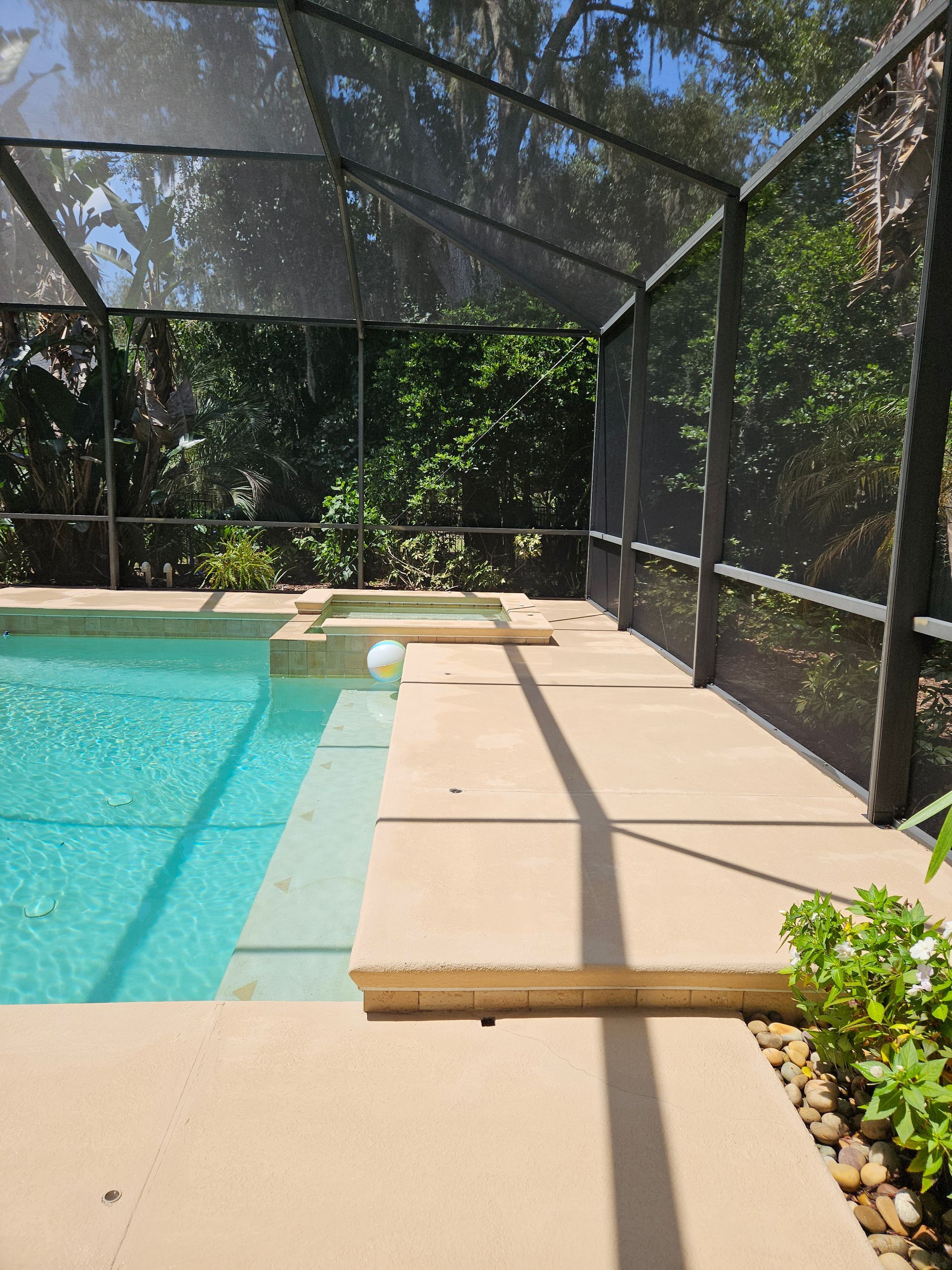
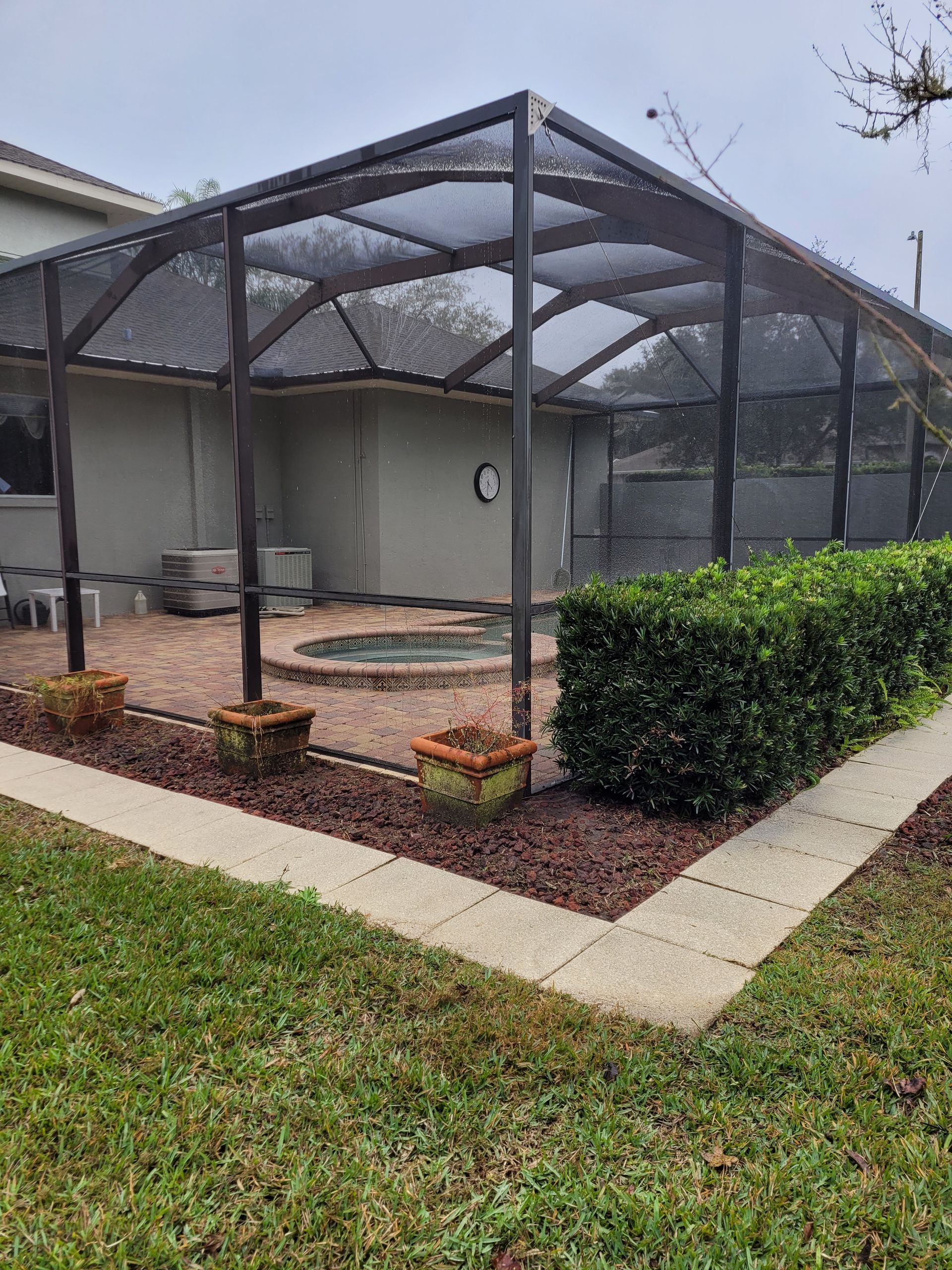
Algae, pollen, and dust build up so gradually that it's easy to miss the change from one week to the next. Many homeowners don't realize how much the enclosure has darkened until it's professionally cleaned and the screens become clear again.
The transformation is often less about removing years of buildup and more about restoring the bright, open feeling the enclosure originally had.
Slowing Algae Growth
While it's impossible to completely prevent algae from growing on a Florida pool cage, there are a few things homeowners can do to help slow the process.
Allowing more sunlight and airflow to reach the enclosure by trimming back overhanging trees and shrubs can help surfaces dry more quickly after rain and morning dew.
Keeping leaves, pollen, and other organic debris from collecting around the enclosure also helps reduce the organic material algae feeds on. If your irrigation system regularly sprays the cage, adjusting the sprinkler heads can make a noticeable difference over time.
Just as importantly, don't wait until the entire enclosure turns green before scheduling a cleaning. Catching algae in its early stages is much easier than waiting until it has become heavily established.
When Is It Time for Professional Cleaning?
Every homeowner has a different comfort level.
Some of our customers schedule annual cleanings as part of their regular home maintenance. Others call us as soon as they notice the first signs of green algae beginning to develop. Still others prefer to wait until the buildup becomes more noticeable across the enclosure.
There's nothing wrong with any of those approaches. It simply depends on how you want your pool area to look and how much buildup you're comfortable with.
The one thing we do recommend is avoiding the point where algae has progressed to dark black or orange staining. At that stage, it can become extremely difficult to remove completely without risking damage to the painted finish on the aluminum frame.
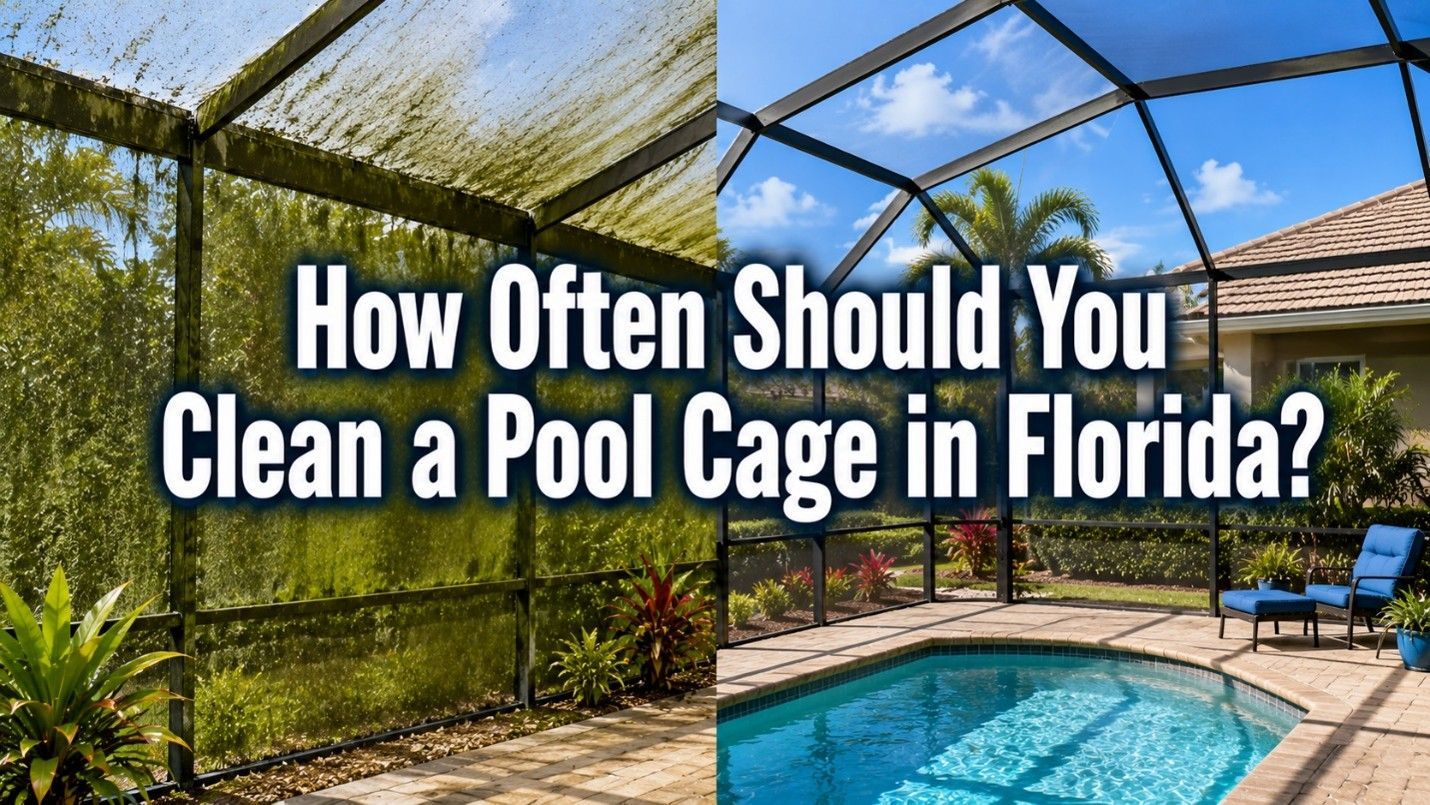
If you're wondering how often your pool cage should be professionally cleaned, be sure to read our article, How Often Should You Clean a Pool Cage in Florida?
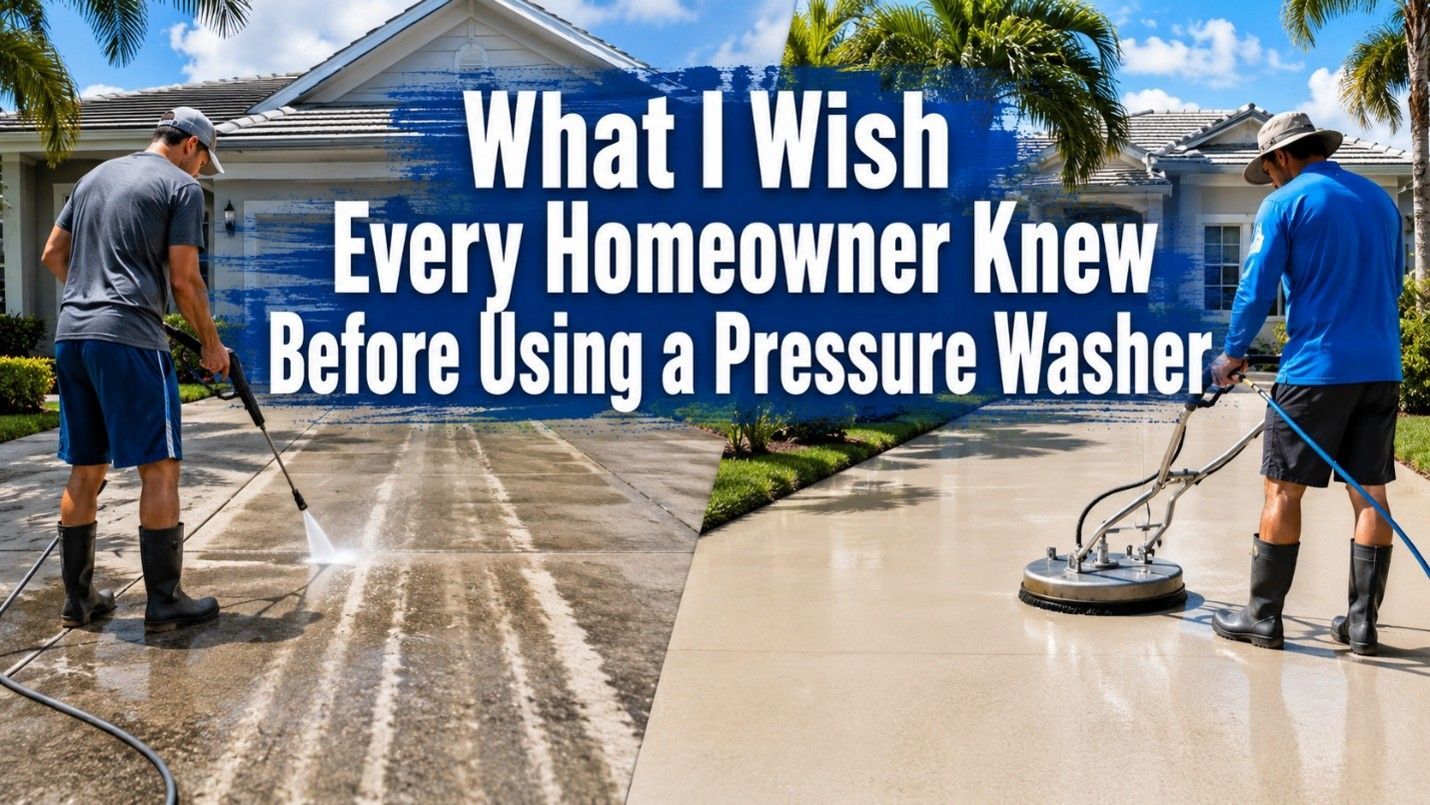
If you're thinking about cleaning it yourself, our DIY vs. Professional Pool Cage Cleaning guide explains the pros, cons, and common mistakes homeowners should avoid. You can also check out our Pool Cage Cleaning Cost Guide if you'd like to learn more about pricing and what's typically included in a professional cleaning.
Final Thoughts
One thing we've learned after years of cleaning pool cages is that algae doesn't affect every home the same way.
Some pool cages stay clean much longer than others, not because they were cleaned differently, but because they're exposed to different conditions every day. Shade, moisture, nearby trees, and airflow all play a role in how quickly algae returns.
By understanding where algae usually starts and what causes it to spread, you can spot problems earlier, keep your pool cage looking its best, and avoid allowing buildup to reach the point where it becomes much harder to remove.
Share: