Why DIY Pressure Washing Often Damages Florida Homes
Why DIY Pressure Washing Can Damage Your Florida Home
Pressure washing is one of those home improvement projects that looks much easier than it actually is.
Many DIYers rent a pressure washer, or buy one thinking they'll use it for everything from the driveway to the house, fence, pool cage, and sidewalks. At first glance, it seems simple enough. Point the wand at the dirt and watch it disappear.
The reality is very different.
After years of pressure washing homes throughout the Tampa Bay area, I've found that most DIY damage isn't caused by homeowners being careless. It's usually caused by not realizing how much experience goes into choosing the right pressure, cleaning solution, and technique for every surface around a home.
Many homeowners successfully pressure wash their own property. The problem isn't that DIY pressure washing is impossible—it's that using the same approach on every surface is where many DIY projects begin to go wrong.
More Pressure Isn't Always the Answer
One of the biggest misconceptions about pressure washing is that more pressure equals better cleaning.
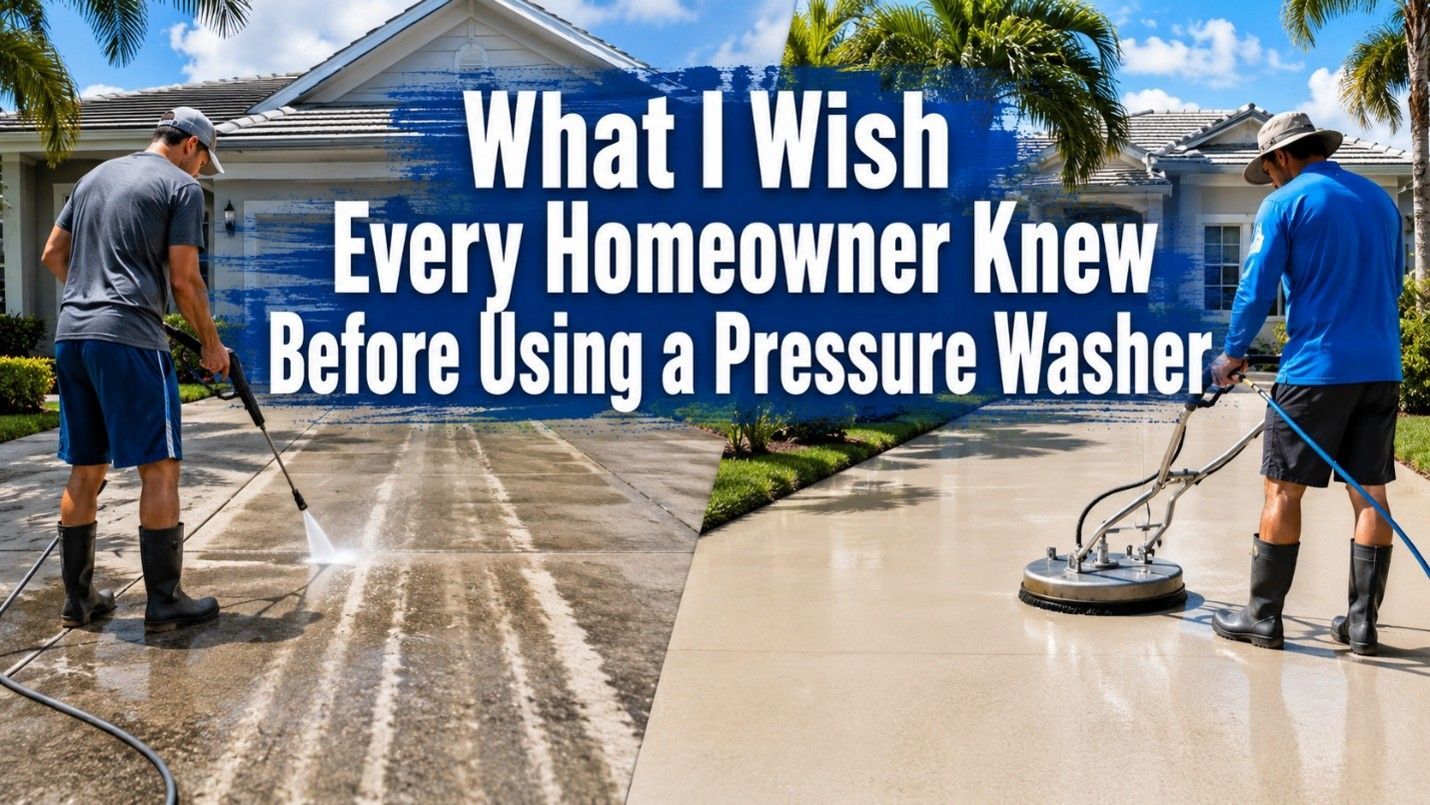
A homeowner starts with the wide 40 degree nozzle, but when algae doesn't come off as easily as expected, they switch to a narrower 25 degree tip. If that still doesn't work, they move to a 15 degree nozzle. Before long, they're using far more pressure than the surface actually needs.
The real solution is often using the proper cleaning solution instead of more pressure.
Professional pressure washing isn't about forcing dirt off the surface. It's about allowing the cleaning solution enough time to loosen algae, mildew, and organic growth before using only the amount of pressure necessary to wash everything away safely.
Every Surface Requires a Different Approach
Pressure washing isn't a one size fits all process.
Concrete driveways can safely handle much more pressure than painted stucco. Vinyl siding is cleaned differently than brick. Older painted surfaces often require even less pressure, while weathered wood or deteriorating trim may need to be avoided altogether until repairs are made.
Even two homes built next door to each other may require completely different cleaning methods depending on their age, condition, landscaping, and how much sun each side of the home receives.
That's one of the biggest differences between DIY pressure washing and professional cleaning. Experienced contractors adjust their process to fit the surface instead of treating every area the same.
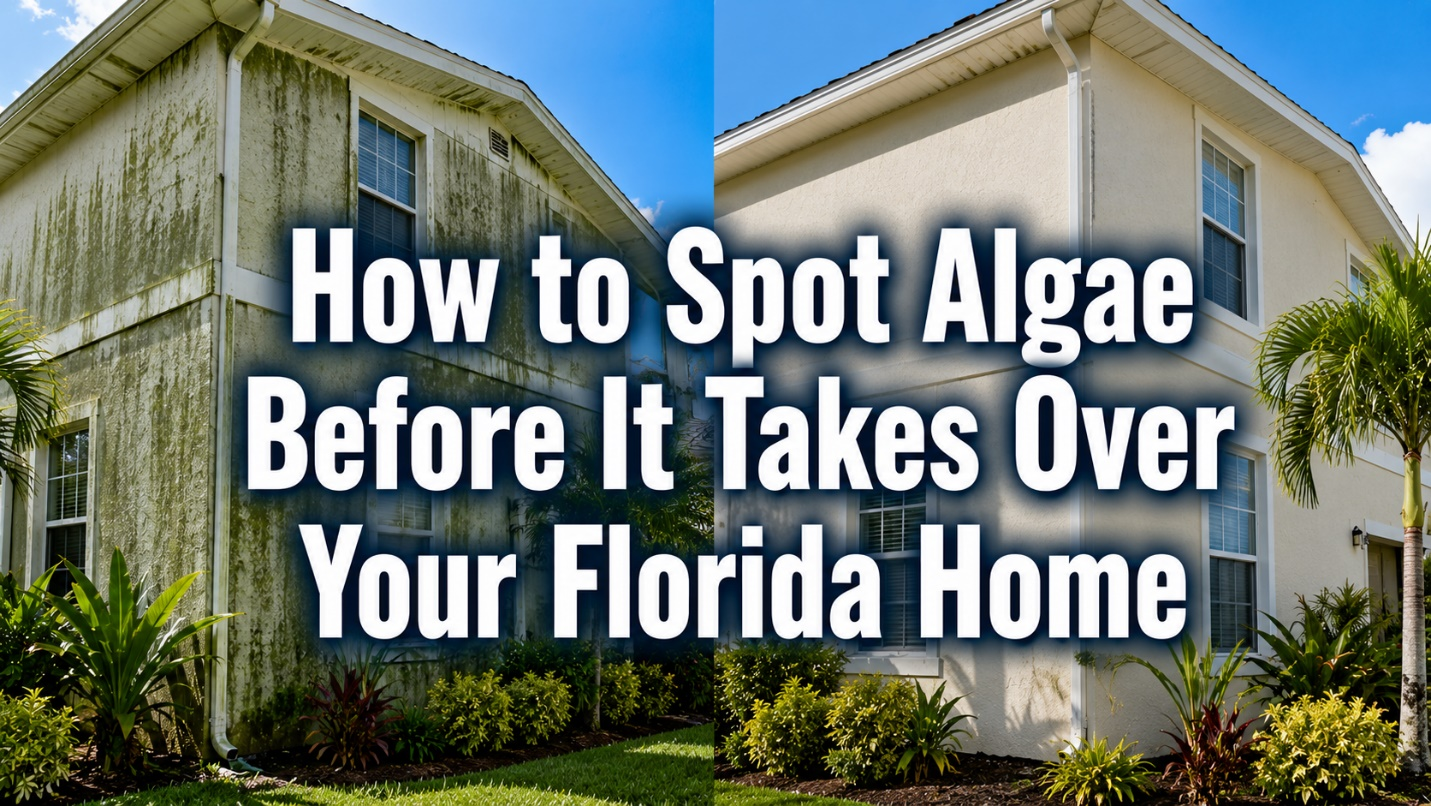
If you're curious where algae usually begins and why it often goes unnoticed until it becomes a bigger problem, be sure to read How to Spot Algae Before It Takes Over Your Florida Home.
Experience Shows Before the Trigger Is Pulled
Most homeowners think pressure washing begins when you pull the trigger.
What they don't see are all the decisions that have already been made before the equipment is even started.
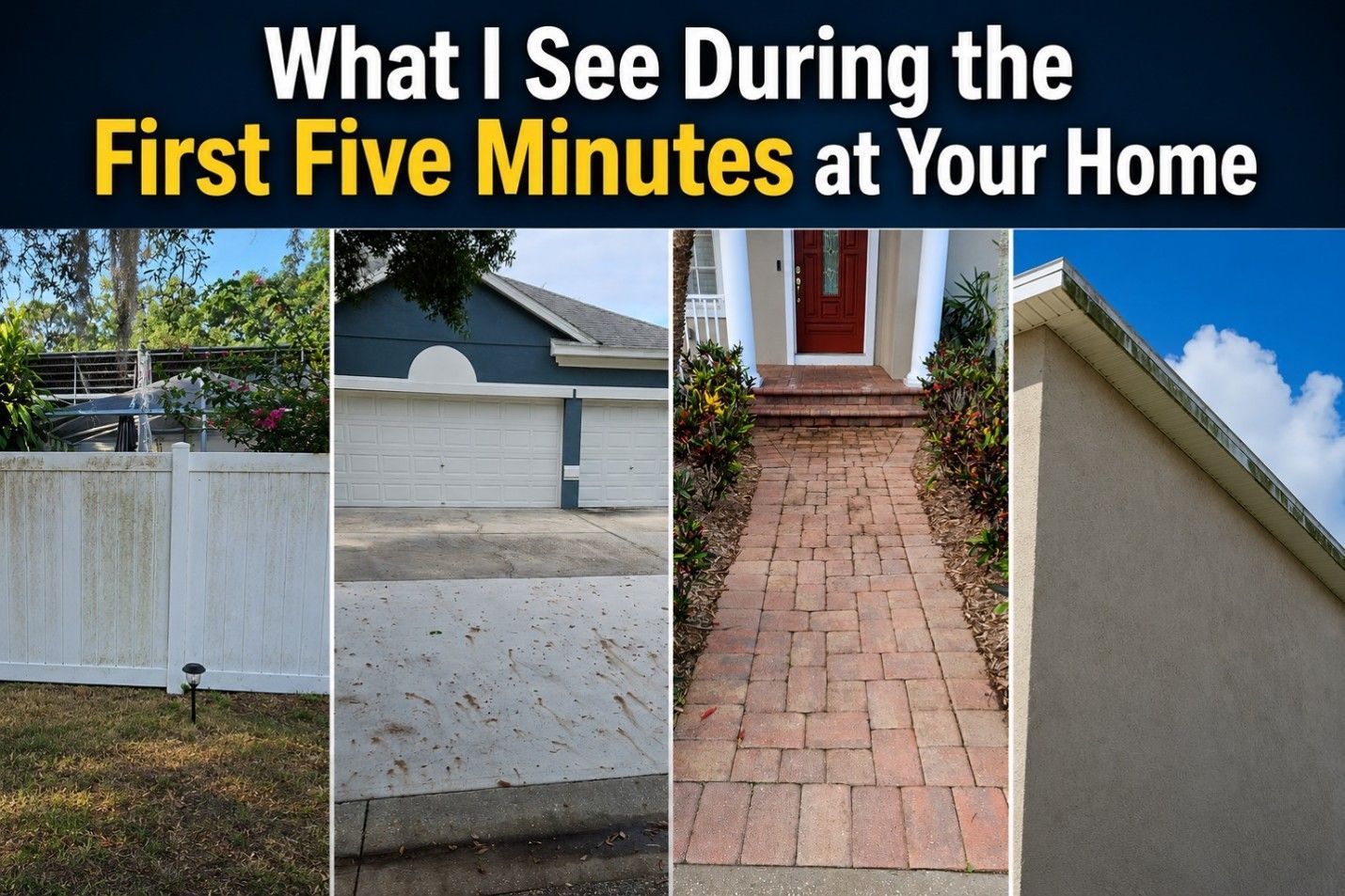
Before I begin cleaning a home, I'm already evaluating the exterior. I'm looking at the condition of the paint, checking for oxidation, inspecting caulking around windows and doors, looking for deteriorated wood, identifying areas with heavier algae growth, and deciding which cleaning solution and pressure settings will work best.
Sometimes the answer is a stronger cleaning solution with less pressure.
Sometimes it's allowing the cleaning solution more time to work.
Sometimes it's avoiding a damaged area altogether until it can be repaired.
Those decisions come from experience, and they help prevent unnecessary damage while producing better, longer-lasting results.
Pressure Washing Is More Physical Than It Looks
I once had a homeowner tell me they pulled out their pressure washer on Friday afternoon thinking they'd have the whole house finished before dinner. By Sunday evening, they had only completed the front and one side of the house. They were sore, frustrated, and decided to call me to finish the rest.
One thing many homeowners don't expect is how physically demanding pressure washing can be.
Even with a homeowner-grade pressure washer, you're constantly holding the trigger, controlling the wand, dragging hoses around the property, walking back and forth, and working in Florida's heat and humidity.
A project that looks like it should take an afternoon often turns into an all-day job or even an entire weekend.
Over the years, I've developed a process that allows me to work efficiently while maintaining consistent results. That efficiency comes from experience, not rushing through a job. At the end of the day, I still have other customers scheduled, so having a proven process allows me to give each home the attention it deserves.
The Results May Not Last as Long
One thing homeowners don't always expect is how quickly algae can return after a DIY pressure washing project.
If the cleaning solution isn't strong enough—or isn't given enough time to work—pressure alone often removes only the algae you can see. While the house may look clean at first, the remaining organic growth can begin returning much sooner than expected.
For many homeowners, that's when the frustration sets in. After spending an entire weekend pressure washing the house, they're surprised to see algae beginning to return just a few months later. Before long, they're pulling the pressure washer back out and repeating the same physically demanding project all over again.
Professional house washing isn't just about making your home look clean today. It's about properly treating the algae before washing it away, helping the results last as long as possible.
The Right Cleaning Process Matters
Professional house washing isn't just spraying water at your home.
Most jobs begin by applying a cleaning solution designed to break down algae, mildew, dirt, and other organic growth. After allowing it time to work, the home is washed using low pressure that's appropriate for the surface being cleaned.
Depending on the home, additional steps may include neutralizing certain surfaces, rinsing nearby plants, or adjusting the cleaning process for delicate paint, older materials, or stubborn stains.
Every home is a little different, which is why the process changes from one job to the next.
If you'd like to learn more about how our professional house washing process safely cleans siding, stucco, fascia, soffits, gutters, and other exterior surfaces, visit our House Washing service page.
Why Hiring an Experienced Professional Makes Such a Difference
When homeowners hire a professional, they're not simply paying for someone who owns a pressure washer.
They're paying for years of experience knowing which cleaning solution to use, how much pressure each surface can safely handle, when to adjust the process, and when to stop before damage occurs.
Those decisions aren't obvious to someone pressure washing their home for the first time, but they often make the difference between a beautiful result and an expensive repair.
Final Thoughts
Pressure washing can be a rewarding DIY project, but it's important to understand that it involves much more than pointing a spray wand at a dirty surface.
If you decide to tackle the job yourself, one piece of advice I always give homeowners is to start with less pressure than they think they'll need. Test a small area first and only increase the pressure if necessary. You can always use more pressure, but you can't undo damage once it's happened.
If you're wondering how often your home should be professionally cleaned, be sure to read How Often Should I Pressure Wash My Florida Home? to learn what factors determine the ideal cleaning schedule based on your home's location, shade, and exposure to Florida's climate.
Share: