The Impact of Florida’s Rainy Season on Driveways & Sidewalks
Originally Published March 18, 2026
Last Updated September 24, 2026
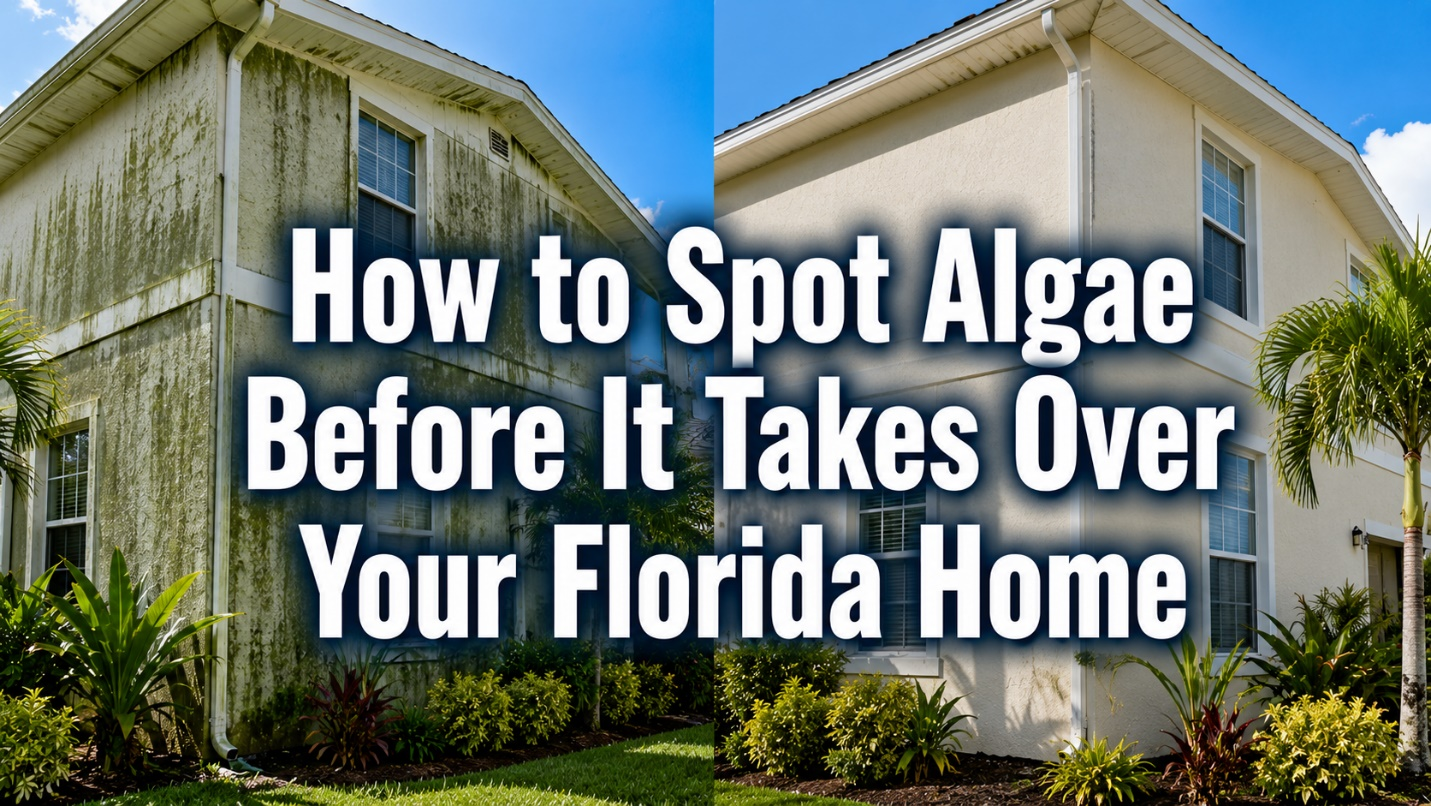
For homeowners in Riverview and across Hillsborough County, the effects of Florida’s rainy season can show up quickly on driveways and sidewalks. After weeks of frequent rain, we often see algae, mildew, and dark organic buildup become much more noticeable, especially on concrete that stays shaded or damp.
If you live in Riverview or one of the surrounding communities, you may have noticed how quickly a clean driveway can begin to darken once the rainy season gets underway. Knowing what causes that buildup can help you recognize it early and decide when your concrete is ready for another cleaning.
Why Florida’s Rainy Season Affects Concrete Surfaces
Concrete is durable, but it is also porous, which means moisture, dirt, and organic debris can collect on the surface and in its pores over time. During Florida’s rainy season, shaded driveways and sidewalks may stay damp for much longer after a storm, giving algae and other organic buildup more opportunity to develop. When moisture combines with pollen, dust, leaves, and other organic debris, algae and mildew can begin developing on the concrete.
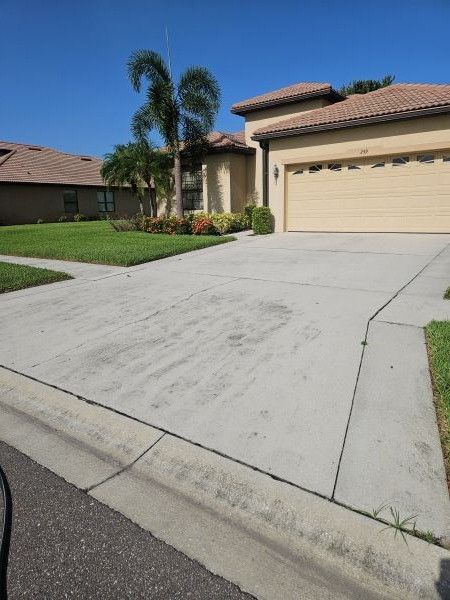
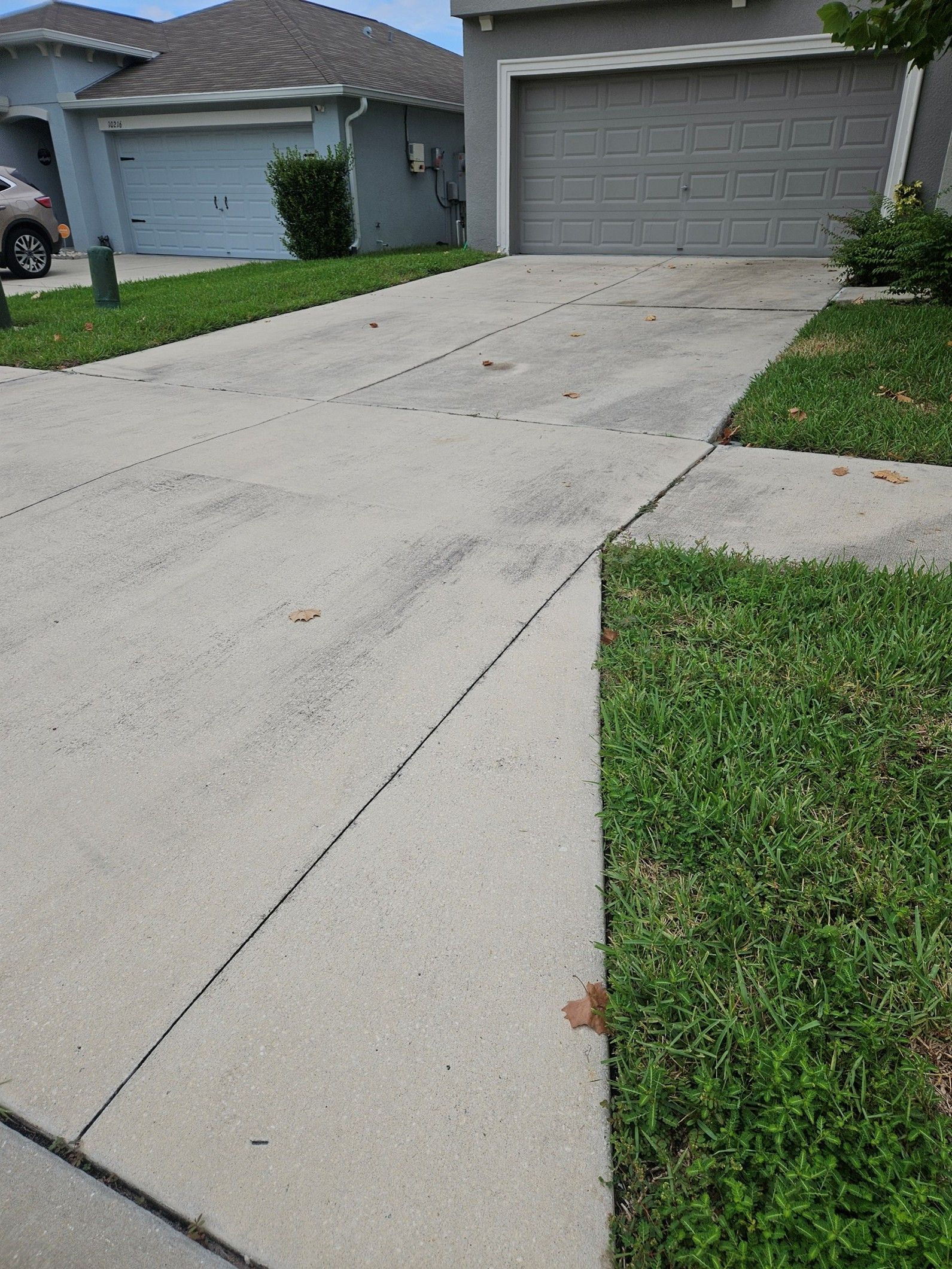
Homeowners may first notice dark streaks, green patches, or black spotting on areas that stay damp or receive less direct sunlight. As the buildup increases, the surface can become noticeably slick, particularly when wet.
Heavy storms can add to the problem as well. Rainwater can carry dirt, leaves, and other organic material from lawns, landscaping, and surrounding areas onto the driveway or sidewalk. When that material remains on a damp surface, it can contribute to the dark buildup that many homeowners notice during the wetter months.
Regular cleaning can remove algae, dirt, and other organic buildup before it becomes more stubborn. Using the appropriate equipment and cleaning method also helps produce a more even result across the driveway and sidewalks.
The Impact of Florida’s Rainy Season on Driveways & Sidewalks in Riverview
In Riverview and the surrounding areas of Hillsborough County, we see the effects of rainy weather differently from property to property. Some driveways stay relatively clean in direct sunlight, while shaded sections can begin showing green or dark buildup much sooner.
Trees, landscaping, and irrigation can all contribute to the difference. Areas that stay damp longer after a storm generally show buildup sooner than concrete that dries quickly and receives plenty of sunlight. We often notice the same pattern on north-facing driveways, areas beneath trees, and sidewalks near irrigation zones. If one section of concrete stays shaded or receives sprinkler overspray, it can start looking noticeably different from the rest of the property. We recently cleaned a sidewalk in Brandon where one side stayed noticeably darker because of shade and consistent moisture. The difference was easy to see once we looked at the areas side by side.
After several weeks of frequent rain, it isn't unusual to see concrete begin to darken, particularly in shaded areas. What looks like simple dirt may actually include algae and other organic buildup.
Florida's frequent summer storms can also mean shorter periods of drying between rain events. When a driveway or sidewalk stays damp repeatedly, especially in a shaded area, algae and other organic buildup can return more quickly.
For that reason, some homeowners choose to clean their concrete before the wettest part of the year and then watch for signs of buildup afterward. If shaded or damp areas begin turning green or dark again, that's usually a good indication that the surface needs attention.
Why Professional Pressure Washing Matters
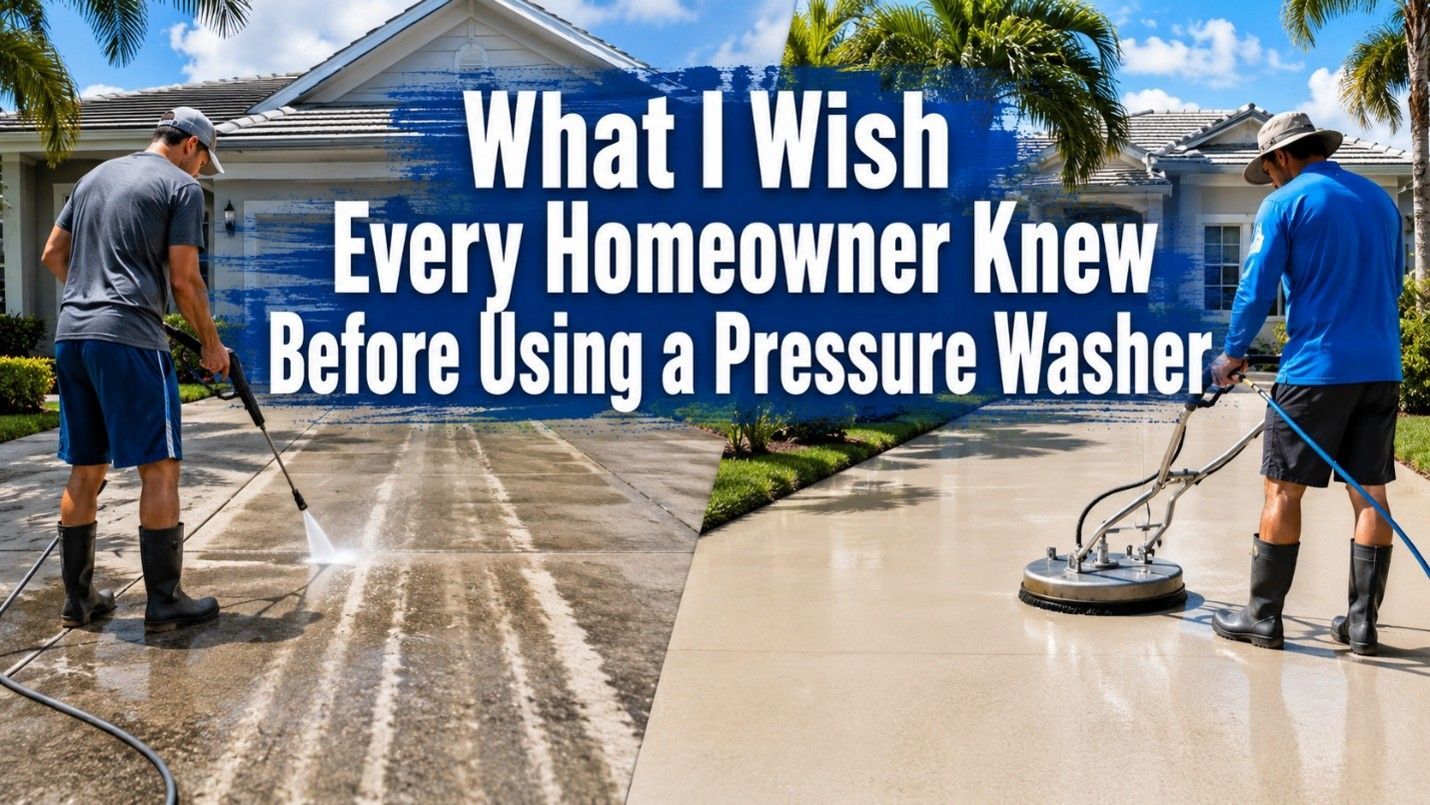
A residential pressure washer can remove some surface dirt, but getting an even result with driveway pressure washing takes more than simply pointing a wand at the concrete. The equipment, cleaning method, pressure, and technique all affect the finished result.
For larger concrete surfaces, a surface cleaner helps maintain a consistent cleaning pattern across the driveway instead of relying on a single spray wand. Cleaning solutions can also be used when appropriate to help break down organic buildup before or during the cleaning process. Simply rinsing a dirty surface with water may remove some loose dirt without addressing all of the buildup.
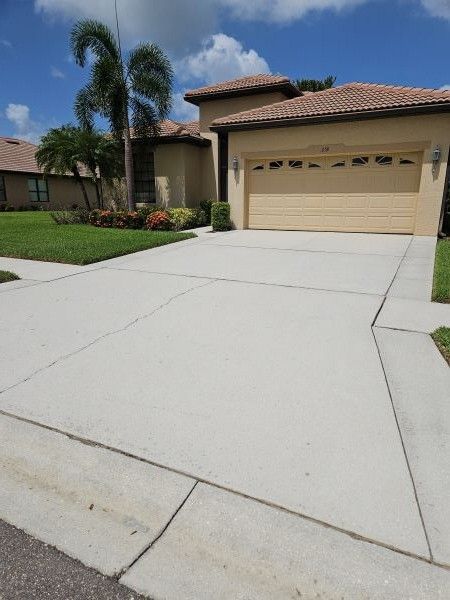
The goal is to remove the buildup effectively while using an approach that's appropriate for the condition of the concrete. A thorough cleaning can also make a noticeable difference in the overall appearance of the driveway and front walk.
Many homeowners are surprised at how dramatically a driveway and sidewalk cleaning can improve the appearance of their entire property.
Common Questions About Rainy Season Driveway Buildup
One of the most common questions homeowners ask is why their driveway turns green or black during the summer months. In most cases, this is caused by algae and mildew feeding on moisture and organic debris. Florida’s climate allows these organisms to grow year round, but the rainy season accelerates the process significantly.
Another frequent concern is whether pressure washing can damage concrete. Concrete can be damaged when too much pressure is used or when the cleaning technique isn't appropriate for the surface. That's why the condition and age of the concrete should be considered before cleaning begins.
Cleaning frequency varies from home to home. We've found that shaded driveways, areas surrounded by trees, and concrete affected by irrigation overspray can start showing algae and dark buildup sooner than areas that receive more direct sunlight. For many homes, cleaning every year or two is a reasonable starting point, with more frequent cleaning if buildup returns sooner.
Another common question is whether dark or green buildup will eventually disappear on its own. Rain may temporarily wash away some loose dirt, but algae and other organic buildup generally remain until the surface is cleaned.
Rainy Season Affects More Than Concrete
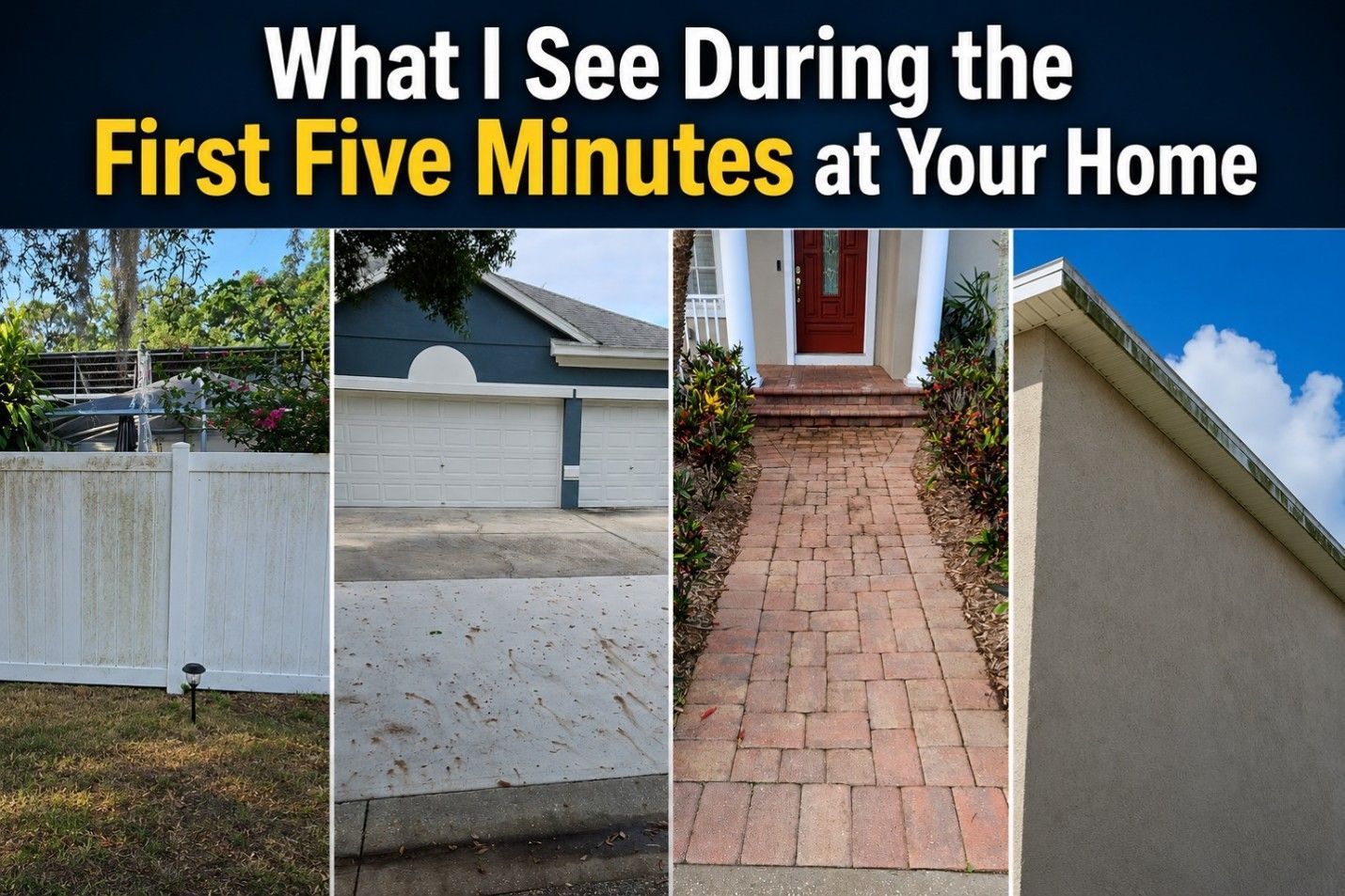
Driveways and sidewalks aren't the only exterior surfaces that can collect algae and organic buildup during Florida's wet months. Pool decks, fences, siding, and other shaded areas around the home can be affected as well.
If you're already noticing green or dark buildup on your driveway, it's worth taking a quick look at other shaded areas around the property. You may find that the same moisture and shade conditions are affecting more than one surface.
Final Thoughts on the Impact of Florida’s Rainy Season on Driveways & Sidewalks
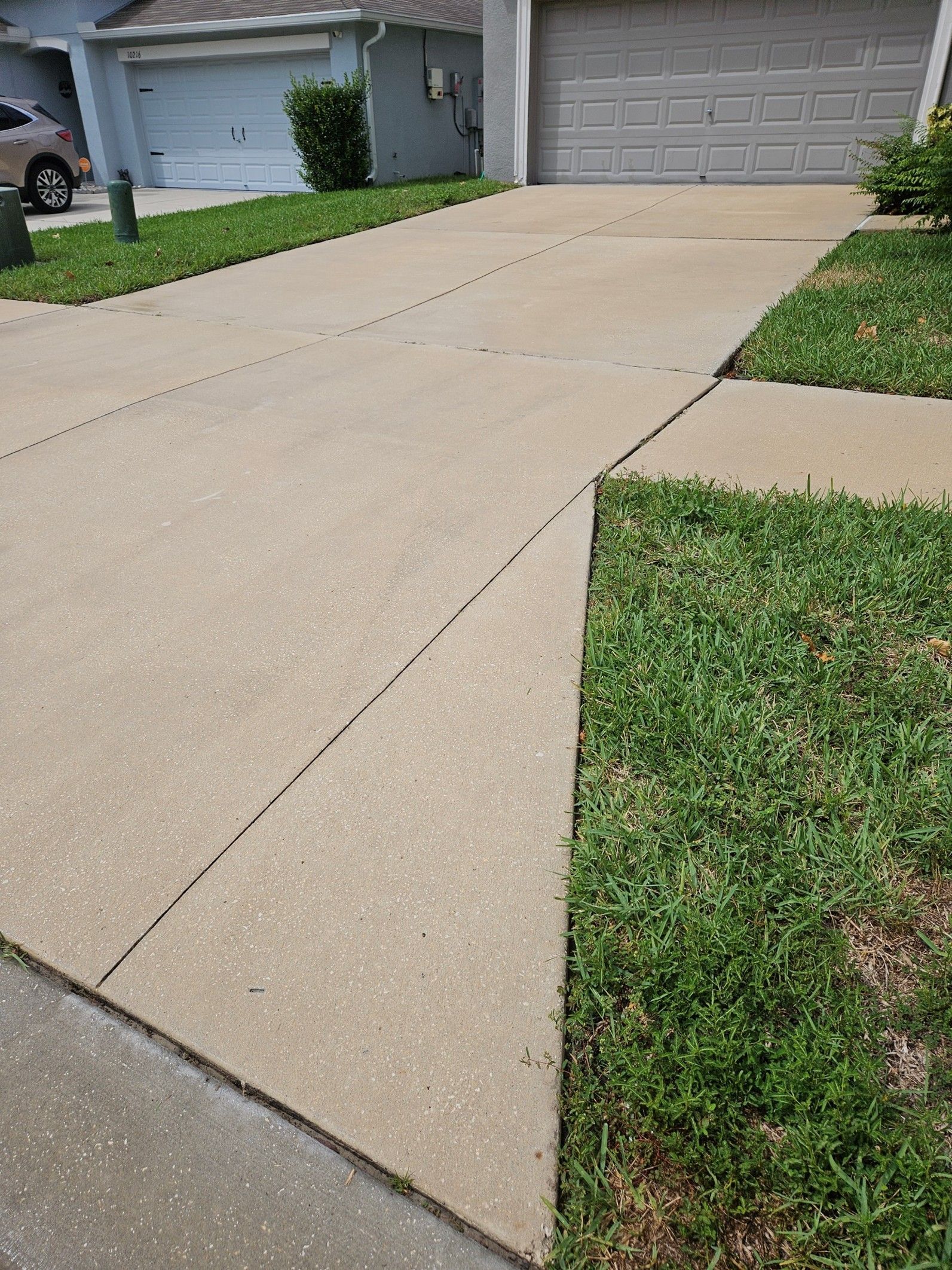
Florida's rainy season can make it surprisingly easy for a clean driveway or sidewalk to start looking dark and weathered again. Shade, trees, irrigation overspray, and frequent moisture can all affect how quickly buildup returns.
If you're noticing green patches, dark areas, or a generally dirty appearance on your concrete, those are good signs that it's time to take a closer look. A proper cleaning can remove the buildup and restore a cleaner appearance to the driveway and sidewalks.
If you need help with your concrete, Riverview Pressure Cleaning is happy to take a look and recommend an appropriate cleaning approach for the surface.
Share: