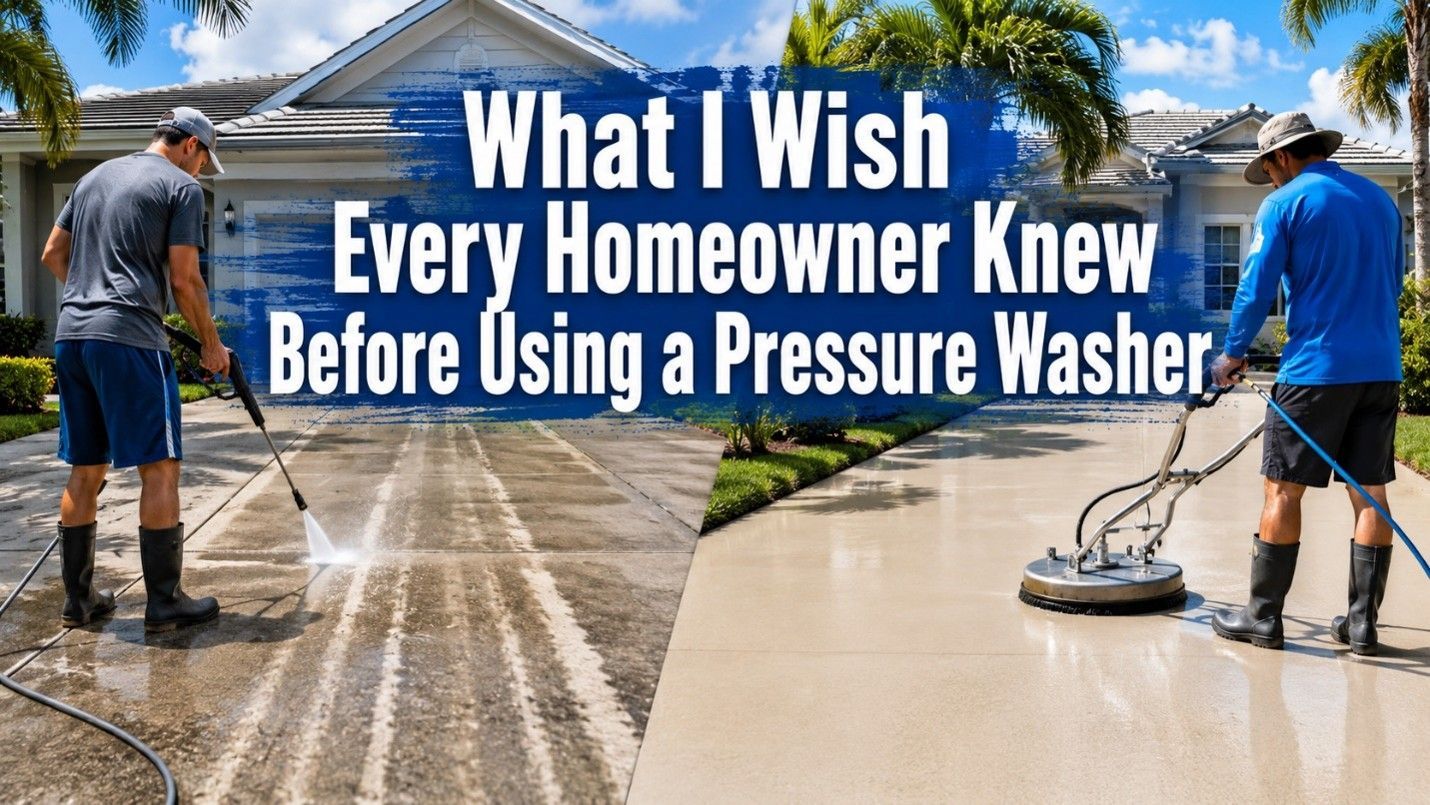
Top 5 Pressure Washing Mistakes Riverview, FL Homeowners Make
Originally Published June 9, 2025
Last Updated September 26, 2026
Keeping your home’s exterior clean is an important part of Florida homeownership, but pressure washing is not as simple as pointing a wand at a dirty surface and pulling the trigger. After more than 13 years of pressure washing homes and properties around Riverview, we’ve seen some of the same mistakes made over and over again.
Using too much pressure, choosing the wrong cleaning solution, ignoring the weather, and treating every surface the same can leave you with damaged surfaces and results that don’t last.
If you’re thinking about tackling a pressure washing project yourself, here are five of the most common mistakes we see and what you can do to avoid them.

1. Using Too Much Pressure
One of the biggest mistakes we see is assuming that more pressure means better cleaning. It’s easy to think that if a little pressure removes dirt and algae, more pressure will remove it even faster. Unfortunately, that approach can cause permanent damage.
For homeowners in Riverview, this can be especially important because many properties have a combination of stucco, painted surfaces, concrete driveways, vinyl fencing, pool screens, and other materials that all require different cleaning techniques.
Too much pressure can cause:
- Chipped paint or damaged siding
- Gouged or damaged wood
- Etched concrete
- Damaged pool screens
- Water intrusion around windows and doors
For concrete, we use a surface cleaner that keeps the spray at a consistent height rather than concentrating a powerful stream in one small area. For painted surfaces, vinyl, and more delicate materials, lower pressure and the appropriate nozzle are much safer.
- The goal isn't to use the most pressure possible. It's to use the right amount of pressure for the surface being cleaned.
2. Skipping Pre-Treatment or Using the Wrong Cleaner
Living in Lithia and the surrounding Riverview area, we're no strangers to green algae, mildew, and the buildup that comes with Florida's heat, humidity, and frequent rain.
One of the biggest mistakes homeowners make is trying to remove all of that buildup with water pressure alone. Pressure can remove a lot of surface dirt, but the right cleaning solution plays an important role in breaking down organic growth.
Without the proper treatment, you may find that:
- Algae and mildew return quickly
- Growth and staining remain in porous concrete
- Wood and painted surfaces still look dingy after cleaning
- You end up using more pressure than necessary to get the surface clean
Our process depends on the surface we're cleaning. For concrete, after surface cleaning, we finish with a mild chemical rinse that penetrates the concrete and kills the remaining spores, helping delay regrowth for months.
For wood fences, we use an environmentally friendly, non-bleach cleaning solution. Pool cages and screens require a different approach, with a gentle cleaner that loosens dirt and algae before the surface is rinsed with low pressure.
The right cleaning solution can often do more of the work so you don't have to rely on excessive pressure.
3. Ignoring the Local Weather
Florida weather can make a big difference in how a pressure washing project turns out. This is especially true in Apollo Beach and other parts of the Tampa Bay area where heat, humidity, sun, wind, and afternoon storms can all affect the cleaning process.
A few things homeowners should keep in mind:
- High humidity can slow drying and affect how long a cleaning solution remains on the surface.
- Direct sunlight can cause cleaning solutions to dry too quickly.
- Wind can carry cleaning solutions toward plants, windows, vehicles, or other areas that need to be protected.
- An approaching thunderstorm can wash away cleaning solutions before they've had enough time to work.
We pay attention to the forecast and work in manageable sections so the cleaning solution has time to do its job. We also avoid starting jobs when severe weather is approaching.
If you're doing a small project yourself, checking the weather before you start can make a noticeable difference in the finished result.
4. Forgetting to Prepare the Property
Before turning on a pressure washer, take a few minutes to prepare the area you're about to clean. This is one of those steps that's easy to overlook when you're anxious to get started.
Whether you're in Brandon or elsewhere in the area, take the time to:
- Move outdoor furniture, decorations, and other loose items
- Protect plants and delicate landscaping
- Make sure windows and doors are completely closed
- Keep pets indoors
- Protect electrical outlets and other sensitive areas
- Look for loose paint, damaged surfaces, cracks, or other areas that could be made worse by pressure washing
It's also important to wear the right safety equipment. Closed-toe shoes, safety glasses, gloves, and footwear with good traction can help reduce the risk of injury.
Pressure washing can look easy when you're watching someone else do it, but the spray can cause injuries and flying debris can create additional hazards. A few minutes of preparation can prevent a lot of problems.
5. Using the Same Technique on Every Surface
One of the biggest things to understand about pressure washing is that there isn't one cleaning method that works for everything.
A Valrico home might have painted stucco, concrete driveways, a vinyl fence, a pool cage, and a painted pool deck. Each surface has different cleaning requirements.
For example:
- Concrete can handle considerably more pressure than delicate screens, but concentrated pressure can still etch the surface.
- Painted surfaces can be damaged by excessive pressure, which is why house washing requires a different approach than cleaning concrete.
- Wood can be roughened, splintered, or damaged by aggressive cleaning.
- Vinyl fences can collect heavy algae and mildew that require the right cleaning solution and technique.
- Pool screens can be damaged easily by excessive pressure.
This is one reason we don't approach every part of a property the same way. The equipment, pressure, nozzle, cleaning solution, and technique can all change depending on what we're cleaning.
Knowing the difference can mean the difference between removing the problem and creating a new one.
What Should You Remember Before Pressure Washing?
The biggest lesson is simple: pressure washing isn't really about using as much pressure as possible. It's about understanding the surface you're cleaning and using the right combination of pressure, equipment, cleaning solution, and technique.
If you're working on a small project, taking the time to understand the surface and prepare the area can help you avoid many of the most common problems.
For larger projects or surfaces that require specialized cleaning techniques, it may be worth having a professional handle the work.
Ready to Get Your Property Clean?
If you're in Riverview or one of the surrounding communities and have a pressure washing project you'd rather leave to a professional, Riverview Pressure Cleaning is here to help.
We clean driveways, houses, pool cages, fences, sidewalks, and other exterior surfaces throughout the area. We take the time to use the right approach for each surface rather than treating every job the same.
Contact us for a free quote and let's get your property looking its best.
Share: